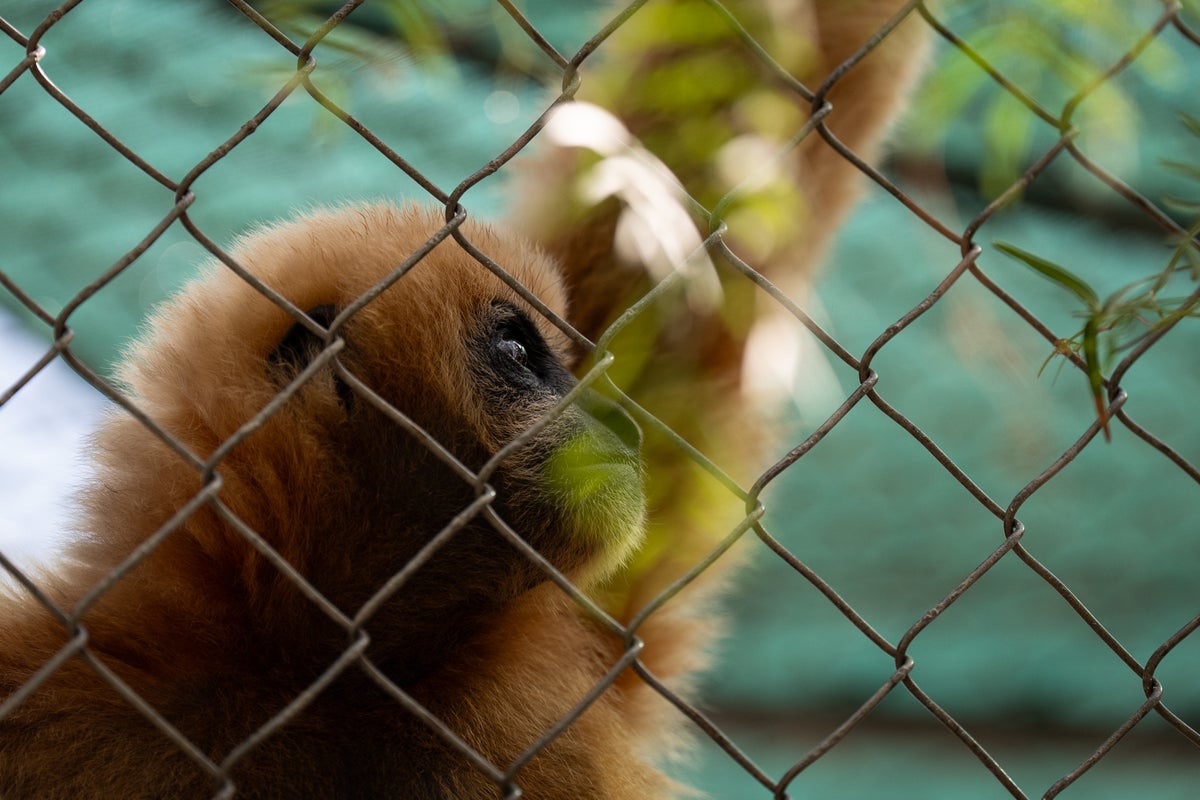
You can hear them before you even park your car. Their calls start as low, hesitant hoots and swell into wild, piercing sirens that echo across the dry hills of the Santa Clarita Valley. Most people don't expect to find a corner of Southeast Asian rainforest hidden in Southern California, but that is exactly what the Gibbon Conservation Center has provided for half a century.
Founded back in 1976 by the late Alan Mootnick, a self-taught expert who funded his early preservation dreams through a home painting business, this 10-acre compound is the only facility in the Western Hemisphere dedicated exclusively to these small, endangered apes.
What Most People Get Wrong About Gibbons
A lot of visitors walk through the gates expecting monkeys. They are not monkeys. Gibbons are apes, meaning they lack tails, possess remarkable intelligence, and move through the air with a blinding speed known as brachiation.
They swing from branch to branch with an effortless grace that makes Olympic gymnasts look clumsy. But their most striking trait is their voice. Every single morning, family groups engage in complex duets. Males and females sing distinct parts, creating a territorial and bonding chorus that can carry over a mile.
Director Gabi Skollar and her dedicated staff currently care for roughly 40 gibbons spanning five distinct species. Some of these animals arrived as rescued pets from the illegal wildlife trade, while others were born on-site as part of critical international breeding safety nets. In the wild, populations of certain species have plummeted below 2,000 individuals due to rampant deforestation across Indonesia and mainland Southeast Asia.
Inside Daily Life at the Sanctuary
Caring for sensitive apes in a Mediterranean climate takes relentless physical labor. On-site caretakers like Jodi Kleier spend their mornings hauling heavy buckets of washed lettuce, sweet potatoes, and bananas. Feeding happens five to six times a day. This schedule isn't random. It mimics how gibbons spend their time in the wild, constantly foraging for food instead of sitting down for a single massive meal.
You quickly learn that these animals have distinct, often stubborn personalities. Skollar notes that individual apes have lifelong quirks. Pepper, a young northern white-cheeked gibbon, frequently starts the morning chorus, while a pileated gibbon named Violet handles the finale alongside her partner Truman. Then there is Pierre, a rescue who simply refuses to warm up to male caretakers.
Maintaining this sanctuary requires navigating strict genetic management. Because captive space is limited, the center regularly trades individuals with accredited zoos and institutions to prevent inbreeding and keep bloodlines healthy. They were even the first facility to successfully breed Javan gibbons outside of their native habitat.
How You Can Experience and Support the Center
If you want to visit, don't expect a standard commercial zoo experience. The facility is located off Esguerra Road in Santa Clarita, and your phone's GPS might drop out as you navigate the winding dirt roads.
Public weekend tours give visitors a rare glimpse into the complex social structures of these monogamous apes. You will watch family units groom each other, play, and occasionally launch into a sudden, roaring song cycle.
The message from the staff is blunt: gibbons do not make good pets. They are intensely wild animals with physical strength that can easily overpower an unsuspecting human.
Check the center's weekend tour schedule online, buy your ticket in advance, and plan to arrive early. Listening to a rare ape sing across a dusty California canyon changes how you view wildlife conservation forever.