Neutrality used to carry Southeast Asia pretty far. Not anymore.
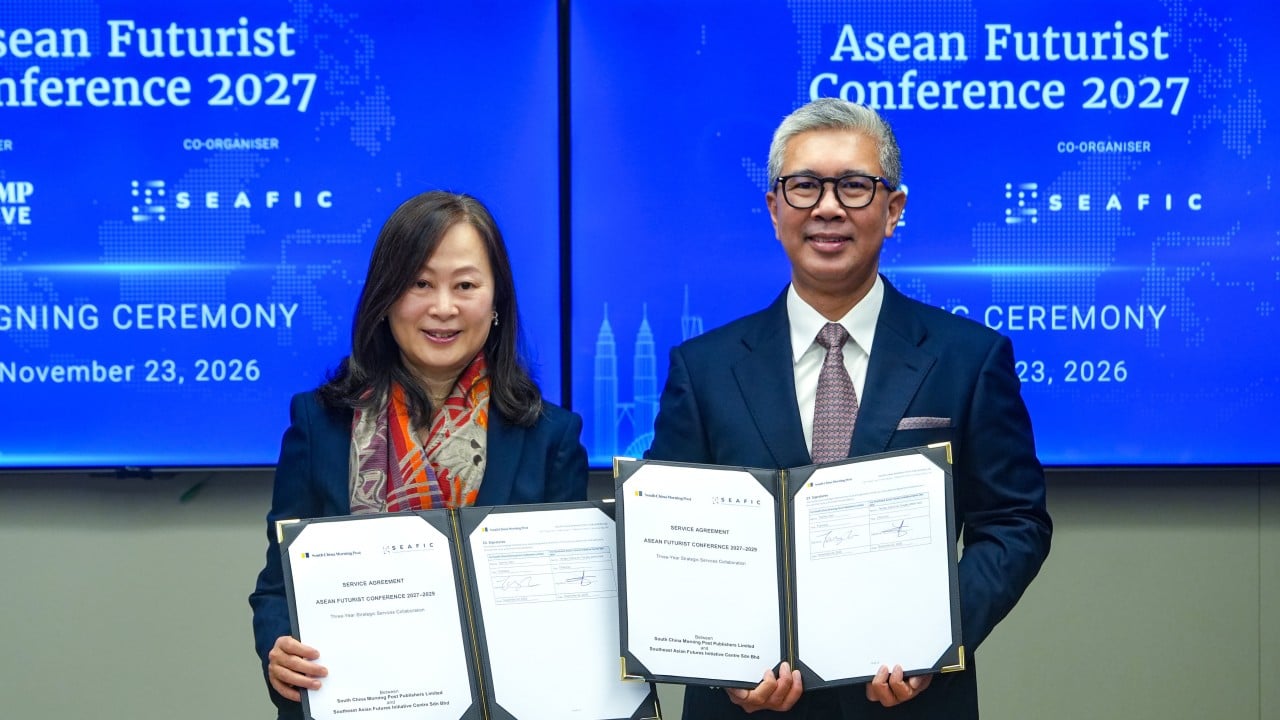
On November 23, 2026, the South China Morning Post (SCMP) and the Southeast Asia Futures Initiative Centre (SEAFIC) signed a three-year agreement to host the inaugural Asean Futurist Conference in Kuala Lumpur on April 19, 2027. It's a one-day, invitation-only gathering designed to bring roughly 150 decision-makers from government, business, and academia into the same room. Their goal is straightforward enough: map out the forces that will shape regional competitiveness over the next five to ten years.
At first glance, another policy forum in Southeast Asia can sound like polite background noise. You've seen dozens of regional summits before—big banners, rehearsed panels, and vague promises about "closer cooperation." Honestly, most of them don't change a single balance sheet or cabinet memo.
This one has a sharper hook, though. It pairs a Hong Kong-rooted newsroom with a young regional think tank led by Tengku Datuk Seri Utama Zafrul Aziz, a former Malaysian finance and investment minister who also chairs the Malaysian Investment Development Authority. When people who sit on policy and capital decisions team up with an editorial operation that covers Washington, Beijing, and ASEAN closely, the conversation usually moves past platitudes.
What We Know About the Asean Futurist Conference Deal
Let's stick to the concrete facts on the table. According to reports from the South China Morning Post and Astro Awani, SCMP and SEAFIC formalized a three-year pact on November 23, 2026, to stage the first Asean Futurist Conference in Kuala Lumpur on April 19, 2027.
Keeping the guest list capped at around 150 invitation-only participants is a deliberate choice. Big conferences reward volume and sponsorship tiers; small rooms reward candor. If you put senior officials, corporate executives, and researchers around a table for a single day without a massive public circus, people tend to talk straighter about what's working and what's breaking.
SEAFIC Chairman Tengku Zafrul Aziz noted that the conference will examine five- to ten-year scenarios and how governments and companies should prepare for them. That time horizon matters. Quarter-to-quarter market panic is easy to react to, while decade-long structural shifts—supply chains, energy systems, compute infrastructure, and trade rules—require serious planning before bottlenecks turn into crises.
This pact didn't appear out of thin air, either. Back in August 2026, SCMP and SEAFIC signed a strategic memorandum of understanding in Malaysia alongside other regional partners, building toward deeper joint work on Southeast Asian economic foresight. What started as an MOU has now turned into a multi-year flagship event on the calendar.
Why Southeast Asia Is Rushing Into Scenario Planning
If you watch Southeast Asian trade and investment up close, you can feel the pressure building. The region sits right between major economic powers, tightening export controls, shifting supply chains, and climate shocks. You can't just coast on low labor costs or geography and expect the next decade to look like the last one.
As Tengku Zafrul has argued in his chairman's remarks for SEAFIC, neutrality alone isn't a strategy when global rivalry, technology shifts, and supply chain realignments move this fast. Potential is nice on a slide deck. Execution is what keeps factories running, grids stable, and wages growing.
Look at the real-world tensions already testing ASEAN economies in 2026. Data center investment has surged across parts of the region, yet power grids, water supply, and local job creation don't automatically scale at the same speed. In Malaysia, for example, SEAFIC's published work on the compute economy has pointed out a sobering gap: hundreds of billions of ringgit in approved data center projects between 2021 and 2026 have created thousands of direct jobs, while broader ecosystem spillovers, grid capacity, and local supplier readiness take years to build.
Then there are the external shocks. Tighter technology and chip restrictions, shifting trade routes, rare earth and critical mineral debates, and climate-driven food price risks all hit Southeast Asia at once. When a single policy shift abroad or a bad weather cycle hits supply chains, businesses that only plan six months ahead get blindsided.
What Most Conferences Get Wrong About the Future
I've sat through plenty of "future of work" and "next decade" panels where speakers spend forty minutes reciting buzzwords everyone already knows. That's usually a waste of time. A useful futurist discussion shouldn't be sci-fi guessing games; it should be stress-testing assumptions.
Here is a common mistake executives make at regional summits: treating scenarios like fortune-telling. Nobody knows with certainty what tariff rules, energy prices, or compute regulations will look like in 2032 or 2036. Smart leaders don't try to predict one single winner. They map out three or four plausible paths—say, tighter tech fragmentation, faster regional grid integration, or sharper commodity swings—and ask which moves stay smart across all of them.
Another trap is separating policy talk from operational reality. A trade minister might talk about regional value chains while a factory operator worries about customs delays, power tariffs, or finding engineers who actually have the right skills. Bridges between policy rooms and boardrooms only work when both sides bring hard numbers rather than slogans.
With SCMP's reporting reach and SEAFIC's research and policy network, the Asean Futurist Conference has a clear lane if it avoids fluff. It can test how regional business leaders and policymakers actually read the same risks—and where they disagree.
Key Angles Likely to Shape the Kuala Lumpur Gathering
While full session agendas roll out closer to April 2027, SEAFIC's recent research and roundtables give a pretty clear clue about the pressures on regional minds right now.
- Supply chains and value creation: Moving beyond simple assembly or re-exporting toward higher-value regional manufacturing and resilient sourcing when external trade rules get prickly.
- Compute, power, and AI readiness: Figuring out how Southeast Asia captures digital and data infrastructure growth without straining electricity grids, water resources, or domestic talent pipelines.
- Critical minerals and energy transition: Balancing investment in clean energy and critical resources with realistic timelines, financing costs, and domestic industrial policy.
- Household and labor resilience: Making sure economic growth and technological change translate into real living standards rather than leaving lower- and middle-income households squeezed by costs.
Notice how connected those four threads are. You can't talk about industrial competitiveness in isolation from power prices, food security, or workforce skills. If the April 2027 conference connects those dots instead of running neat little silos, it will earn its seat at the table.
Realistic Expectations and Blind Spots to Watch
Let's be fair and skeptical, too. An invitation-only one-day conference with around 150 people isn't a magic wand. One day goes by fast. By the time people get past introductions and opening remarks, half the afternoon is gone.
There's also a classic risk with exclusive gatherings: echo chambers. When an event is invite-only, organizers have to work harder to include contrarian thinkers, operators on the ground, and voices outside the usual capital-city circuit. If everyone in the room agrees on the same consensus view, the scenarios won't challenge anyone's blind spots.
Also, a three-year deal is a marathon, not a single headline. The first edition in April 2027 will set the tone, while the second and third years will show whether the partnership builds lasting momentum, sharper research follow-through, and real cross-border connections.
Practical Next Steps for Leaders and Watchers
Whether you run a business with ASEAN exposure, advise investors, or just follow how Southeast Asia's economy is evolving, you don't have to wait until April 2027 to put this news to work.
- Audit your five-year assumptions this quarter. Pick two core assumptions your business or strategy relies on—such as supply chain routing, power and infrastructure costs, or regional demand—and ask what happens if both shift against you at once.
- Track SEAFIC's research outputs ahead of the event. Read its roundtables, trackers, and policy briefs at SEAFIC to see the exact data points and trade-offs shaping regional policy debates.
- Follow SCMP's regional coverage. Keep an eye on South China Morning Post ASEAN coverage for ongoing reporting on trade, tech rules, and diplomatic shifts leading up to the April 19, 2027 gathering in Kuala Lumpur.
- Build cross-border conversations before the conference calendar gets crowded. If you operate across Hong Kong, Malaysia, or wider ASEAN markets, start comparing notes with peers, researchers, and policy watchers now so you aren't playing catch-up when regional agendas firm up.
Big announcements get clicks on day one. What separates real regional momentum from noise is what gets built over the next three years.