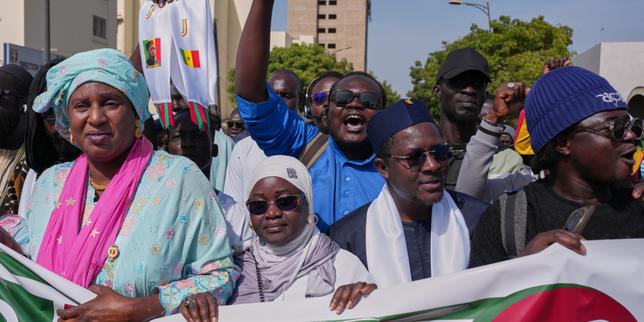
The security forces in Dakar aren't slowing down. They've shifted their focus. For a long time, the state machinery targeted men accused of homosexual acts under Article 319 of the penal code. That chapter isn't closed. It's just expanding. Recent weeks brought a surge of police raids targeting queer women across several neighborhoods. It's a calculated escalation.
People keep asking why this is happening right now in Senegal. The answer sits at the intersection of populist politics, rising conservative movements, and a desperate search for scapegoats. When the economy stalls and young people struggle to find decent work, politicians lean on moral panic. It works every time.
Let's look at the mechanics of this shift. How did we get here, and what does it mean for the broader human rights situation in West Africa?
The Legal Trap in Senegal
Article 319 is blunt. It penalizes acts against nature with prison terms ranging from one to five years, alongside heavy fines. Courts have weaponized this statute for decades. But historically, the enforcement leaned heavily toward men. Why? Because male homosexuality remains more publicly visible in certain urban spaces, making it an easier target for neighborhood vigilantes and corrupt police officers looking for bribes.
Lesbians faced a different kind of violence. Their marginalization was largely private, hidden behind walls of familial pressure, forced marriages, and economic dependence. They dealt with corrective rape, psychological torture, and quiet banishment from their homes.
State authorities are now crossing that threshold. Police are entering private homes based on anonymous tips, seizing phones, and dragging women to holding cells. They're scrolling through private messaging apps. They're looking for photo evidence of relationships.
The Cost of Digital Surveillance
Your phone is no longer private in Dakar if you're queer. Investigators routinely demand passwords during interrogations. They use dating apps and social media groups as digital traps.
If you think encryption saves you, think twice. Local authorities don't always need sophisticated spyware. They rely on social engineering, coercion, and forced confessions. A woman is picked up on a minor suspicion, her phone is seized, and suddenly five of her friends receive frantic calls or find themselves implicated in police reports.
Human rights defenders on the ground in Dakar are sounding alarms. Organizations like Amnesty International and local coalitions have documented dozens of arbitrary detentions over the past month. Yet, mainstream political leaders remain silent—or worse, they cheer the crackdowns on television talk shows.
The Political Calculus Behind the Purge
Senegal has long prided itself on teranga, the Wolof concept of hospitality and tolerance. But that hospitality has distinct limits when populist actors seize the microphone.
Civil society groups pushing for stricter anti-LGBTQ legislation aren't fringe actors anymore. They command prime television slots and organize massive rallies. They frame basic human rights as Western cultural imperialism. It's an effective rhetorical trick. By labeling queer identity as a foreign import, local politicians position themselves as defenders of national sovereignty and traditional values.
You can't separate these arrests from the electoral cycle. Whenever public frustration boils over regarding high living costs, youth unemployment, or institutional corruption, the ruling class pulls the moral panic lever. It unifies conservative voters across religious lines, bringing Muslim and Christian religious leaders into a rare alliance of condemnation.
"They aren't just locking up individuals; they are trying to erase an entire population from public life."
✨ Don't miss: charles de batz de castelmore d'artagnan
That quote from a local activist captures the bleak reality on the street. The arrests serve a dual purpose. They punish visible dissent and send a chilling message to anyone thinking about organizing for civil liberties.
What Happens to the Detained
The judicial process moves swiftly when public outrage is manufactured. Women swept up in these raids face immediate social ruin. Families disown them out of fear or shame. Landlords throw their belongings onto the street. Finding a lawyer brave enough to take these cases becomes an uphill battle.
Prisons in Senegal are already overcrowded. Adding people arrested under morality laws creates a secondary humanitarian crisis inside the correctional facilities. Inmates face harassment, physical abuse from guards and fellow prisoners, and a complete denial of medical care.
Legal aid groups are overwhelmed. They're trying to coordinate emergency housing, secure safe passage out of the country for those most at risk, and provide psychological support. But resources are thin. International donors talk a big game about human rights, but the bureaucratic machinery moves too slowly for a woman hiding from the police tonight.
Moving Past the Silence
Ignoring this escalation won't make it stop. Silence from international partners allows governments to step up repression quietly. If you care about human rights, pay attention to West Africa right now. Support local grassroots networks that smuggle people out of danger zones. Amplify the voices of activists on the ground who risk their freedom every time they post a status update.
The crackdown on lesbians in Senegal isn't an isolated local story. It's a testing ground for how far authoritarian tactics can go under the guise of cultural defense. Watch closely. The playbook used in Dakar is already being copied elsewhere.