Most people ignore a minor bug bite, brushing it away as a seasonal annoyance until a routine outdoor evening escalates into an organ-failing catastrophe. Imagine sitting by a peaceful campfire, enjoying a standard family weekend, only to find yourself given mere days to live because of an uninvited arachnid. That exact nightmare upended the life of Britagne Miller, a Kansas mother of four whose routine camping trip to Cheney Lake transformed into an intensive care unit battle.
If you think a simple spider bite can't turn fatal, you're missing how quickly localized tissue damage cascades into systemic sepsis. Let's look at what actually happens when venom, pre-existing health complications, and opportunistic bacteria collide inside the human body.
The Rapid Descent From Campfire to Critical Care
In late May, Miller noticed a few small bites on her leg. Like anyone else, she didn't panic. Bites happen outdoors. But within days, the harmless-looking marks morphed into an aggressive medical emergency. The pain wasn't just an itchy nuisance; she described it as feeling like a hot metal rod shooting down her leg into her foot, mimicking the sensation of being repeatedly stabbed.
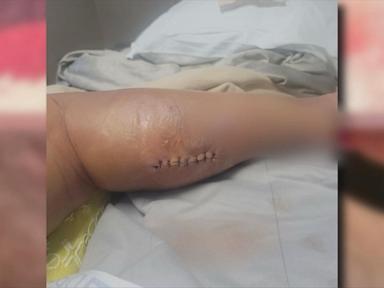
When she checked into Wesley Medical Center in Wichita on June 4, doctors uncovered a massive hematoma—a trapped pool of blood clots—nestled deep in her calf. That was only the surface issue. Miller was managing pre-existing end-stage liver disease, a condition that completely alters how the body handles trauma, surgery, and blood clotting.
Her husband, Jake Miller, pointed out the stark reality medical professionals laid out for them. Because of her compromised liver function, routine surgical intervention carried an astronomical risk of internal bleeding. Within two weeks of hospital care, complications mounted violently.
Sepsis and the Danger of Secondary Infections
A spider bite rarely kills purely through direct venom action unless it's a specific medically significant species like a brown recluse or black widow. More often, the real killer is what happens after the skin barrier breaks.
Miller developed secondary Staphylococcus and gram-negative bacterial infections right at the surgical drain sites. Those pathogens triggered full-blown sepsis, a catastrophic systemic response where the body's immune system turns on its own organs. Tissue necrosis set in around her stitches, demanding emergency bedside procedures to scrape away dead skin.
At that stage, doctors delivered a grim prognosis: she had anywhere from three days to a month left to live, actively recommending hospice care. Her vital levels flatlined below critical thresholds.
Why Pre-Existing Conditions Change the Equation
People often ask how a bug bite can escalate so fast. The answer lies in baseline health vulnerabilities. Healthy immune systems usually wall off localized spider venom, clearing minor necrotic reactions over several weeks with minimal intervention.
When a patient battles underlying organ dysfunction, the body lacks the reserve needed to fight secondary bacterial invasions. Sepsis exploits these exact cracks. If your liver cannot properly filter toxins or regulate clotting factors, a localized wound easily becomes a systemic firestorm.
Experts like Kansas State University horticultural entomologist Dr. Raymond Cloyd note that outdoor areas across the Midwest are prime habitats for venomous biters like the brown recluse. While you cannot inspect every blade of grass or campfire log, understanding your personal risk profile when heading outdoors makes all the difference.
Practical Steps to Protect Yourself Outdoors
You don't need to stay locked indoors to avoid this fate, but you do need to ditch careless habits.
- Dress defensively: Wear high socks and long pants tucked in when hanging around wooded areas, lakesides, or brush piles, especially at night.
- Inspect gear: Shake out sleeping bags, tents, and stored outdoor clothing before use. Spiders love dark, undisturbed fabric folds.
- Treat minor breaks instantly: Clean any mysterious skin puncture immediately with antiseptic soap and water.
- Monitor the spread: If redness, severe heat, or radiating pain starts expanding past a quarter-inch radius within 24 hours, skip the home remedies and head straight to urgent care.
Miller survived her ordeal because she refused to accept the hospice timeline, pushing doctors to fight for every possible option. She faces a long road of physical therapy to walk normally again and manage ongoing specialist visits, proving that vigilance and stubborn endurance matter when the worst happens. Don't wait until a tiny mark turns into a life-or-death crisis. Pay attention to your body early.