We live in an era obsessed with borders, walls, and defensive isolation. Every day, headlines push a narrative of closed doors and institutionalized suspicion. But what if treating strangers as threats isn't just a political choice—what if it's a profound betrayal of what makes us human?
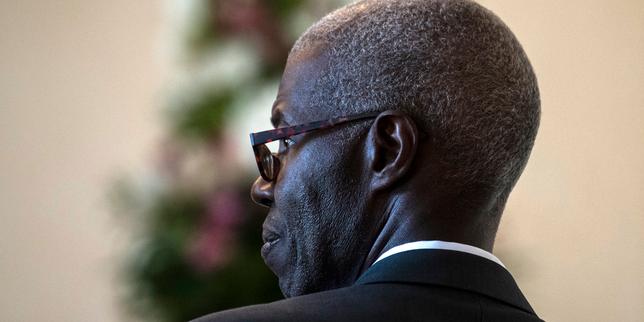
In his striking new essay, L’hospitalité. Affirmer l’humanité, published by Autrement, the renowned philosopher Souleymane Bachir Diagne cuts through the noise of modern political anxiety. He argues forcefully that welcoming the stranger is not a naive moral luxury. It is a fundamental obligation. Against what he terms the rising "anti-empathy ideology," Diagne reminds us that human existence is fundamentally relational.
The Core Danger of the Anti-Empathy Ideology
Look closely at contemporary political discourse across Western democracies and beyond. You will notice a steady hardening of public policy and cultural attitudes. Borders are fortified physically and rhetorically. The stranger is routinely framed as an existential risk rather than a fellow human being.
Diagne exposes this shift as a dangerous philosophical error. When societies adopt policies driven by hostility and rejection, they aren't just managing migration or security. They are eroding the very fabric of human empathy.
This isn't an abstract academic debate. When you systematically deny the humanity of the newcomer, you degrade your own humanity in the process. Diagne insists that closed-minded nationalism and institutionalized inhospitality directly contradict our biological and social nature. We are built to connect, not to barricade ourselves inside gated communities of the mind.
Translation as the Ultimate Act of Welcome
If hospitality sounds difficult in a world divided by language, culture, and politics, Diagne offers a powerful bridge: the hospitality of translation.
As a thinker who has spent decades exploring African philosophy, Islamic thought, and postcolonial studies—from Dakar to Columbia University—Diagne knows a thing or two about crossing cultural chasms. Translation isn't just about swapping words from French to English or Wolof to Arabic. It is an ethical stance.
When you translate, you step out of your linguistic and cultural comfort zone. You make an effort to inhabit another person's universe of meaning. Diagne argues that languages must "conspire together" to build a shared universal human experience. Refusing to translate or refusing to listen is the linguistic equivalent of slamming a door in someone's face. True intellectual hospitality requires intellectual humility—the willingness to admit that your culture does not hold a monopoly on truth or wisdom.
Moving Past Pluralism Toward Active Reciprocity
We often hear politicians praise diversity or pluralism as a polite checklist item. Diagne pushes much further than passive tolerance.
Tolerance is cheap. It often means simply gritting your teeth and enduring the presence of someone different. Hospitality, by contrast, demands active reciprocity. It creates a space where the host and the guest are transformed by the encounter.
When you welcome someone into your community, your home, or your cultural space, you open yourself up to change. That is precisely what frightens the architects of anti-empathy. They want static, pure, unblemished identities. But history and philosophy teach us that dynamic cultures are hybrid cultures. They grow by absorbing, listening, and welcoming.
Reclaiming Our Humanity in Troubled Times
It is easy to feel cynical when reading the daily news. Xenophobia wins elections. Fear drives policy. Walls keep going up.
Yet Diagne's work serves as a vital antidote to despair. By grounding his philosophical defense of hospitality in rich intellectual traditions—drawing on writers, poets, and thinkers who valued human connection above tribalism—he reminds us that another way of living together is possible.
You don't need to be a professional philosopher to practice this in daily life. It starts with how you look at the person standing next to you, how you listen to an unfamiliar perspective, and whether you choose curiosity over fear.
Hospitality is an ongoing daily practice. If we abandon it, we lose the very thing that makes human society worth having.