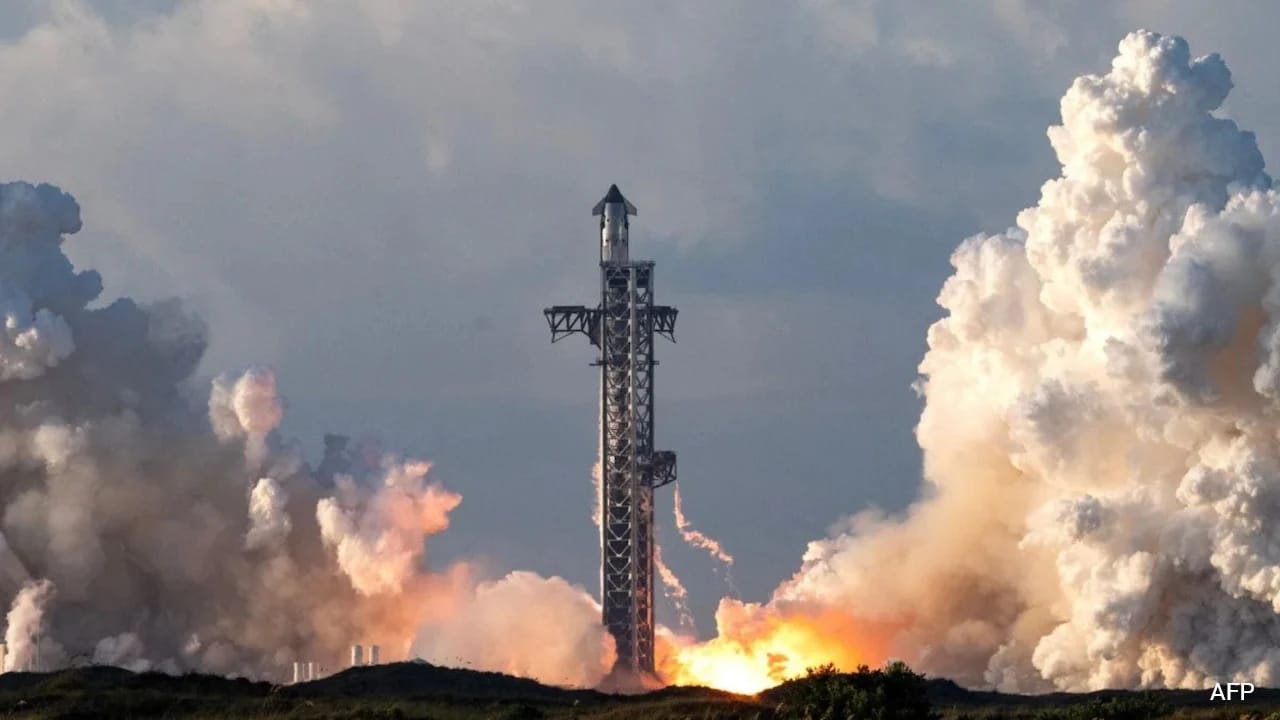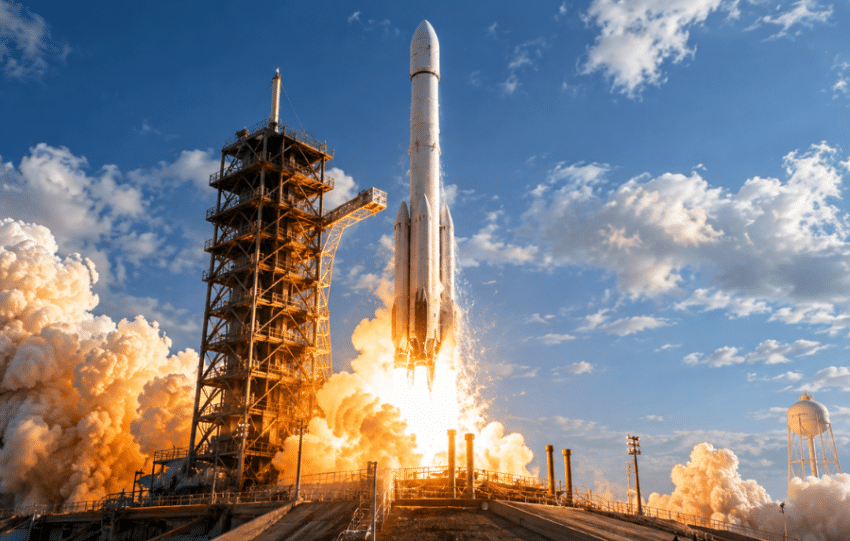
Standing 407 feet tall, SpaceX's Starship isn't just another rocket. It's the absolute blueprint for multi-planetary survival.
Recent test flights and operational milestones from Starbase in Texas proved that heavy-lift reusability is moving from science fiction into hard reality. When a Starship upper-stage engine experienced a momentary shutdown during ascent, flight engineers didn't panic. They assessed the health of the remaining Raptor Vacuum engines, cleared the vehicle for orbit, and proceeded with a flawless deployment of 26 next-generation Starlink V3 satellites.
If you think this mission was just about improving internet speeds, you're missing the entire point.
The Technical Leap of Starlink V3
Let's look at the hardware. The Starlink V3 design represents a massive architectural jump from older iterations. Each satellite is engineered to support an astounding 1 Tbps of downlink and 160 Gbps of uplink capacity. That translates to a tenfold increase in downlink capacity and a staggering 22-fold jump in uplink performance compared to V2 variants.
Upgraded modem chips handle a 64-fold throughput increase, allowing the constellation to dynamically shift beams to densely populated urban centers or remote rural regions in real time.
Furthermore, each V3 satellite features six high-capacity 400-gigabit space lasers. They talk to each other across a petabit laser mesh network in orbit, entirely bypassing terrestrial bottlenecks. Four quad-band radio frequency backhaul antennas covering Ka, E, V, and W bands push backhaul capacity to 1.2 Tbps—over eight times what V2 could manage.
Three of these newly deployed satellites carry custom camera arrays specifically pointed at Starship's heatshield. Engineers are using live imagery to test thermal protection durability, gathering critical telemetry for future high-speed atmospheric returns.
Reusability is the Only Way to Mars
Elon Musk and the SpaceX engineering team aren't building a satellite delivery truck; they're building a transit system. Fully and rapidly reusable stages are the holy grail of rocketry for a reason. Without rapid turnaround, interplanetary colonization remains financially impossible.
Reaching a self-sustaining city on Mars requires moving millions of tons of cargo and upwards of one million people. Doing that efficiently means launching multiple times per day to capitalize on orbital transfer windows that open up roughly every 26 months. Thousands of Starship flights will be required to haul the necessary equipment, life support systems, and habitat modules to the Red Planet.
When a Starship eventually slams into the Martian atmosphere at 7.5 kilometers per second, it will rely entirely on aerodynamic deceleration. The thermal conditions will be brutal—worse than Earth returns due to higher levels of atomic oxygen. Cargo flights targeting the Martian surface are already slated to ramp up toward the end of this decade.
Starship is fundamentally rewriting the economics of space access. The transition from orbital internet upgrades to human interplanetary missions isn't a distant dream anymore. It's an active engineering timeline.