Federal judges rarely stop heavy machinery when corporate deadlines loom, and the latest ruling out of Texas proves it. A federal district court just refused to block a controversial land swap giving Elon Musk’s SpaceX more than 700 acres of protected coastal land. Environmental advocates and tribal groups are furious. Yet the legal war over the Lower Rio Grande Valley National Wildlife Refuge is far from over.
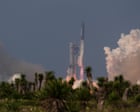
If you are trying to understand why this specific land exchange matters, look at a map of South Texas. SpaceX's sprawling launch site sits right on the edge of the Gulf coast, and the company's appetite for physical expansion is insatiable. Back in June, the US Fish and Wildlife Service greenlit a deal where SpaceX surrenders 683 acres it privately owns elsewhere in exchange for over 700 federal refuge acres situated closer to the launchpad. Also making waves recently: What Happens When 1,200 Palestinians Are Displaced In Hebron Overnight.
The administration defended the maneuver as a net conservation benefit. Critics call it a handout of public treasures to billionaire private enterprise.
US District Judge Fernando Rodriguez Jr didn't buy the plaintiffs' emergency arguments this week. He declined their request for a preliminary injunction, pointing out that the challengers failed to present concrete proof that the property would suffer immediate, irreversible environmental or historical damage while the lawsuit crawls through court. Furthermore, the judge noted that hitting pause on the transfer would impose heavy hardships on SpaceX's aggressive development milestones and contractual obligations. Further insights into this topic are detailed by NPR.
That logic leaves conservationists empty-handed for now, but they aren't backing down. Representatives from the Center for Biological Diversity made it clear that the litigation proceeds regardless of the judge's refusal to grant an injunction. They argue that bulldozers could start tearing into fragile South Texas habitats almost immediately.
What makes this conflict so intense isn't just the acreage. It is the broader collision course between rapid commercial space exploration and delicate local ecosystems. For over a decade, SpaceX has transformed sleepy coastal areas near the US-Mexico border into a bustling rocket factory and launch complex. Employees even voted to incorporate their own municipality called Starbase. Local residents, however, have watched their beach access shrink while dealing with the fallout of rocket debris, noise pollution, and environmental stress.
The federal agency responsible for managing the wildlife lands insists the swap will improve landscape-scale habitat connectivity. Environmentalists counter that trading pieces of paper doesn't replace living, breathing ecosystems that shelter rare wildlife and hold deep cultural significance for Indigenous communities.
You can expect this courtroom battle to drag on through discovery and trial, even as heavy equipment moves onto the disputed parcels. The injunction denial is a heavy blow to the plaintiffs, but the underlying questions about public land giveaways and environmental oversight remain wide open. Watch how quickly development starts and whether appellate courts are willing to step in once the dirt begins to fly.

:max_bytes(150000):strip_icc():focal(742x300:744x302)/elon-musk-justine-wilson-062424-d55056f5cbd1428fa3b76079db3cd865.jpg)
