Two high-speed trains barreling down the same track in Toledo province shouldn't collide. Yet they did. That failure cost at least 68 lives and left five Canadians caught up in the wreckage.
When a state-owned RENFE train slammed into the tail of a stationary IRYO passenger service on October 28, 2026, it shattered Spain's hard-earned reputation as a global titan of modern rail infrastructure. Officials confirmed that five Canadians were affected by the disaster, prompting immediate consular intervention from Foreign Affairs Minister Anita Anand and statements of condolence from Prime Minister Mark Carney.
Behind the diplomatic responses lies a brutal mechanical and systemic failure. Transport Minister Óscar Puente didn't mince words when pointing fingers at a computerized breakdown that preceded the catastrophe.
What Actually Triggered the Toledo Crash
At 8:30 a.m., the electronic safety system governing a 63-kilometre stretch of track in central Spain suffered a severe computer glitch. The malfunction forced trains across that corridor to grind to a halt. Standard protocol exists for moments like this to prevent chaos.
Instead of maintaining a secure lockdown, the central command center issued an inexplicable order. They told the RENFE train to resume operations without speed restrictions.
It was a fatal directive. At 8:53 a.m., travelling at speeds that could have reached 200 kilometres per hour, the RENFE service plowed directly into the rear of the stopped IRYO train near Urda and Los Yébenes.
Train engineers bore zero responsibility for the collision. They acted on direct commands from a central system that failed to account for an active stop signal remaining on the tracks ahead.
The Mounting Pressure on Europe Rail Safety
Spain boasts one of the most extensive high-speed rail networks on the planet. Only China manages more kilometres of high-speed track for its population. For decades, Madrid poured billions into laying nearly 3,900 kilometres of rail designed for trains hitting 250 kph and above.
Opening that network to private competitors like Italy-backed IRYO in 2022 was supposed to modernize travel and lower prices. Instead, the system is cracking under pressure.
This tragedy isn't an isolated incident. Just back in January, another major train accident in southern Spain killed 45 people when a derailed carriage struck an oncoming service. Two disasters of this magnitude within a single year have completely upended public confidence in a transit model that was once viewed as foolproof.
Global Repercussions and Canadian Impacts
Prime Minister Carney addressed the nation, confirming that Ottawa stands ready to provide consular assistance to any affected citizens and their families. Canadian authorities are working closely with Spanish officials as hospitals across Castilla-La Mancha treat scores of injured survivors.
Meanwhile, political fallout is swift. Prime Minister Pedro Sánchez cancelled his schedule ahead of a tight national election next month. Transport officials are facing aggressive investigations from European transport safety boards to determine why a computerized fail-safe override led to such catastrophic carnage.
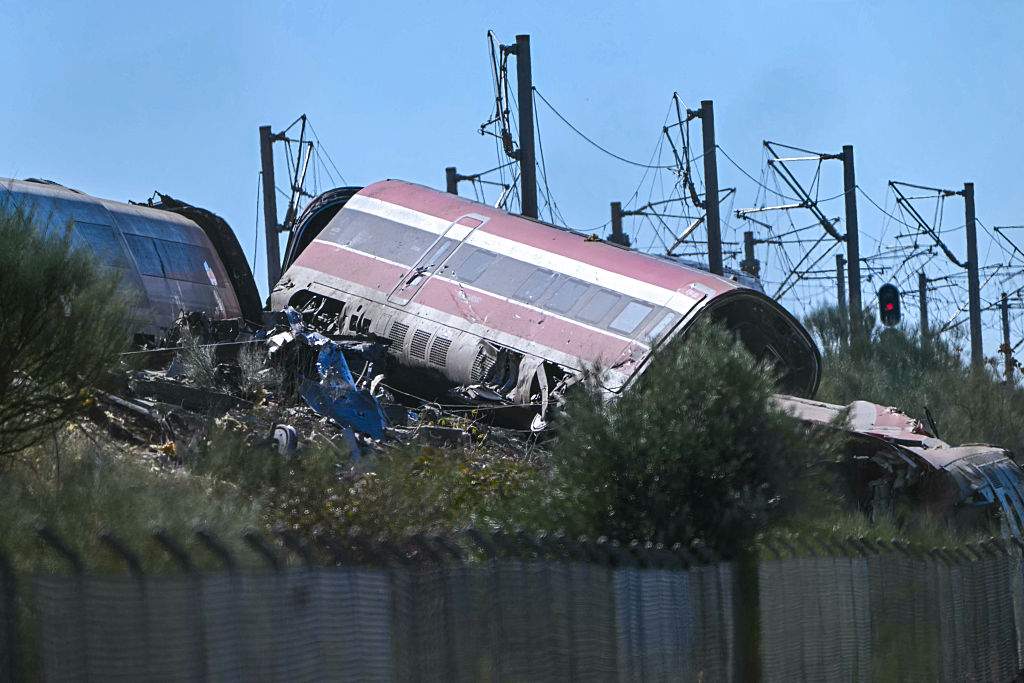
The physical scars on the landscape in Toledo are severe, with entire passenger cars shredded into twisted metal along the gravel embankments. The psychological scars for a country reliant on daily rail commutes will take much longer to heal. Modern technology can lay down thousands of miles of high-speed track, but it cannot outrun basic operational discipline.