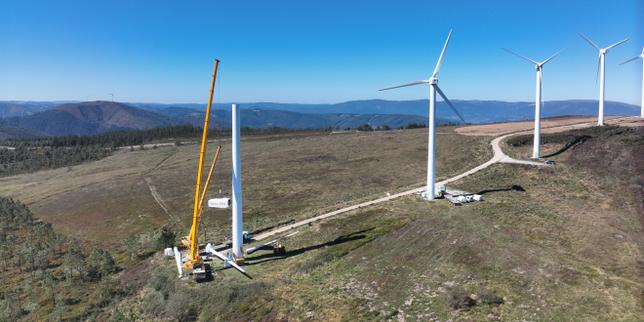
You drive through the hills of Galicia, expecting to see endless forests of spinning blades dominating every ridge. Instead, you notice something changing on the horizon. Near La Coruña, energy operator Endesa is quietly pulling down forty aging wind turbines that have stood on the landscape for three decades. They aren't replacing them with more of the same. They are putting up just four modern giants.
It sounds counterintuitive. How can four massive structures possibly match the energy output of forty older ones? The secret lies in a massive industrial shift sweeping across the Iberian Peninsula. It's called repowering, and it's completely rewriting how European countries handle renewable infrastructure without cluttering up natural horizons. You might also find this similar story interesting: Why Microsoft Cutting A Quarter Of Its Workforce Changes Everything.
The Problem With First-Generation Wind Farms
Wind energy didn't appear overnight. Spain jumped into renewables early, installing thousands of sleek, white towers across windy ridges back in the late 1990s and early 2000s. Back then, technology was modest. Turbines were small, mechanically limited, and remarkably inefficient by modern standards.
To hit meaningful energy quotas, developers had to pepper entire mountain ranges with dozens of small units. Over time, those aging machines started showing their age. Maintenance costs skyrocketed, downtime increased, and local communities grew frustrated with the sheer density of metal cluttering their natural vistas. As extensively documented in latest reports by Bloomberg, the results are worth noting.
Leaving these old sites to rust wasn't an option. Tearing them down completely would mean losing precious grid connection points, which are notoriously difficult to secure in modern energy markets. That's where industrial repowering entered the conversation.
How Repowering Changes the Math
Instead of expanding into untouched natural zones, operators are returning to existing sites to upgrade the hardware. The numbers speak for themselves. In the Galician project run by Endesa, dismantling forty obsolete thirty-year-old turbines opens up space while scaling up production. The four replacement giants don't just equal the old output—they nearly double the amount of electricity generated.
Engineering has evolved drastically. Modern blades sweep much larger surface areas, catch wind at higher altitudes where currents are stronger and more stable, and rely on advanced generator tech that converts mechanical rotation into power with minimal loss.
Fewer towers mean fewer service roads cutting through fragile ecosystems, less noise pollution for nearby wildlife, and a dramatically cleaner horizon. Local residents who spent decades looking at picket fences of spinning blades suddenly find open space returning to their view.
European Subsidies and Bureaucratic Hurdles
This isn't just an isolated corporate experiment. The European Union is actively subsidizing these upgrades as part of its broader push to modernize energy infrastructure without triggering fierce local opposition. When citizens fight new wind farms, projects stall for years in courtrooms and municipal councils. Upgrading existing footprints bypasses much of that friction.
Yet, the transition isn't entirely frictionless. Securing permits to swap old infrastructure for new hardware still requires navigating complex administrative mazes. Environmental reviews must confirm that larger foundations and heavier transport vehicles won't disrupt local habitats during construction. Even so, the economic logic is undeniable. Maintaining ancient turbines is a financial drain, whereas modern machines pay for themselves through sheer efficiency and lower operational overhead.
What This Means for the Future of Renewable Energy
Spain's strategy offers a clear blueprint for other nations grappling with aging green infrastructure. You don't always need to conquer new territory to grow your clean energy capacity. Often, the smartest move is going back to where you started and doing more with less.
As thousands of wind farms across Europe approach the end of their operational lifespans over the next decade, repowering will shift from a clever alternative to an absolute necessity. The days of cluttering every hill with minor turbines are ending. The future belongs to fewer, taller, and vastly more powerful machines that respect both the grid's hunger for power and the human need for an open sky.