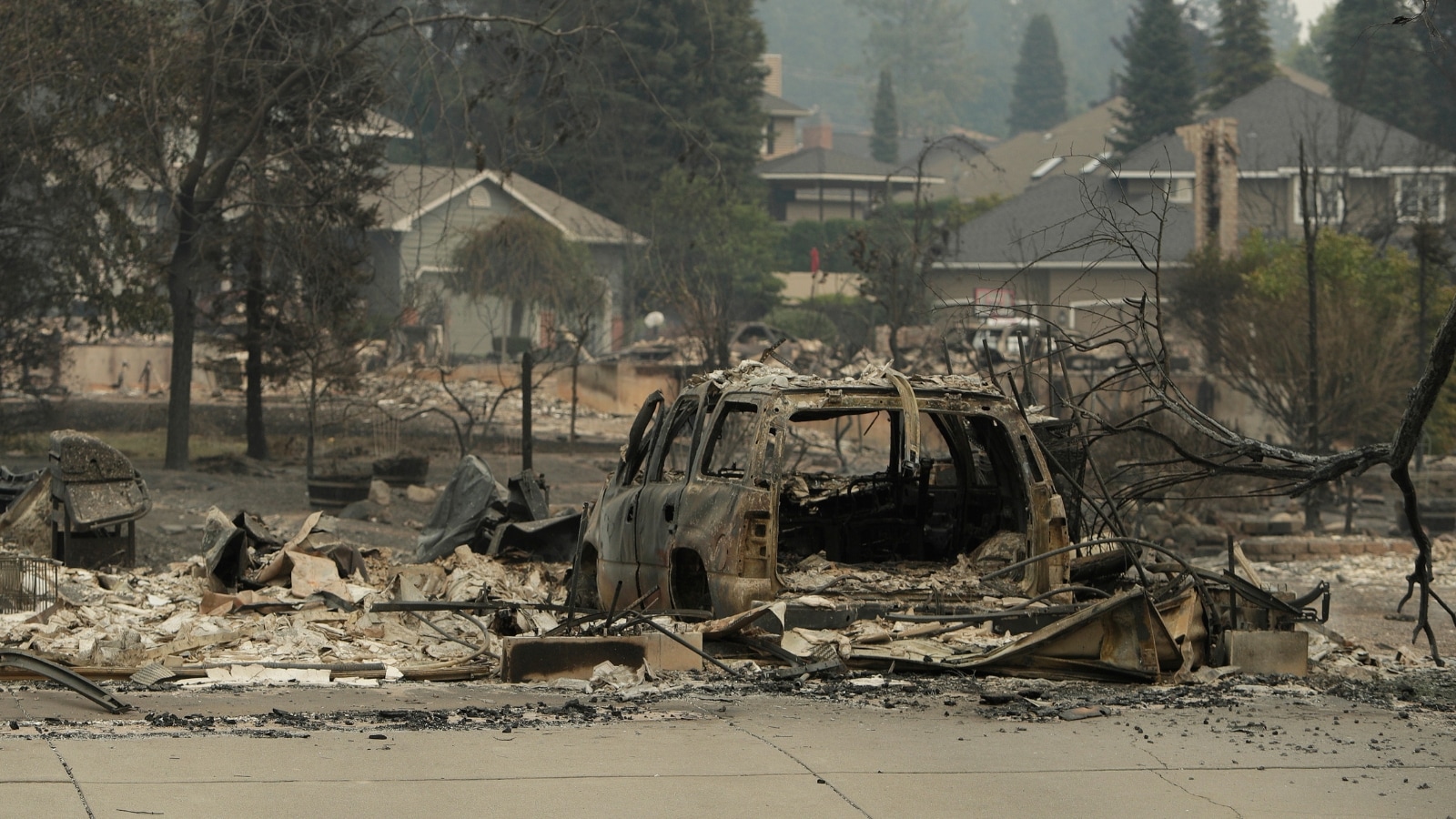
A cigarette, a rubber band, a strip of notebook paper, and a box of matches. That is all it took to trigger a catastrophe that reduced hundreds of buildings to ash and forced tens of thousands of residents to flee for their lives.
When 37-year-old Aaron Farinacci sat down with police investigators, he didn't just confess to starting the devastating Old Trails Fire in Spokane, Washington. He mapped out a chillingly calculated blueprint of premeditation. He didn't act on a sudden impulse or a moment of blind rage. Instead, court documents reveal that Farinacci spent weeks studying weather patterns, analyzing the tactics of a well-known serial arsonist, and waiting for a catastrophic weather window.
If you live in a wildfire-prone region, this case should make your blood run cold. It highlights an uncomfortable reality about modern disaster vulnerability: human malice can easily weaponize climate conditions that are already primed to burn.
The Anatomy of a Calculated Disaster
Farinacci didn't pick just any day to set the woods ablaze. He tracked meteorological data until he found a forecast featuring high heat, low humidity, and dangerous winds. He targeted Saturday, August 1, knowing full well that regional winds would roar up to 50 miles per hour.
He knew it was going to get bad. In fact, police state that he admitted as much, though he claimed he never meant for the flames to spiral quite this far out of control.
To pull it off without drawing immediate suspicion, Farinacci allegedly manufactured a rudimentary time-delay device. By bundling matches, a cigarette, paper, and a rubber band, he gave himself enough time to walk away before the first spark caught. He even carried smoking supplies simply to ensure he always had a plausible excuse for possessing lighters or matches in wooded areas.
The destruction left in the wake of this planning is staggering. The Old Trails Fire stands as just one of three major blazes in the local area that collectively obliterated over 850 structures. Whole neighborhoods vanished. Families lost everything.
The Watchful Eye That Cracked the Case
Arson is notoriously difficult to prosecute because fire tends to destroy its own forensic evidence. Investigators often rely on luck, specialized canine units, or sharp-eyed citizens. In this instance, human intuition broke the case wide open.
Sixty-four-year-old Paul Child was driving alongside railway tracks with his grandson when something felt wrong. He spotted a man standing rigidly near the tree line, staring into the brush. Ten minutes later, on their return trip, the man was still there, hunched over and acting nervous.
Child told authorities that he instinctively felt the stranger was up to no good. Just ten minutes after Child arrived home, his daughter burst into the room to announce a nearby smoke sighting. Child immediately pointed the finger at the individual he had spotted by the tracks.
That single observation provided the critical lead law enforcement needed. Without Child's vigilance, an already complex investigation might have stalled indefinitely.
A Troubling Pattern of Escalation
As investigators dug deeper, the scope of the criminal charges expanded rapidly. Farinacci now faces multiple first-degree arson counts connected not only to the recent catastrophe but also to a string of smaller fires ignited during the summers of 2025 and 2026. Police tied him to roughly 25 smaller fires near the Spokane River and Centennial Trail, revealing a dangerous escalation in scale and intent.
Court records also outline a troubling history. Farinacci previously served roughly a decade behind bars following a 2010 manslaughter and aggravated assault conviction in Arizona. During legal proceedings for the current wildfire charges, his defense counsel requested a competency evaluation, prompting Spokane Superior Court Judge Jeremy Schmidt to order a $2 million bond due to extreme community risk.
When questioned by Detective Michael Drapeau, Farinacci offered a chilling philosophical justification for his actions, stating that "fire is powerful, beautiful, and that things that go through fire experience a kind of rebirth".
What This Means for Community Safety
Incidents like the Spokane disaster expose the limits of preventative infrastructure. Communities can clear brush, enforce strict burn bans, and install advanced weather-monitoring sensors, but stopping an intentional saboteur requires a different level of defense.
Public awareness remains our strongest line of protection. If you see someone lingering suspiciously in dry brush during high-risk weather alerts, trust your instincts. Report it immediately. Arson thrives on isolation and indifference, and as this case proves, a few minutes of civilian alertness can save thousands of lives from going up in smoke.