Imagine flying home after a routine academic trip, your bags packed, your lectures delivered, and your mind already on your return to Boston. You arrive at the airport, step toward customs, and suddenly find yourself surrounded by state security agents. You are stripped of your phone, cut off from your family, and locked in a room.
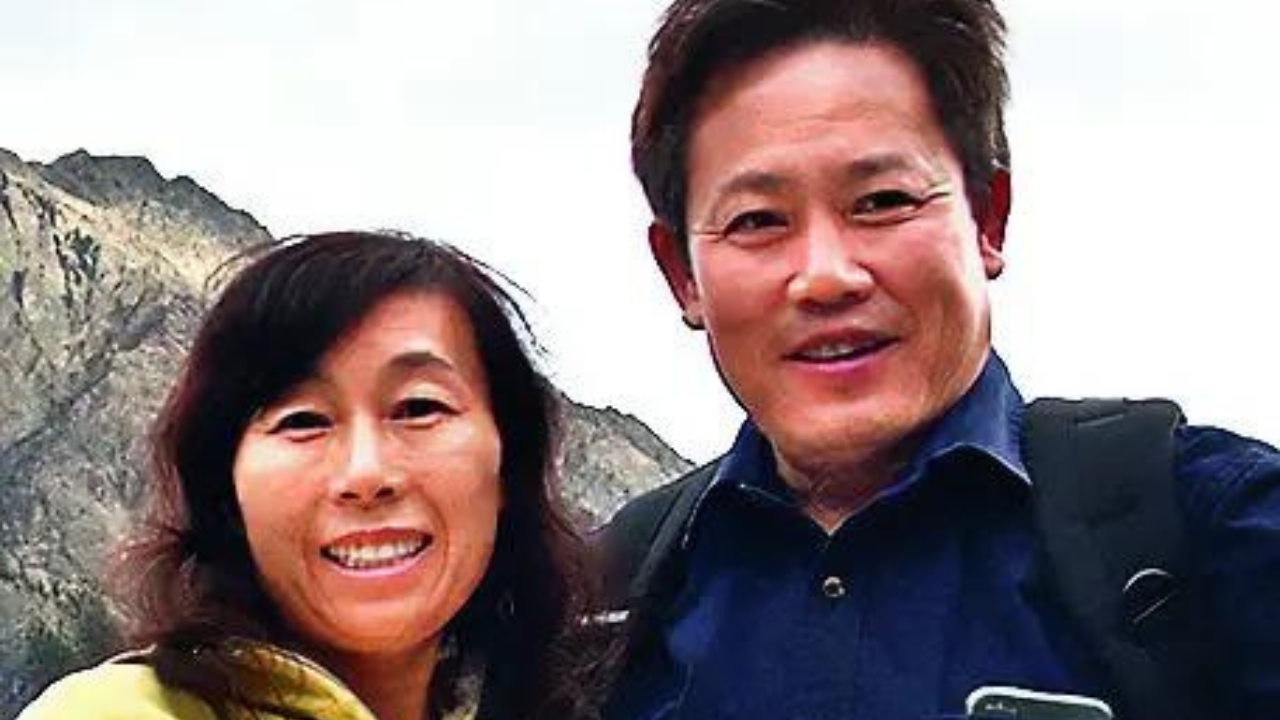
This is exactly what happened to Dr. Youlin Chen on November 5, 2024.
Chen is a Chinese-born American seismologist who has spent his career studying how to detect underground nuclear explosions. For nearly two years, he has been held in a Chinese detention facility without a trial. His family, desperate and exhausted by backchannel diplomacy, has finally broken their silence.
His case is not just a tragic personal story. It is a loud, clear warning to every researcher, academic, and dual-national doing business or science in China. The ground has shifted, and the rules of engagement have changed.
A simple trip home turned into a nightmare
For Youlin Chen, a 54-year-old U.S. citizen living in Massachusetts, the journey to China in late 2024 was meant to combine family and work. He went to visit his elderly parents in Beijing and delivered academic lectures at two Chinese universities. His research was not secret. It was funded by the U.S. State Department and the Air Force Research Laboratory, built entirely on public data, and co-authored with Chinese academics.
Yet, as he prepared to board his flight back to Boston, Chinese state security agents arrested him.
Months of agonizing silence followed. In May 2025, Chinese authorities formally charged him with espionage. In March 2026, U.S. Secretary of State Marco Rubio officially designated Chen as "wrongfully detained," which formally elevated his release to a top diplomatic priority.
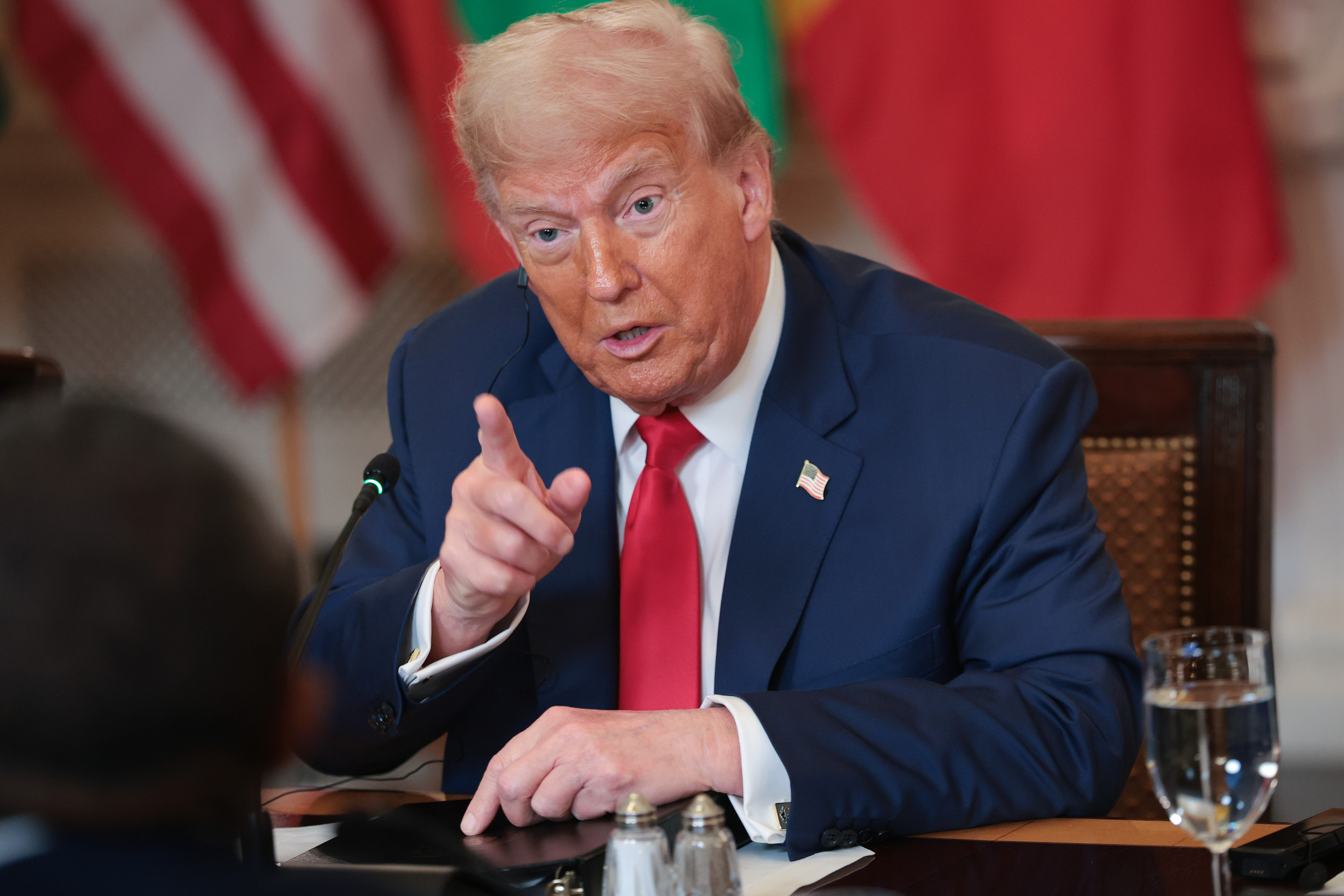
The Trump administration initially kept the designation quiet to allow room for high-level negotiations. During a state visit to Beijing in May 2026, President Trump raised Chen's case directly with Chinese leader Xi Jinping, who reportedly promised to look into the matter.
Nothing happened.
With Xi expected to visit Washington in September 2026, Chen's family decided they could no longer wait in the shadows. They went public, revealing the brutal conditions Chen has endured.
Who is Youlin Chen and why does his work matter
Chen is a highly respected geoscientist. He became a naturalized U.S. citizen in 2011 and has built a quiet, productive life in Boston. He does not have a U.S. security clearance. He has never worked on classified intelligence programs.
His focus is pure science. He analyzes seismic waves to differentiate between natural earthquakes and man-made underground nuclear blasts, specifically focusing on North Korea’s weapons testing.
To understand why this makes him a target, you have to understand the geopolitics of nuclear detection. When a country tests a nuclear weapon underground, it sends shockwaves through the earth, much like a small earthquake. Seismologists use complex algorithms to analyze these waves, pinpointing exactly where the blast occurred and how powerful it was.
Chen’s research was highly collaborative. He used publicly available data sets—often provided by Chinese academic networks—and published his findings openly on the internet. In any normal era, this is called international scientific cooperation. Today, Beijing calls it spying.
The science of detecting explosions and why Beijing cares
Why would China lock up a civilian scientist over public earthquake data?
National security experts believe the answer lies in a concept known as decoupling.
Decoupling is a technique where a nuclear test is conducted inside a massive, hollowed-out underground cavity. The air cushion inside the cavity absorbs a massive portion of the explosion's energy, dampening the seismic waves that travel through the earth. This makes the test appear much smaller than it actually is, or can even hide it from international monitors entirely.
Detecting a decoupled nuclear test is incredibly difficult. It requires highly sophisticated, precise seismic modeling.
Eric Lebson, a former U.S. national security official advising Chen's family, pointed out that Chinese interrogators have questioned Chen more than 100 times. Their focus? The specific scientific techniques used by the U.S. to identify these hidden, low-yield nuclear tests.
This is not a standard criminal investigation. It is an intellectual extraction.
China, which has signed but not ratified the Comprehensive Nuclear-Test-Ban Treaty, has a vested interest in understanding exactly how sensitive U.S. detection systems are. By detaining Chen, they get access to a brilliant mind who understands the exact mathematical models the West uses to monitor underground tests.
Retroactive secrets and the trap of Chinese law
Chen's arrest highlights a terrifying trend in China's legal system: the weaponization of national security laws.
Under China's broadly written espionage and state-secret laws, the government can retroactively decide that previously public, unclassified scientific data is now a state secret.
If you are an academic, this should make your blood run cold.
- You collaborate with a Chinese colleague on a joint paper.
- You use public geological or meteorological data provided by a Chinese university.
- You publish the paper in an international journal.
- Years later, Beijing decides that the specific geographical region you studied is now a sensitive security zone.
Suddenly, your academic paper is treated as a compiled intelligence report, and you are branded a spy.
There is no due process here. In China, the criminal conviction rate is over 99%. When cases involve state security, trials are held in secret, behind closed doors, without public oversight or independent media. Chen’s wife, Dr. Yufang Rong, who is also a seismologist, understands this grim reality. She expects a closed-door trial and a guaranteed conviction, regardless of what the evidence shows.
The harsh reality of wrongful detention
Hostage diplomacy is a brutal business, and the human cost is paid in physical and mental deterioration.
At the start of his detention, Chen was subjected to sleep deprivation and physical torment. According to his wife, he was forced to sit upright on a hard stool all day, forbidden from standing, reading, exercising, or receiving proper medical care.
Chen suffers from diabetes and other chronic health issues. Denied his regular medications and fed a nutrient-poor diet lacking protein, fresh fruits, or vegetables, his health has plummeted. He has lost between 30 and 40 pounds.
Dr. Youlin Chen's Detention Timeline:
- Nov 5, 2024: Arrested at Beijing International Airport.
- May 1, 2025: Formally charged with espionage.
- Dec 2025: U.S. Senators urge state department action.
- Mar 19, 2026: Designated as "Wrongfully Detained" by Secretary Marco Rubio.
- May 2026: President Trump raises the case directly with Xi Jinping.
- Jul 2026: Family goes public with details of detention and health decline.
Even consular access is a carefully managed theater. U.S. embassy officials have been allowed to visit Chen occasionally, but Chinese state security agents remain in the room. He cannot speak freely. He cannot tell them the details of his interrogation or describe his physical pain without immediate consequence.
It took more than 13 months before Chen was even allowed to see a Chinese defense lawyer.
What researchers and travelers must do next
If you are an academic, researcher, or business professional—especially of Chinese descent—the case of Youlin Chen should force you to re-evaluate your travel plans. The era of open scientific collaboration between the U.S. and China is effectively on life support.
If you must travel to China, or if you coordinate international research, you need to take active, non-negotiable steps to protect yourself.
Audit your research and publications
Before booking a flight, review every paper, lecture, and data set you have ever worked on that involves China. If you have co-authored papers with Chinese nationals using Chinese geographical, geological, atmospheric, or industrial data, you must assume that data could be retroactively classified.
Implement a clean device policy
Never travel to China with your primary phone, laptop, or tablet. State security can and will copy the contents of your hard drive at the border. Use temporary burner devices with no saved passwords, no active logins to corporate or university networks, and no sensitive personal photos or messages.
Register with the State Department
If you are a U.S. citizen, register your travel through the State Department’s Smart Traveler Enrollment Program (STEP). It ensures the local embassy knows you are in the country and can establish contact if you do not check in.
Reconsider the necessity of travel
Ask yourself if your physical presence is truly required. Can the lecture be delivered via a video call? Can the family visit happen in a neutral third country like Japan, Singapore, or Thailand? If the answer is yes, do not risk crossing the Chinese border. The legal protections you take for granted at home do not exist once you step off that plane.