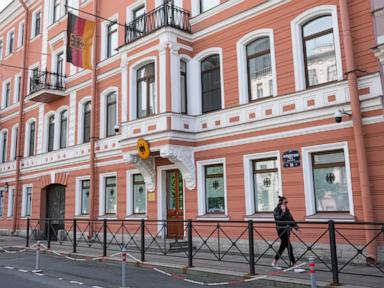
Diplomatic relations between Moscow and Berlin just hit a new low. Russia's Foreign Ministry recently ordered the closure of the German Consulate General in St. Petersburg, forcing its staff to pack up and leave. This retaliation follows Berlin's decision to shut down the Russian consulate in Bonn and the Russian House cultural center in Berlin.
Tit-for-tat expulsions used to be rare, calculated moves. Now, they're happening almost instantly. If you're wondering how fast European security is deteriorating, look right here.
The Leipzig Airport Drone Incident That Triggered Everything
The core of this explosive fallout traces back to August 4, 2026. Security personnel at Leipzig/Halle Airport found an explosives-laden drone parked suspiciously close to a Ukrainian transport aircraft. The airport serves as a critical logistics hub for international freight supporting Ukraine's military defense.
The device was safely defused before it could detonate. But the political fallout immediately caught fire.
German interior officials didn't hesitate to point fingers. By early September, the German government officially blamed Moscow, classifying the failed strike as an act of state-sponsored sabotage. Chancellor Friedrich Merz and other officials made it clear that hybrid attacks on German soil would trigger immediate countermeasures.
Berlin acted swiftly on September 3, ordering the closure of the Russian consulate in Bonn and the prominent Russian House in Berlin. Moscow didn't wait long to return fire.
Moscow Strikes Back with Expulsions and Closures
Russia's response followed a predictable script, but with accelerated speed. The Russian Foreign Ministry branded Berlin's actions as an unfriendly escalation. Alongside shuttering the German consulate in St. Petersburg—with a strict deadline of September 18 for workers to clear out—Moscow reaffirmed orders to close German Goethe-Institut cultural centers in both Moscow and St. Petersburg.
Moscow denies any involvement in the Leipzig airport incident, dismissing the accusations as a provocation manufactured by Western states.
Security experts across Europe aren't buying the denial. Intelligence agencies in several European nations argue that Russian state structures have ramped up covert operations, sabotage campaigns, and electronic disruption across the continent. The goal? Undermine public and political support for Ukraine and fracture European unity.
What This Means for Everyday Diplomacy
When consulates close, real people pay the price. Visa processing stops. Emergency travel documents become nearly impossible to secure for citizens stranded or traveling abroad. Cultural exchange programs vanish overnight.
We are watching the total dismantling of institutional bridges that took decades to build. Consulates and cultural centers are usually the last remaining safety valves when high-level political talks break down. Shutting them down means neither side is interested in keeping communication lines open.
If you're planning travel or business involving Russia and Germany, expect endless bureaucratic gridlock. The era of open diplomatic channels is effectively over. Expect more retaliatory measures as security paranoia deepens across Europe. Keep a close eye on borders, airspace restrictions, and further diplomatic expulsions in the coming weeks.