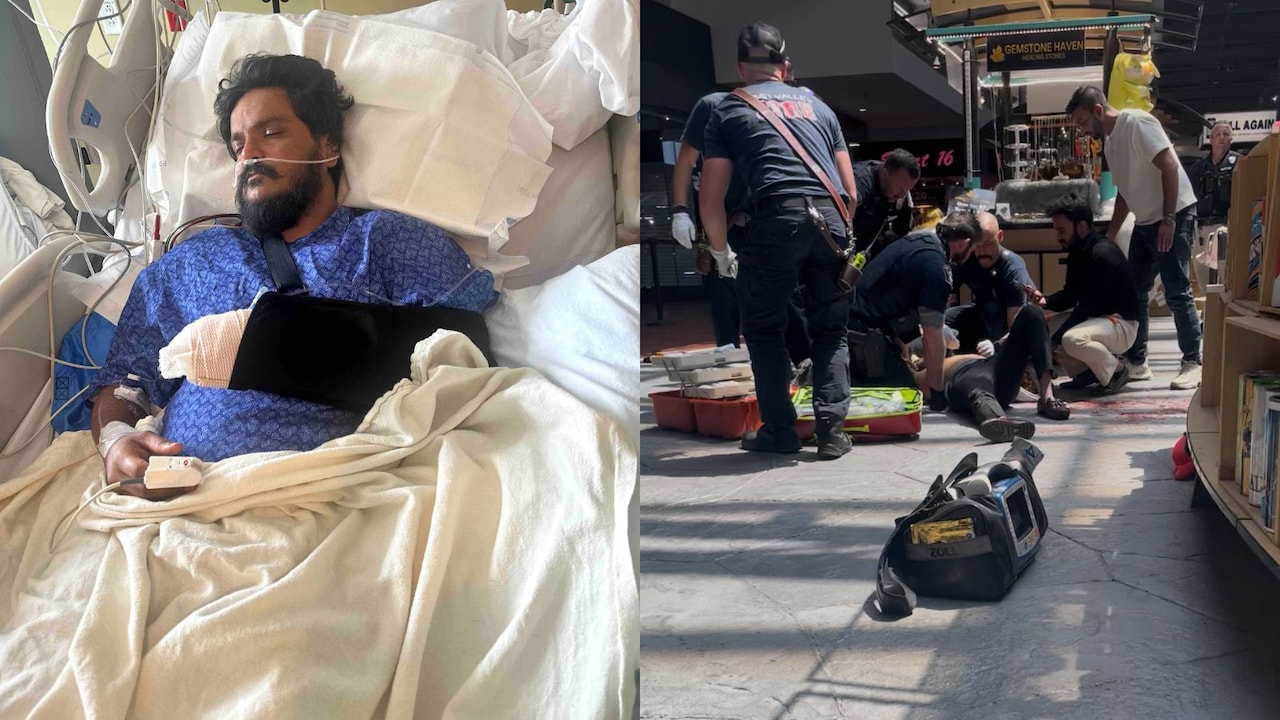
On Monday afternoon, July 13, 2026, what should have been a routine workday at a shopping mall in West Valley City, Utah, turned into a scene of absolute horror. Syed Sohail Uddin, a dedicated kiosk worker originally from Hyderabad, India, was targeted, interrogated, and stabbed at least 15 times. The attacker did not want his money. He did not know him. He simply hated his faith.
This was not a random act of violence. It was a cold, calculated attempt at an assassination.
The horror of the stabbing of a Hyderabad man for his religion in Utah has sent shockwaves far beyond Salt Lake County, reaching all the way to his home country of India. While local communities in Utah grapple with the reality of this hate-fueled violence in their backyard, the incident raises systemic questions about parole decisions, rising Islamophobia, and what it actually takes to protect vulnerable diaspora communities.
The Cold Execution of a Hate Crime
The details of the attack on Syed Sohail Uddin at the Valley Fair Mall are chillingly straightforward. According to court documents and witness statements, the suspect, 48-year-old Peter Michael Larsen, approached Uddin's kiosk. He did not start a fight. Instead, he asked Uddin his name, where he was from, and directly questioned if he was a Muslim.
Uddin answered honestly. Larsen then asked for a bottle of water. As soon as Uddin turned his back to get it, Larsen pulled out a knife and began plunging it into his body.
He did not stop stabbing until bystanders literally jumped on top of him.
"He believes he is a catalyst and he intends to kill Muslims."
That is what Larsen openly told police officers during his interrogation, according to the arresting officer's affidavit. There is no ambiguity here. This was not a dispute over a retail transaction. This was an extremist trying to spark a religious war, targeting a defenseless father of two.
How Bystanders Prevented a Massacre
If we are looking for a glimmer of hope in this dark story, it lies in the immediate, heroic reaction of everyday people at the mall.
When the attack began, coworkers and shoppers did not just run away. Several bystanders rushed toward the knife-wielding attacker. They punched Larsen, tackled him to the concrete, and physically wrestled the knife out of his hands. One bystander punched him hard enough in the head that the suspect had to be hospitalized for his own injuries before being booked into jail.
Without those split-second interventions, Uddin would not be alive. He survived 15 stab wounds to his heart, lungs, and hands, but he remains in critical condition after multiple major surgeries. His boss and close family friend, Adnan Mohammed, called his survival a "miracle," but the mental and physical scars will linger forever.
The Outrage from India and the Consular Action
As news of the attack traveled back to India, anger and anxiety spiked. The Indian diaspora is massive, and Hyderabad has sent thousands of students and professionals to the United States. To see one of their own hunted down in a suburban American mall simply for existing is a terrifying wake-up call.
The Consulate General of India in San Francisco responded quickly to the tragedy, issuing a statement on X:
"The Consulate General of India in San Francisco is deeply saddened by the tragic stabbing incident involving an Indian national in Utah. The Consulate is in close contact with the friends and family and stands ready to provide all possible consular assistance. We remain engaged with local authorities and will continue to monitor the matter closely."
While diplomatic support is necessary, many in the community feel it does not go far enough. Indian families back home are increasingly asking if their relatives are truly safe working and living in the United States, especially in areas where they might represent a visible minority.
The System Failure That Put a Killer on the Streets
Perhaps the most frustrating part of this entire tragedy is that it was entirely preventable. Peter Michael Larsen was not a new threat. He was a violent felon out on parole.
Larsen's criminal history is long and disturbing. He had been granted parole more than once by Utah's Board of Pardons and Parole despite a track record of violence and unstable behavior. This raises massive red flags about how the state assesses the danger that violent individuals pose to the public.
When the justice system repeatedly releases someone with violent tendencies who openly harbors dangerous, radicalized views, the community pays the price. Larsen should have been behind bars. Instead, he was allowed to walk into a public mall with a prohibited weapon and nearly take a young father's life.
Anti-Muslim Rhetoric Has Real Consequences
This stabbing is not an isolated incident, though it is the most violent attack Utah's Muslim community has experienced in its history, according to Imam Shuaib Din of the Utah Islamic Center.
Over the last few years, hate incidents targeting religious minorities in the region have been climbing. Just look at the timeline of the surrounding area:
- July 2025: A local Hindu temple was vandalized three separate times.
- Recent Years: A man was charged with a hate crime for assaulting a woman in a hijab in South Salt Lake.
- Threats: Another individual was arrested for making anti-semitic threats and building pipe bombs.
These are not coincidences. When hate speech, xenophobia, and anti-Muslim rhetoric are normalized online and in political spaces, they eventually find a home in the minds of unstable individuals who decide to act. They become self-proclaimed "catalysts" for violence.
The local Muslim community in Utah makes up less than 1% of the state's population. Being such a small minority makes them highly visible and incredibly vulnerable when public rhetoric sours.
Actionable Next Steps for Diaspora Safety
If you are a member of the immigrant or minority community living in the US, or if you have family members working abroad, you cannot rely solely on the promise of public safety. Here are practical steps to take right now:
- Build Local Security Networks: Connect with local community organizations, such as the Utah Muslim Civic League or CAIR (Council on American-Islamic Relations). These groups track local threats, offer self-defense training, and coordinate directly with law enforcement.
- Report Harassment Immediately: Do not brush off minor incidents of verbal harassment or threatening behavior. Establish a paper trail with local police and community watch groups.
- Support the Victim's Family: Syed Sohail Uddin faces a mountain of medical bills, surgeries, and a long road to rehabilitation. His friends have set up a verified GoFundMe campaign to help support his wife and two young children. Contributing or sharing the campaign is a direct way to fight back against the financial ruin this hate crime intended to cause.
- Demand Parole Reform: If you live in Utah, contact your local representatives to demand accountability regarding the state's Board of Pardons and Parole. Ask why violent felons with known extremist views are repeatedly let back into our shared public spaces.
This tragedy shows that the dangers of extremist violence are real, immediate, and incredibly close to home. We have to protect each other, hold the justice system accountable for who it lets walk free, and call out the rhetoric that fuels these attacks before another family is torn apart.
To understand more about how the state's justice system failed to keep this violent offender off the streets, watch this detailed report on Peter Larsen's parole history which outlines the prior warnings the state ignored before the tragic stabbing.