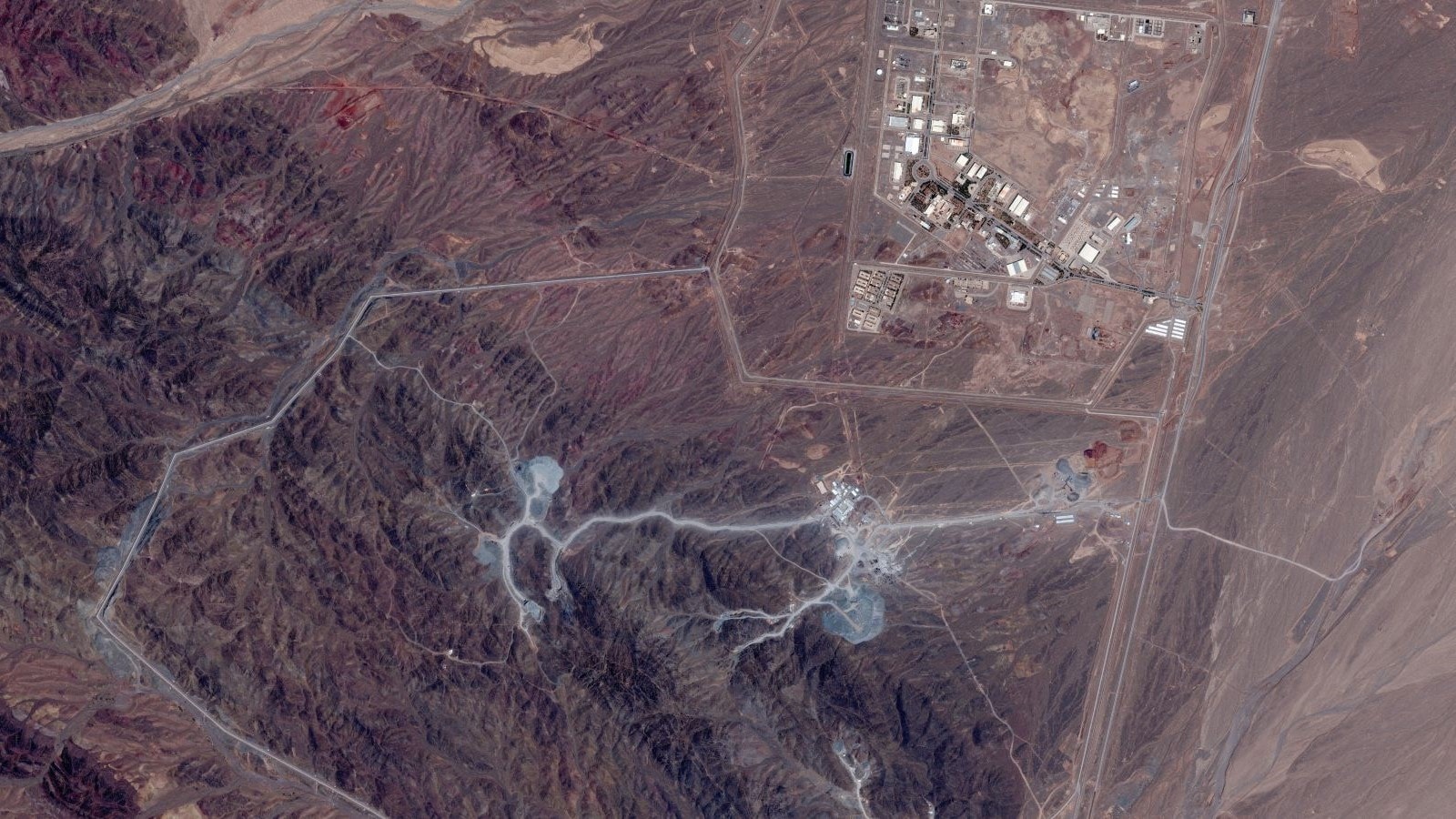
Donald Trump wants to shoot a missile down the front door of a mountain.
During a radio interview with Hugh Hewitt, the American president targeted a specific site known as Pickaxe Mountain. He called it a perfect spot for a big fat shot right in the entrance. This happened right after the fragile July 8 ceasefire fell apart, pushing the Middle East back into open conflict. Everyone is panicked about a new nuclear crisis. They shouldn't be surprised.
The real story here isn't the rhetoric. It is the physics.
When you look past the political theater, you find a massive engineering puzzle that conventional weapons simply cannot solve. Here is exactly what is happening under the rock in central Iran, why previous airstrikes missed it, and what a strike on the front door would actually accomplish. Hint: It is a lot less than advertised.
The Illusion of Total Obliteration
Last year, the White House claimed it completely destroyed Iran's nuclear program during Operation Midnight Hammer. B-2 stealth bombers dropped heavy ordnance on Fordow and Natanz. Satellites showed smashed buildings and cratered concrete. Trump called it total obliteration.
He was wrong.
While surface buildings crumbled, the core of Iran's newest nuclear ambition sat completely untouched nearby. That site is Pickaxe Mountain, known locally as Kuh-e Kolang Gaz La. It survived because the Iranian military learned from decades of Israeli and American threats. They stopped building factories on top of the desert. They started hollowed-out mountain projects instead.
Intelligence reports suggest that days before the 2025 strikes, Iran quietly moved significant amounts of its enriched uranium stockpile away from exposed facilities. Where did it go? Experts point directly to the deep tunnels of the Isfahan province. You can blow up the labs on the surface all day long. The real value is buried deep inside the stone.
Inside the Tunnels of Kuh-e Kolang
Pickaxe Mountain sits just two kilometers south of the old, heavily damaged Natanz uranium enrichment plant. Iran began digging here in late 2020. They needed a replacement after an above-ground centrifuge assembly facility mysteriously blew up in an act of sabotage.
The scale of the excavation is staggering. Satellites have spent years tracking massive piles of excavated rock debris clearing out from the mountain base. The facility features two main tunnel entrances flanked by heavy security walls and reinforced concrete barriers.
Iran tells the International Atomic Energy Agency that the site is merely a civilian factory for advanced centrifuges. Western intelligence agencies believe something entirely different. The size of the underground halls suggests a hidden uranium enrichment facility or a heavily fortified command bunker meant to withstand a nuclear war.
Because UN inspectors have never been allowed inside, we are left tracking earth-moving equipment from space. The activity has not stopped. Even after the heavy bombardments across Iran earlier this year, construction crews kept digging.
The Unforgiving Physics of Granite and Bunker Busters
Can the United States actually destroy Pickaxe Mountain?
The short answer is no. Not with conventional bombs.
The Pentagon's most powerful conventional weapon is the GBU-57 Massive Ordnance Penetrator. It is a monster of a bomb, weighing 30,000 pounds. When dropped from a B-2 bomber, it can punch through roughly 200 feet of earth or 20 feet of reinforced concrete before exploding. That sounds terrifying. Against Pickaxe Mountain, it is a firecracker.
Independent geological assessments show that the underground chambers of this facility sit under solid granite rock. The depth ranges from 100 meters to an astonishing 600 meters below the peak.
Let's look at the math.
Maximum US Bomb Penetration: 60 meters (200 feet)
Pickaxe Mountain Depth:      100 to 600 meters
The math does not work for the Pentagon. Even the shallowest rooms of the complex are deeper than the maximum penetration capability of America's best bunker buster. The deepest sections are entirely out of reach.
This explains Trump's shift in language. He is no longer talking about blowing up the mountain from above. He is talking about firing a weapon directly through the entrance tunnel.
A direct strike on the front door would create a massive blast wave. It would collapse the immediate entryways, seal the tunnels with tons of jagged rock, and destroy any external utilities like power lines or water pipes. It would temporarily pause operations. But it would leave the hidden centrifuges and nuclear material completely intact deep inside the mountain core. Iran would just clear the rubble or dig a new exit path. They have done it before.
The Inspection Dilemma
Trump insists that any future diplomatic deal requires UN inspectors to go down into that deep tunnel to verify what is there. It is a logical demand, but a diplomatic dead end.
Tehran views Pickaxe Mountain as its ultimate insurance policy. If they open the doors to inspectors, they give away the exact layout of their final fortress. If they refuse, the American blockade continues, and the threat of regional war grows.
Military analysts worry that a failed strike on the mountain could trigger the exact outcome the West wants to avoid. If Iran feels its deeply buried stockpiles are unsafe, it might decide to rapidly refine its remaining 60 percent enriched uranium to 90 percent weapons-grade material before the doors get sealed for good.
How to Track This Conflict Moving Forward
Don't get distracted by the daily political soundbites. If you want to know what is actually happening with Iran's nuclear capability, watch these specific indicators.
First, monitor the commercial satellite imagery of the Isfahan province. Look for changes in the concrete batching plants outside the Pickaxe Mountain tunnels. If the concrete trucks stop, construction is finished, and the site is likely operational.
Second, track the movement of heavy transport vehicles between Isfahan and the older Natanz facilities. Frequent transit suggests Iran is actively shifting materials to maximize their protection underground.
Third, watch the diplomatic statements from the IAEA leadership in Vienna. If the agency officially declares the site a total blind spot, the risk of a miscalculated pre-emptive military strike goes through the roof.
The mountain isn't going anywhere. No matter how big the bomb is, the rock always wins.


