Middle Eastern waters are once again turning into a high-stakes chessboard. When a commercial oil tanker catches fire just off the coast of Oman, nobody should be acting surprised. Yet, global markets panic every single time an explosion echoes through the Strait of Hormuz.
Let's look at what's actually happening on the ground and why standard news coverage keeps missing the real economic threat. Expanding on this topic, you can also read: What Zelenksy Moving Toward Trilateral Peace Talks Actually Means.
What Triggered the Latest Oman Tanker Incident
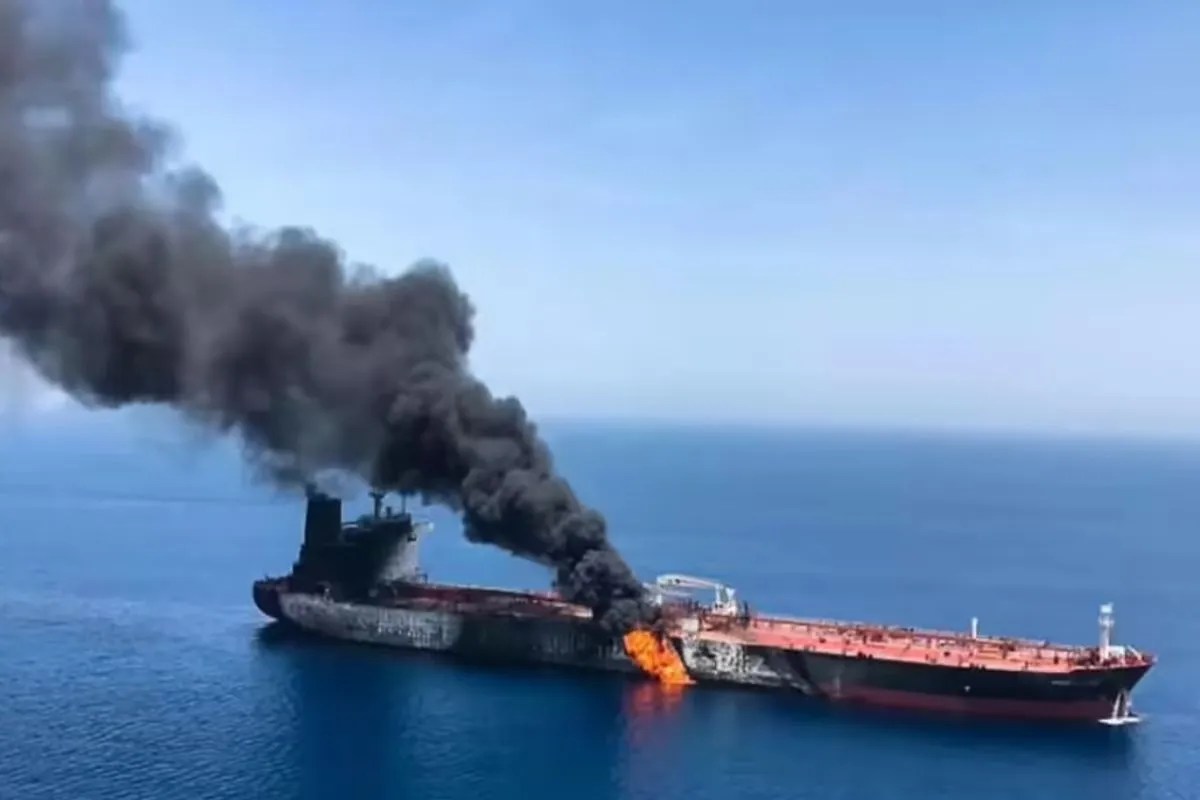
Recent reports from the United Kingdom Maritime Trade Operations (UKMTO) confirmed that a commercial vessel took an unexpected hit roughly eleven nautical miles west of Musandam's Bukha region in Oman. An unidentified projectile sparked an onboard fire, triggering immediate emergency protocols. While the crew managed to contain the flames and avoid a catastrophic spill, the vessel remains dead in the water.
This isn't an isolated accident. It's part of an escalating pattern of maritime friction in one of the world's most critical energy chokepoints. Experts at The New York Times have also weighed in on this trend.
Meanwhile, contrasting narratives are dominating diplomatic channels. The Islamic Revolutionary Guard Corps (IRGC) has stepped forward with dramatic claims regarding multiple vessels striking naval mines within a tight twenty-four-hour window. Iran's military leadership has labeled these commercial shipping lanes increasingly hazardous, pointing fingers at unflagged vessels navigating American air protection umbrellas without active transponders.
Washington has largely kept quiet on these specific mine claims, and international monitoring bodies haven't fully verified the IRGC's timeline. But the psychological impact on commercial shipping companies is already locked in.
The Reality of Global Oil Flows Through Hormuz
Panic headlines love to predict an immediate total shutdown of global energy supplies. They talk about empty fuel pumps and skyrocketing crude prices overnight. Reality is far more stubborn.
According to tracking data from analytics firm Kpler, daily oil flow through the Strait of Hormuz has hovered around fourteen million barrels per day. That figure represents roughly eighty-two percent of pre-conflict baseline volumes. When you factor in active overland export bypass pipelines operated by Saudi Arabia and the United Arab Emirates, total Gulf crude exports actually sit above pre-crisis levels.
Here's the takeaway most analysts miss. Energy logistics don't stop just because a tanker takes a hit. Insurance premiums spike, shipping lanes shift slightly, and transit times stretch out by a few days. Shippers absorb the added cost, and consumers eventually pay a few cents more at the pump. The system adapts because it has to. The global economy cannot survive a true, sustained total blockade of the Gulf, which is precisely why major state actors maintain a fragile, armed equilibrium beneath all the posturing.
Why Maritime Security Is Entering a Dangerous New Phase
We are moving away from traditional naval deterrence. When asymmetric actors use floating mines, unidentified projectiles, and electronic warfare tactics, multi-billion-dollar aircraft carriers become less effective at stopping localized sabotage.
Insurance underwriters are rewriting their risk models in real time. Crews working the Persian Gulf and the Gulf of Oman now operate under constant threat levels that didn't exist a decade ago. Every transit requires precise coordination, electronic countermeasures, and tense communication with regional naval patrols.
Look past the political posturing and you see a permanent structural shift. Energy security is no longer just about drilling enough oil out of the ground. It's about whether that oil can physically move through narrow straits without getting caught in the crossfire of geopolitical brinkmanship.
Expect higher volatility in crude pricing for the foreseeable future. Every sudden flare-up near Oman or the Persian Gulf will trigger knee-jerk market reactions, even if actual physical supply volumes remain steady. Stop expecting a clean resolution to these maritime flashpoints. This is the new baseline for global energy trade.