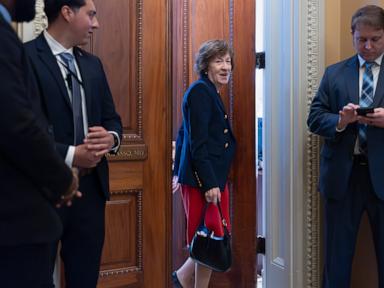
National political pundits keep waiting for Susan Collins to fall. They look at her moderate voting track record, her occasional high-profile rebukes of Donald Trump, and the deep blue leanings of Maine in presidential cycles. They assume she's a goner. But those outsiders don't get Maine, and they don't understand the strange math of surviving as a New England Republican.
The primary results are officially locked in. Collins easily secured her spot on the ballot for a sixth term. Facing her in November is Democrat Graham Platner, a combat veteran and oyster farmer who just won a messy, bruising primary after Governor Janet Mills abruptly dropped out of the running. Platner brings plenty of anti-establishment energy, but he enters the general election saddled with intense personal baggage. There are controversial online posts, rocky past relationships, and a problematic old tattoo that has already alienated moderate voters.
This isn't Collins’s first rodeo. In 2020, national Democrats poured over $100 million into the state to back Sara Gideon. Polling showed Collins down for months. On election day, she won by nine points while Joe Biden took the state. She wins because she knows exactly how to walk a tightrope that would snap under anyone else.
The Art of the New England Tightrope
Most Republicans who break ranks with the White House find themselves targeted, primaryed, and driven out of the party. Look at what happened in Texas, where the administration backed Ken Paxton to successfully tank longtime senators' allies. In contrast, Trump's inner circle explicitly avoids attacking Collins.
They know the map. The road to keeping the Senate requires holding Maine. If Trump launches a scorched-earth campaign against her, he hands the seat to a Democrat.
Collins plays a highly calculated game. Last week, she voted with Democrats to block a $1.8 billion fund pushed by the White House to aid allies who claim they were targeted by federal law enforcement. Back in January, she voted for a Venezuela war powers resolution that earned her a screaming, profanity-laced phone call from the president, who labeled her a disaster.
Yet, weeks later, she was sitting in the Oval Office holding a red hat while Trump told the cameras, "You're doing good." Trump himself admitted it to the New York Post last week, noting that she's always down in the polls but always survives.
Fire Trucks Matter More Than Trump
National Democrats want to turn this race into a referendum on the administration. Platner’s victory speech hammered Collins as spineless and corrupt, pointing directly to her 2018 vote confirming Supreme Court Justice Brett Kavanaugh. For progressives, that vote remains an unforgivable sin that led to the end of Roe v. Wade.
But local politics operates on a completely different wavelength than cable news. Collins is the chair of the incredibly powerful Senate Appropriations Committee. She has spent nearly thirty years funnelling federal cash back to local towns.
If you live in a rural Maine town with 1,500 people and Collins just secured the funding for your town’s brand-new fire truck, or fixed the collapsed shipping pier down the road in Eastport, you don't care about her latest statement on war powers. You care about your community.
Her campaign strategy relies heavily on this old-school retail politics. Her first general election ad didn't mention her opponent, national polarization, or party ideology. It focused entirely on local infrastructure.
The Flawed Challenger Problem
Democrats had a golden opportunity this cycle with Governor Janet Mills, a popular figure who could have pushed Collins to her absolute limit. Instead, Mills's campaign fell apart, leaving national Democrats stuck with Platner.
While Platner’s outsider, top-shelf media campaign looks great on paper, his vulnerabilities are massive liabilities in a state that rewards steady, predictable leadership. Collins’s team is already preparing to flood the airwaves with opposition research detailing Platner's personal scandals and erratic history.
Even JD Vance showed up in Bangor recently to acknowledge the dynamic. He openly admitted that if Collins were as strictly partisan as national Republicans sometimes wish she was, she wouldn't fit the state.
What to Watch Next
The general election is officially underway, and the spending will be astronomical. To understand where this race is heading, skip the national poll numbers and track these specific indicators instead.
- Watch the ad buy focus: Track whether Collins keeps her advertising strictly local or if she gets dragged into national culture war debates. If she stays focused on Maine infrastructure, she wins.
- Monitor ticket-splitting data: Keep an eye on internal polling regarding independent voters in Maine's Second Congressional District. Collins needs these rural split-ticket voters to outrun the top of the Republican ticket.
- Look at the attack timing: Watch how early the Republican apparatus begins running negative ads highlighting Platner's personal scandals. If they drop the hammer early, they can suppress moderate Democratic turnout before the fall.


