Political prognosticators spent months writing the same script. They told us that populist movements across Europe were an unstoppable force, that conservative coalitions would inevitably swallow up hard-right factions, and that Sweden was about to cross a historic Rubicon by letting the Sweden Democrats into the cabinet.
They were wrong.
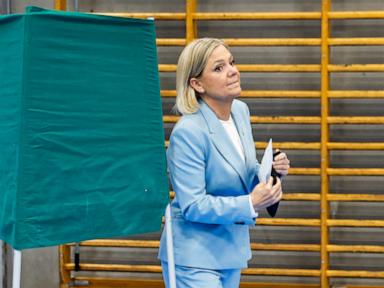
When more than 8 million eligible voters across this Nordic nation headed to the polls, the outcome turned into an absolute nail-biter that shattered conventional wisdom. Instead of an easy win for the incumbent conservative government or a coronation for the nationalist right, the election delivered a razor-thin margin. After a grueling count involving hundreds of thousands of advance and overseas ballots, the centre-left bloc engineered a dramatic turnaround. Prime Minister Ulf Kristersson's right-wing coalition lost its narrow edge, paving the way for former Prime Minister Magdalena Andersson and her Social Democrats to build a path back to power.
If you want to understand modern European politics, stop looking at national averages and start looking at how voters react when the fringe tries to step into the mainstream.
The Myth of Inevitable Populist Growth
For the past four years, Sweden operated under a unique political experiment known as the Tidö Agreement. Kristersson led a three-party center-right government that relied on outside parliamentary support from the Sweden Democrats—a party with roots in 1980s nationalist and neo-Nazi movements. That arrangement gave the hard right massive leverage over policy, steering the country toward severe crackdowns on gang crime and some of the strictest migration controls in the European Union.
Conventional political science suggests that once a populist party gets a taste of power and policy influence, its voter base only expands. But reality proved far messier.
When the final tallies solidified, the Sweden Democrats actually saw their support slip from 20.5 percent down to roughly 17.5 percent, dropping them from the second-largest party in the Riksdag to third place. Political scientist Ann-Cathrine Jungar notes that when radical right parties prop up governments without taking full cabinet responsibility, their voters often experience fatigue or frustration when every campaign promise isn't magically enacted overnight.
Voters basically realized that hitching a traditional conservative platform to radical nationalist baggage comes with a cost. The electorate pushed back just enough to deny Jimmie Åkesson and his party those coveted ministerial seats.
What the Mainstream Media Missed
Coverage of the election heavily fixated on whether the hard right would secure cabinet posts for the first time in Swedish history. While that drama dominated headlines, everyday citizens cared about entirely different metrics.
Inflation has cooled down, and high-profile gang violence has dropped from its historic peak. Yet, instead of feeling secure, voters worried intensely about the integrity of their welfare state, crumbling healthcare systems, and the skyrocketing cost of living. Andersson's Social Democrats leaned hard into those concerns, rallying younger voters and working-class citizens who felt the current government spent too much time debating culture-war issues rather than fixing local schools and hospitals.
Furthermore, the structural fragmentation of Sweden's parliament makes forming a stable government an extreme sport. Individual parties need to clear a strict four percent threshold to enter the 349-seat Riksdag, creating complex blocs that hate compromising with one another. Center parties refuse to sit with the left's more radical factions, while conservatives found themselves handcuffed to anti-immigration hardliners.
The Hard Lesson for Coalition Builders
Sweden's political gridlock offers a clear lesson for any democracy flirting with right-wing populist partnerships.
First, normalization doesn't equal permanent dominance. Parties that try to sanitize their extremist origins can easily plateau once voters scrutinize their actual governance records. Second, running a country requires more than soundbites about borders and crime; the moment voters feel their hospitals and grocery bills are being ignored, the backlash is swift.
Kristersson admitted defeat and resigned after the narrow centre-left victory became clear, leaving Stockholm facing weeks of complicated coalition wrangling. Andersson now has the mandate to piece together an administration, but she inherits a nation fundamentally altered by years of sharp rightward shifts on crime and immigration.
The political pendulum doesn't just swing in one direction. Pay attention to how ordinary voters punish politicians who take their support for granted.
What to know as Sweden, NATO's newest member, votes in a national election
This video provides essential context on how the political contenders positioned themselves and why the question of government formation dominated the campaign.
http://googleusercontent.com/youtube_content/1