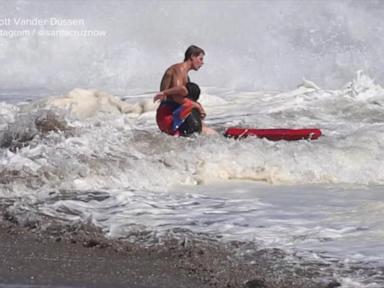
An ankle-deep splash turns into a battle against violent coastal surf in seconds. Most people freeze when panic sets in. Sixteen-year-old lifeguard Ryder Williams didn't.
If you've spent any time tracking viral news stories lately, you've likely seen the heart-stopping footage from Seabright State Beach in Santa Cruz, California. A young boy loses his footing near the shoreline, and a teenage guard plunges headfirst into heavy surf to drag him back. The clip spreads everywhere online. Commentators call it a miracle. But look past the dramatic clicks, and you'll find a raw lesson in split-second accountability, intensive youth training, and what it actually takes to stare down an ocean rip current.
Inside the Santa Cruz Beach Rescue That Stunned the Internet
The incident happened on a busy afternoon when the water looked deceptively calm until it wasn't. Ten-year-old Nathaniel Rice lost his footing in shallow water, and heavy sets immediately dragged him outward. Ryder Williams, stationed at Seabright State Beach, spotted the shift instantly.
He didn't wait for permission. He radioed his base, kicked off his sandals, and sprinted into the impact zone.
The raw video captures nearly two full minutes of brutal struggle. White-water waves crash directly over both of them, dragging the teen and the limp child beneath the surface repeatedly. Bystanders rushed toward the water line, but Williams yelled at them to stay back, knowing untrained rescuers would only multiply the casualties. Working alongside fellow lifeguard Aaron Bonan, Williams refused to let go until they cleared the surf zone.
What Most People Get Wrong About Beach Safety
Too many beachgoers treat the ocean like a backyard swimming pool. They assume ankle-deep water equals safety. That misconception almost cost a young boy his life.
Ocean dynamics change instantly. A sudden drop-off combined with a heavy shorebreak creates an invisible undertow that can knock down an adult, let alone a child. Williams understood the physics of the shoreline. His split-second decision to sprint rather than hesitate saved a life.
When reporters later interviewed the boy's father, Sumi Rice, the shock was palpable. Realizing the hero who pulled his son from the jaws of the ocean was only 16 years old—just six years older than Nathaniel himself—highlights a maturity level we rarely attribute to teenagers today.
The Reality of Junior Lifeguard Programs
People love to label heroic teens as anomalies. They aren't. They are products of rigorous, old-school physical training.
Coastal communities invest heavily in junior guard and rookie training programs for a reason. Long before Williams sat in that California tower, he spent grueling hours mastering open-water swimming, board rescues, spinal injury management, and radio communication protocols.
When adrenaline floods your system, complex thought shuts down. You fall back on your lowest level of training. Williams didn't panic because his muscle memory had already been forged through months of repetitive, exhausting drills.
Moving Past the Viral Hype
Accolades pour in from everywhere now, including national media spotlights and an invite to the White House. Yet Williams remains remarkably unimpressed by his own internet fame. His response to reporters stays grounded: "This is my job and I love what I do".
If you are planning a trip to the coast anytime soon, take a cue from the Santa Cruz safety patrols. Swim strictly within sight of active towers. Respect the power of the water. And remember that behind every calm lifeguard station sits a professional ready to risk everything when the ocean turns hostile.
California teen lifeguard speaks out about viral rescue
This video features the firsthand account of the 16-year-old lifeguard discussing the dramatic rescue off the Santa Cruz coast.
http://googleusercontent.com/youtube_content/1