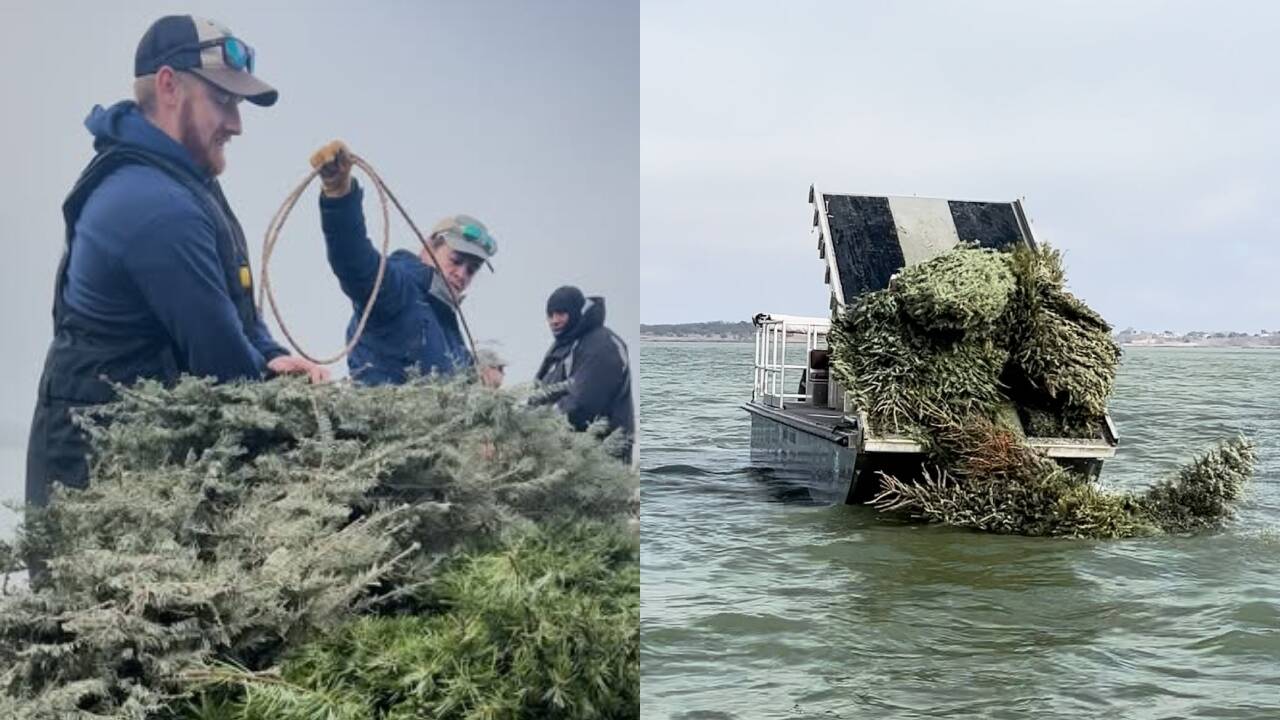
Every January, millions of pine and fir trees meet the same fate. They get stripped of their ornaments, dragged out to the curb, and tossed into woodchippers. But in Texas, a quiet ecosystem shift happens instead. Fisheries biologists and conservationists collect hundreds of discarded evergreens and sink them straight into reservoirs.
It sounds counterintuitive. Why dump a living room decoration into a thriving lake? The answer boils down to basic fish biology, aging reservoirs, and a clever shortcut for building an underwater sanctuary. For an alternative perspective, check out: this related article.
Why Aging Lakes Lose Their Fish
If you fish regularly, you know that catching a trophy largemouth bass or crappie requires finding the right structure. Fish don't just swim out in the open water randomly. They need cover from predators, shady spots to ambush prey, and safe zones to spawn.
Natural lakes and newly formed reservoirs have plenty of this. Trees, brush piles, and fallen timber line the banks, creating complex underwater mazes. Related analysis regarding this has been provided by Refinery29.
Reservoirs age poorly over time. Submerged timber rots away. Waves crash against shorelines, silt fills in the shallows, and lakes turn into underwater deserts. Without cover, small baitfish have nowhere to hide, and when the bait disappears, the sport fish follow suit.
Texas reservoirs like Granger Lake face this exact problem. While Granger is famous for crappie, its natural habitat is scarce.
The Fifteen Minute Transformation
When conservation teams hauled more than 160 donated Christmas trees from an Austin collection point straight to Granger Lake, they weren't just getting rid of trash. They were building a massive brush reef.
Partnering with agencies like the U.S. Army Corps of Engineers and commercial partners such as Yeti, the Texas Parks and Wildlife Department (TPWD) manages dozens of these habitat projects every year.
Drop a dried pine tree into deep water, and something remarkable happens. Within fifteen minutes, small aquatic insects, microscopic organisms, and tiny baitfish begin swarming the branches. The dense network of needles and tight limbs offers instant protection from larger predators.
Largemouth bass, sunfish, and crappie quickly figure out the pattern. Where the minnows go, the hunters follow. Anglers quickly learn these spots too, turning these artificial brush piles into reliable locations for a successful weekend catch.
Why Real Evergreens Beat Plastic Structures
You can buy artificial plastic fish attractors at any outdoor store. They last forever, won't rot, and require zero maintenance. So why haul heavy, sap-dripping trees out onto a boat?
Biology demands organic materials. As a submerged Christmas tree sits on the lakebed, it doesn't just provide physical cover. It actively participates in the aquatic food web.
Over a span of one to two years, the needles and smaller twigs slowly decompose. This breakdown feeds periphyton and freshwater invertebrates, creating a biological buffet for small fish. The tree basically feeds the creatures that feed the fish you want to catch.
Furthermore, pine and fir needles soften up underwater, creating a complex micro-habitat that plastic plants simply can't replicate. By the time the tree fully disintegrates, the local fish population has benefited for multiple breeding seasons.
How to Help Your Local Waters
You don't need a state-level biology degree or a fleet of government boats to help improve local fisheries. Many municipal parks and state departments run community tree-recycling programs every winter.
Before you drag your old holiday pine to the curb this winter, check with your local wildlife agency or conservation district. Many community lakes and reservoirs accept clean, undecorated trees to sink into designated public fishing zones.
Make sure you follow local regulations. Tossing unauthorized debris into public water bodies is illegal and can disrupt municipal water supplies or boating safety. Work through official state programs or organized community drop sites.
Turn your holiday cleanup into a boost for local wildlife, and give that old evergreen a second life beneath the surface.