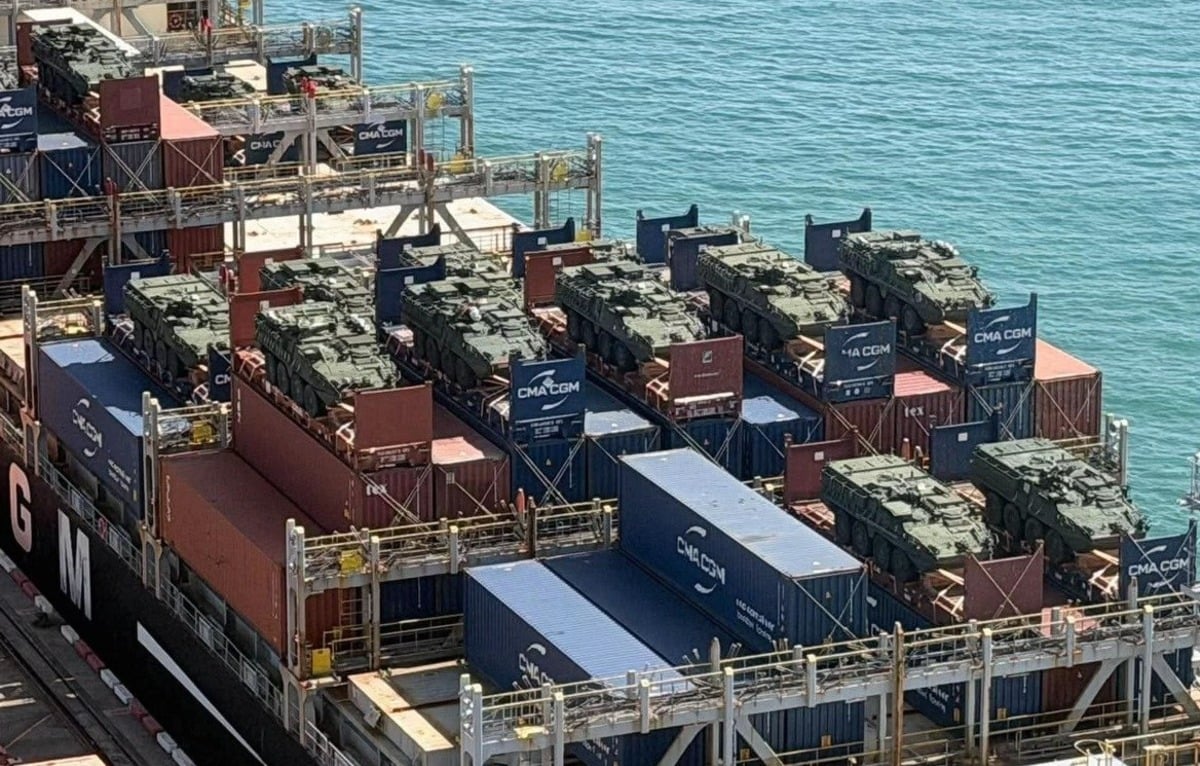
Another shipment of U.S. Stryker armored vehicles rolled off the docks at Laem Chabang port, heading straight for Royal Thai Army installations. Defense observers love posting vessel manifests and transport photos. They talk about gross unit counts like they're tracking sports trading cards.
That misses the point.
The arrival of 17 additional 8x8 Stryker Infantry Carrier Vehicles (ICVs) transferred through the U.S. Excess Defense Articles program isn't just routine military logistics. It marks a deliberate, calculated shift in how Thailand plans to move troops, defend its borders, and balance power between Washington and Beijing.
If you want to understand what's really happening in Southeast Asian military modernization, you have to look beyond the armor plate. You need to see how a decades-old alliance is adapting to modern battlefields.
The Tactical Reality Behind the Latest Stryker Delivery
Let's clear up the baseline facts. This recent transfer isn't a brand-new Foreign Military Sales purchase. It operates through the U.S. Excess Defense Articles program, which moves refurbished, well-maintained U.S. Army equipment directly into the hands of key allies.
These 17 new vehicles build on the initial orders Thailand placed back in 2019, when Bangkok became the very first foreign nation to adopt the Stryker platform.
The Royal Thai Army isn't getting stripped-down shells. Each vehicle arrives equipped for real combat environments:
- Firepower: Heavy M2 Flex .50 caliber machine guns mounted on remote weapon systems.
- Night Vision: AN/VAS-5 driver vision enhancement systems for low-light maneuvering.
- Communications: AN/VIC-3 digital intercom systems designed to keep crews talking over intense cabin noise.
- Protection: Integrated M6 smoke grenade launchers along with hydropneumatic suspensions built to handle rough terrain.
These vehicles aren't scattered across random units. They directly feed into Thailand's 111th Infantry Regiment, based in Chachoengsao province. The unit serves as the template for Thailand's modernized mechanized infantry units.
Why Ditching Tracked M113s for 8x8 Wheels Fits Thai Geography
For over fifty years, the backbone of Thailand's mechanized forces was the M113 tracked armored personnel carrier. The M113 was cheap, lightweight, and simple. It also tracked through muddy rice paddies back in the 1970s.
It's horribly outdated today.
Tracks carry massive maintenance burdens. Rubber pads wear out. Torsion bars snap. Transmissions overheat during long highway road marches. Moving a full battalion of tracked M113s across Thailand requires heavy equipment transporters, train flatcars, and endless fuel trucks.
Wheeled 8x8 platforms change that equation completely.
The Stryker can cruise on paved highways at speeds over 60 miles per hour under its own power. In a regional emergency—whether responding to sudden border tensions or rapid disaster relief—a Stryker unit can self-deploy across hundreds of miles of highway networks without destroying the road surface or frying its own drivetrain.
I've watched military logistics planners struggle with tracked vehicle maintenance in humid, tropical environments. Humidity eats away at sealings, while road vibration destroys sensitive internal electronics on older tracked armor. The hydropneumatic suspension on an 8x8 Stryker cushions internal electronics while providing ground clearance over washouts and rural terrain.
Wheels beat tracks when speed and road mobility matter most. Thailand recognized this shift earlier than many of its regional neighbors.
How Thailand Balances Washington and Beijing Without Getting Burned
Western analysts often make the mistake of looking at Southeast Asian defense acquisitions through a strict zero-sum lens. They assume buying American armaments means picking a side.
Thailand doesn't work that way.
Bangkok practices a long-standing foreign policy often called "wind-bending diplomacy." The goal is balance.
Look at the Royal Thai Army's inventory:
| Equipment Type | Origin / Model | Strategic Purpose |
|---|---|---|
| Armored Personnel Carriers | United States (M1126 Stryker) | Rapid troop movement and U.S. interoperability |
| Main Battle Tanks | China (VT-4) / Ukraine (Oplot-M) | Heavy armor force replacement |
| Amphibious Ships | China (Type 071E LPD) | Naval transport and regional sealift |
| Fighter Aircraft | United States (F-16) / Sweden (Gripen) | Air defense and tactical strike capabilities |
While Thailand expands its Stryker fleet with U.S. help, it continues to operate Chinese-built main battle tanks and amphibious assault ships.
Buying American Strykers gives the Thai army direct access to joint U.S. training, doctrine, and tactical networks. Annual exercises like Hanuman Guardian and Cobra Gold use these platforms to run joint live-fire drills and command exercises.
It keeps Thai forces operational with the U.S. military while maintaining political independence from both major global powers.
What Most Defense Analysts Get Wrong About Network-Centric Warfare
Defense blogs spend endless paragraphs talking about horsepower, armor thickness, and gun caliber. They rarely mention the real modern force multiplier: digital battlefield integration.
The Stryker isn't just a taxi with heavy metal plates. It's a mobile data node.
When the Royal Thai Army receives these vehicles, they aren't just getting steel. They get access to tactical communication networks, digital map overlays, and real-time unit tracking.
In a traditional infantry scenario, a squad leader steps out of an armored carrier with a paper map, a hand-held radio, and a limited view of the surrounding hills. In a modern Stryker unit, the squad commander sees active position markers on a digital display before the ramp even drops. They know where friendly forces are, where enemy fire was spotted, and where air support is holding.
That transition requires an incredible amount of training. It demands strict radio discipline, constant power management, and specialized mechanics.
The U.S. Army Pacific sends dedicated Stryker Brigade Combat Team trainers to Thailand specifically to teach maintenance and network integration. Buying the metal is easy. Building the technical muscle memory to run a digital battlefield takes years.
The Supply Chain Challenge Nobody Likes to Mention
Here is an uncomfortable truth about foreign military hardware transfers: getting the vehicles delivered is the simple part. Keeping them running five years down the line is where most militaries fail.
Surplus vehicles require steady streams of replacement parts:
- Tires and Suspensions: 8x8 wheel assemblies take heavy punishment on rough, unpaved tropical roads.
- Specialized Electronics: Thermal sight optics and driver vision systems break down in extreme heat and humidity.
- Engine Seals: Standard gaskets degrade faster under tropical conditions without custom synthetic lubricants.
The U.S. Embassy in Bangkok recently highlighted plans for dedicated local maintenance support and infrastructure projects tied to the Stryker fleet. Thailand wants to become a regional hub for vehicle maintenance rather than shipping heavy components back to American depots.
If Thailand successfully establishes local supply hubs, it turns a simple military purchase into a long-term defense industry advantage. If maintenance falls behind, those high-tech 8x8 carriers turn into expensive depot paperweights.
Actionable Steps for Defense Analysts and Industry Observers
If you're tracking military modernization in Southeast Asia, watching basic procurement headlines won't give you the full picture.
Here is how to properly evaluate future force modernization announcements in the region:
- Track the Maintenance Contracts: Don't stop reading when the delivery ceremony finishes. Look for follow-on depot-level maintenance agreements, spare parts logistics contracts, and technician training programs.
- Watch the Joint Exercises: Keep an eye on upcoming iterations of Exercise Cobra Gold and Hanuman Guardian. See if the Royal Thai Army integrates Stryker units into combined arms live-fire drills alongside American forces.
- Monitor Regional Defense Procurement: Watch how neighboring Southeast Asian nations respond to Thailand's 8x8 fleet expansion. Look for increased regional interest in wheeled infantry combat vehicles over heavy tracked platforms.
- Evaluate Interoperability: Pay attention to how Thai forces blend Western digital command systems with hardware acquired from non-NATO suppliers.
The Royal Thai Army's fleet expansion shows how modern armies balance high-speed mobility, joint training, and strategic independence. The steel hitting the docks at Laem Chabang is just the visible surface of a far larger operational transformation.