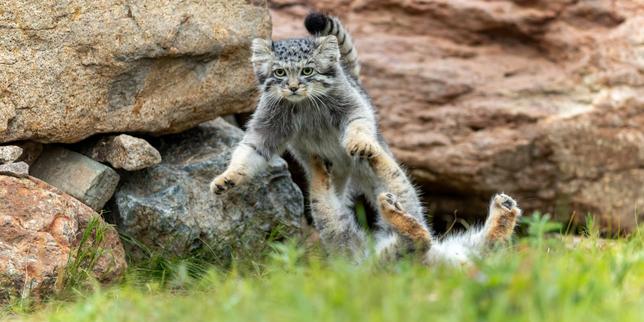
You’d think a multi-million-dollar energy project spanning the vast steppes of northwest China would roll right over any obstacle in its path. You'd be wrong. In the arid expanse near Zhangye, inside Gansu province, construction trucks grinding across the landscape recently hit an unexpected roadblock. It wasn't local protests, bureaucratic red tape, or a shifting political mandate. It was a chubby, perpetually grumpy-looking wild cat weighing barely a few kilograms.
Meet the Pallas's cat, known locally as the manul. This fierce little feline doesn't look imposing. Yet, its unexpected defense of its natural habitat has forced regional authorities to freeze part of a massive wind farm development. It's a rare friction point where China's lightning-fast green energy transition crashes headfirst into native wildlife conservation.
The Collision Between Renewable Ambition and Fragile Ecosystems
China's renewable energy push is staggering. The nation leads the planet in wind and solar installations, routinely building massive energy complexes across deserts and high-altitude steppes to power distant megacities. In 2024 alone, Chinese manufacturers captured dominant global market shares, deploying wind capacity at a scale that left Western competitors far behind.
Yet, this relentless dash toward clean energy comes with heavy ecological footprints. When planners approved a 100-megawatt wind farm near Zhangye back in 2024, the environmental impact assessment filed with local bureaus gave the project a clean bill of health. The paperwork claimed zero specially protected wildlife inhabited the target zone.
That assessment was fundamentally flawed.
The rugged steppes and rocky outcrops of Gansu province serve as prime territory for the manul. These small cats rely on undisturbed terrain, rodent burrows for shelter, and remote isolation to survive harsh winters. When heavy machinery rolled into the area in July 2026 to pour foundations for towering wind turbines, they disturbed an established population of these protected animals.
How NGOs and Local Activists Turned the Tide
Environmental watchdogs didn't let the oversight slide. Following sharp alerts and pressure from local conservation NGOs, the Gansu provincial environment department had to step in. Rather than brushing aside the complaints to keep construction on schedule, authorities took the rare step of demanding a comprehensive, renewed ecological assessment of the wind farm project.
This intervention proves that even under authoritarian governance structures where industrial mandates reign supreme, grassroots wildlife advocacy still carries weight. Protecting national first- or second-class protected species remains legally binding on paper. When concrete evidence proves that industrial development threatens rare fauna, even giant energy firms have to pause and recalculate.
What the Manul Teaches Us About Modern Conservation
The standoff near Zhangye highlights a broader global dilemma. How do we build the infrastructure required to combat climate change without destroying the fragile ecosystems we're supposedly trying to save?
Wind farms aren't invisible. They require vast access roads, heavy transport trucks, high-voltage substations, and concrete pads that fragment pristine wilderness. For species like the manul, which maintain large home ranges across desolate terrain, habitat fragmentation spells disaster.
If you're tracking how governments manage these conflicts, watch Gansu closely. The outcome of this specific dispute will set a vital precedent for future renewable projects across Central Asia and the Qinghai-Tibet Plateau. Clean energy doesn't get a free pass on biodiversity. The manul just proved that small defenders can still bite back against industrial giants.