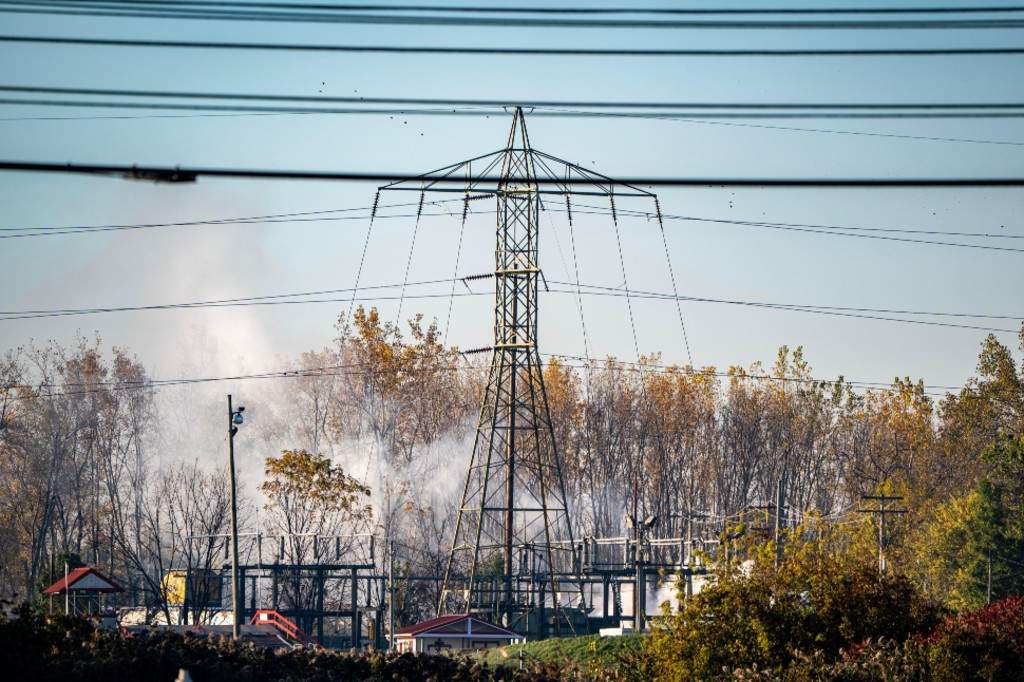
Midnight explosions change cities instantly. When a massive chemical tank blew open in north Toledo, Ohio, it sent hundreds fleeing into the dark while emergency crews locked down entire neighborhoods.
You wake up to sirens, check your phone, and realize a toxic cloud is hanging over your streets. That was the reality for residents near MC Tank Transport Inc. following an intense blast late Tuesday night. Toledo Mayor Wade Kapszukiewicz made it clear early Wednesday that the threat wasn't over. The ruptured vessel, holding thousands of gallons of volatile industrial compounds, remained volatile hours after the initial blast. For a deeper dive into this area, we suggest: this related article.
Understanding the Glycidyl Methacrylate Hazard
The tank at the center of the crisis contained glycidyl methacrylate. Companies use this reactive chemical compound to manufacture specific plastics, paints, and protective coatings.
In liquid form inside a pressurized or sealed container, it acts like many standard industrial agents. Once it escapes into the open air, however, it vaporizes into a hazardous gas. For broader details on this issue, comprehensive coverage is available at The Washington Post.
Direct contact or inhalation brings immediate discomfort. People exposed to the vapor report severe burning sensations across their eyes, nose, mouth, and skin. Long exposure or high concentrations trigger headaches, dizziness, nausea, and vomiting. Karim Baroudi, director of the Toledo-Lucas County Health Department, noted the immediate priority became measuring air toxicity levels to give precise public safety directives.
Evacuation Zones and Shelter Directives
Authorities drew sharp boundaries around the disaster zone to protect civilians from chemical exposure.
City officials ordered an immediate evacuation for anyone living within a 1.6-kilometre radius of the MC Tank Transport facility. More than nine hundred people reside inside this tight perimeter. Local authorities confirmed that emergency teams successfully cleared the immediate zone by Wednesday morning.
A wider safety buffer went into effect for neighborhoods sitting between 1.6 and 4.8 kilometres from the blast site. Officials instructed those residents to shelter in place, keep all windows tightly shut, and avoid going outside. Anyone experiencing physical irritation was told to take immediate showers and seek medical guidance.
Thick morning fog rolled across Toledo around the same time, complicating early reconnaissance efforts. Drones meant to survey the damaged tank and monitor airborne chemical plumes were grounded temporarily due to poor visibility. Officials quickly separated the weather event from the industrial accident, assuring the public that the heavy fog came from natural atmospheric conditions rather than the chemical release itself.
Why First Responders Kept Their Distance
Hazmat teams and firefighters faced a dangerous calculus during the early hours of Wednesday morning.
Emergency responders refused to approach the damaged tank directly. The structural integrity of the vessel remained compromised, and experts warned of a secondary explosion window lasting up to twelve hours. One sheriff's deputy suffered injuries responding to the initial Tuesday night blast but managed to drive himself to a hospital for treatment.
Arkansas-based MC Tank Transport released brief statements acknowledging the incident and confirming that corporate representatives were traveling to Toledo to coordinate with local fire departments and municipal leadership.
Industrial accidents of this scale expose the fragile proximity between heavy manufacturing and urban residential zones. Local emergency management infrastructure faces immense pressure when volatile chemicals transition from contained industrial uses to airborne public hazards.
Check your local emergency management channels for ongoing air quality updates if you live in the affected region. Ensure your household emergency kit includes proper seals for windows and doors, and follow all municipal shelter orders immediately when industrial alerts sound.