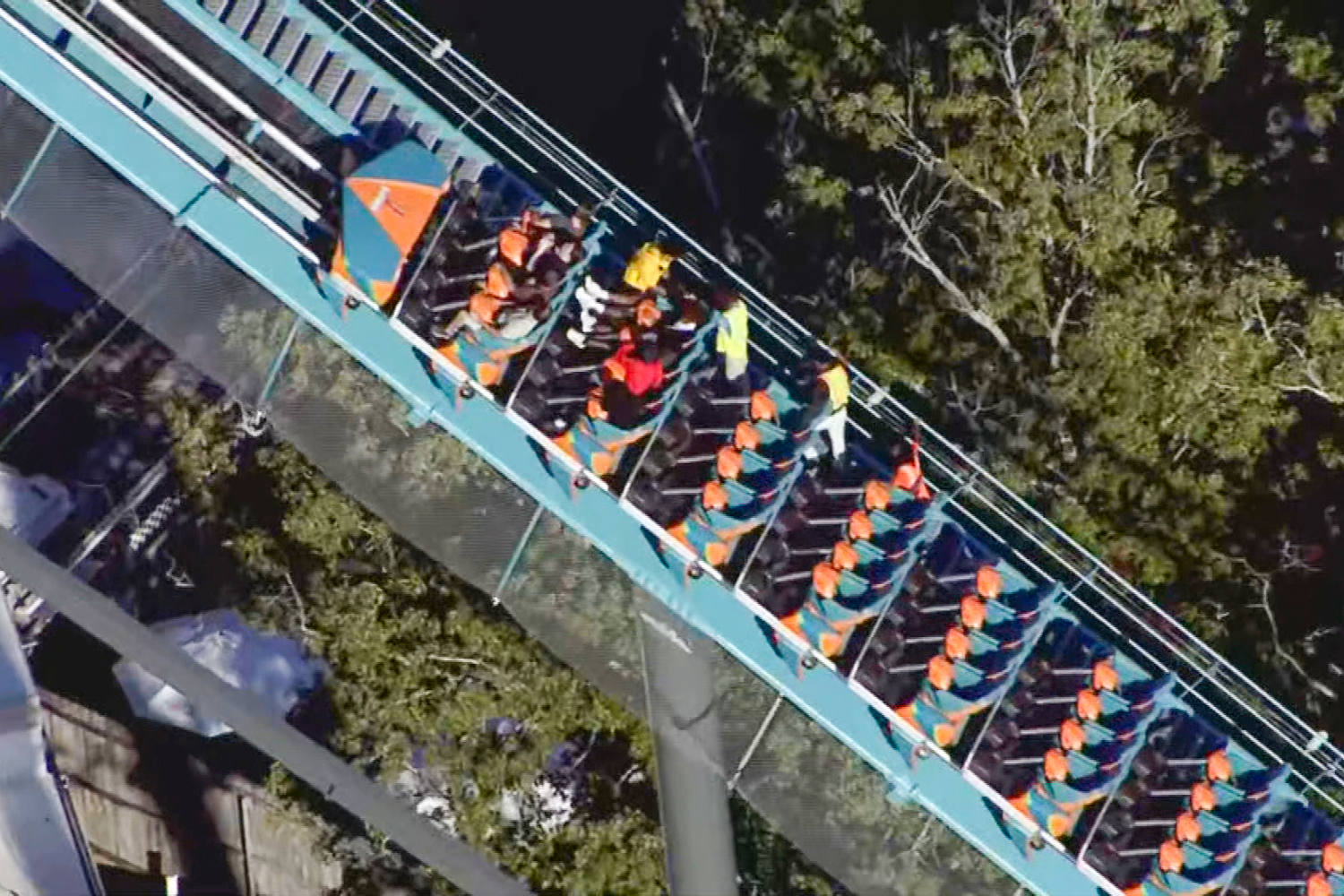
An afternoon of adrenaline turned into a horrific nightmare when a routine ride at Six Flags Over Georgia ended in tragedy. One man lost his life and several others sustained injuries after an incident on the park's iconic Goliath roller coaster. Cobb County police confirmed the fatality happened just before 4 p.m., instantly shuttering the park and throwing amusement park safety protocols back into the global spotlight.
When rides built to deliver 70 mph thrills and multi-G forces experience catastrophic failures, the shockwaves hit every major theme park on Earth. You strap in, pull down the lap bar or harness, trust the engineering, and expect to walk out the exit gate a few minutes later. But what happens when that trust is shattered?
The Reality of What Happened on Goliath
Details are still trickling out as investigators comb through the wreckage and witness statements, but the accounts are harrowing. The Goliath is a 200-foot-tall hypercoaster engineered by Bolliger & Mabillard—a firm widely regarded as an industry gold standard for safety. It features a brutal 170-foot drop, sharp turns, and intense speed profiles.
According to eyewitnesses on the ground, a man was ejected from the ride while it was in motion, striking the structure before falling. In a chilling twist of modern surveillance and park culture, several visitors reported that the tragic moment was accidentally captured in their official souvenir park photographs.
Authorities from the Cobb County Police Department immediately initiated a full-scale investigation. Meanwhile, terrified passengers stranded mid-air on the massive coaster were forced to endure long, tense waits before emergency crews could guide them down via manual evacuation stairwells.
Why People Obsess Over Theme Park Safety
Statistically, riding a roller coaster is remarkably safe. You are statistically more likely to be struck by lightning or injured in a car crash on the drive to the park than you are to suffer a fatal incident on a modern amusement ride. Yet, theme park accidents occupy a uniquely terrifying space in our collective psychology.
Why? Because you have surrendered total control.
When you get behind the wheel of a car, you feel like you are steering your destiny. When you sit in a bucket seat hurtling down a 200-foot drop with nothing but a mechanical restraint holding you back, you are entirely at the mercy of steel, hydraulic pressure, and human inspection checklists.
When something goes wrong on a ride like Goliath, it forces a hard look at the invisible variables that keep millions of thrill-seekers safe every single year.
The Inspection Process Under the Microscope
Every major theme park operates under rigorous maintenance guidelines. Rides undergo daily morning test runs, weekly mechanical teardowns, and annual state-mandated safety inspections. Engineers check restraint sensors, hydraulic lines, wheel assemblies, and track alignment meticulously.
So how does a fatal ejection happen on a hypercoaster?
Investigators will look at several critical factors:
- Mechanical restraint integrity: Did a locking mechanism fail, or was it improperly secured before dispatch?
- Ride sensor overrides: Did computer diagnostics flag an issue that was ignored or bypassed?
- Human error: Did ride operators clear a train without properly verifying restraint indicators on every single seat?
The answers won't bring back the life lost, but they will dictate whether parks nationwide have to overhaul their operational checklists overnight.
What Riders Should Keep in Mind
If you plan to visit a major amusement park anytime soon, you don't need to live in fear, but a little situational awareness never hurts. Mechanical failures are rare, but human verification errors during the loading process do happen.
Always double-check your own restraints. If a lap bar or shoulder harness doesn't feel entirely locked, or if the ride operator rushes through the check without giving you a proper pull-test, speak up immediately. Don't assume everything is fine just because the green light flashed on the control panel.
The industry will adapt, modifications will be made, and Goliath will face intense scrutiny before it ever welcomes another passenger. Until then, the tragedy serves as a grim reminder that the boundary between exhilarating fun and absolute danger is razor-thin.