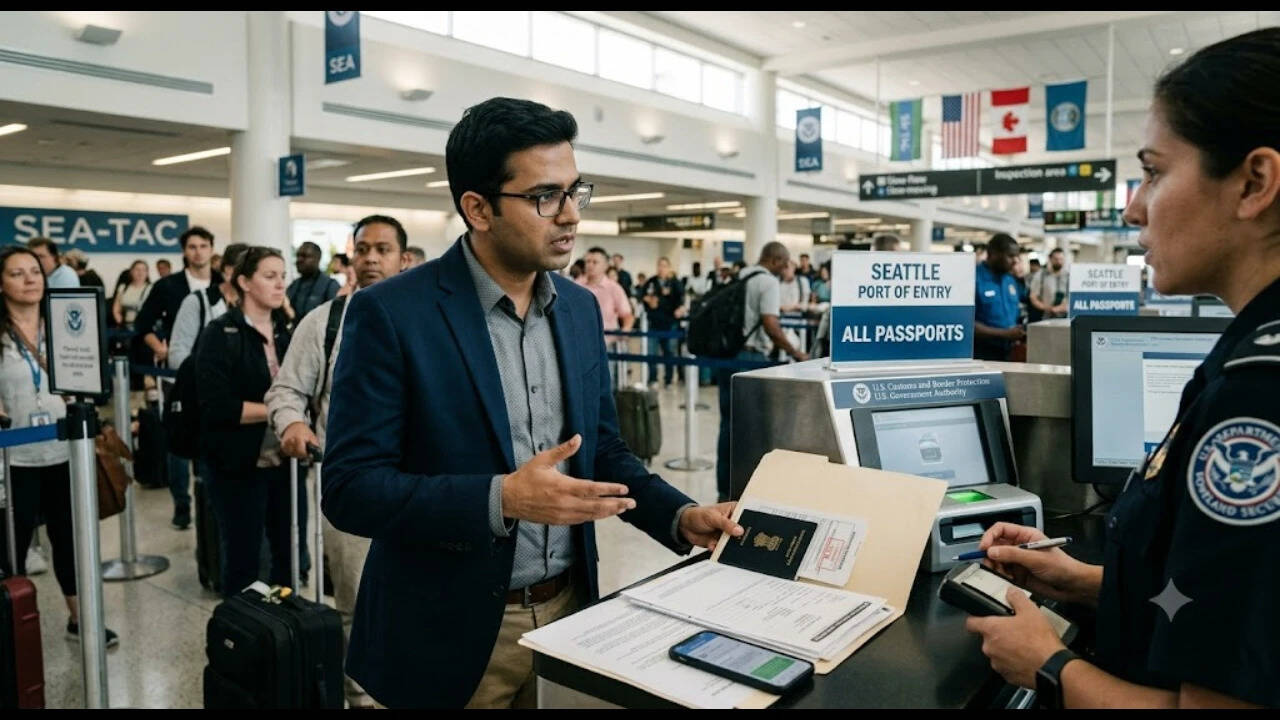
Cutting it close with U.S. immigration deadlines is a quick way to invite intense scrutiny at the border. Recently, an Indian H-1B professional shared a nerve-wracking experience online after touching down at the Seattle Port of Entry just three days before their visa stamp expired. What followed was a classic textbook example of why immigration lawyers constantly tell workers to stay put while extensions hang in limbo.
The traveler had flown back to India on June 28 due to an emergency and returned on July 28. Their H-1B visa validity ran out on July 31, and a routine extension petition filed back in March was still sitting pending with United States Citizenship and Immigration Services (USCIS).
The Border Realities
When presenting documents at primary inspection, the Customs and Border Protection (CBP) officer asked for the new I-797 approval notice. Since that didn't exist yet, the traveler handed over the pending H-1B extension receipt notice instead. Questions quickly followed about travel timelines and future visa stamping intentions.
That interaction triggered a referral to secondary inspection. Officers took the traveler's passport, phone, and documentation for a deeper review.
The Short Admission Trap
The resolution caught the traveler off guard. Officers returned the passport and admitted them into the country only until August 10—giving them a brief window matching standard administrative grace parameters rather than a clean extension of status tied to the pending petition. Border agents lack the jurisdiction to grant indefinite extensions based purely on a pending USCIS application status when admitting someone on an expiring visa counterfoil.
This situation highlights a common misconception. Many people assume that holding a receipt notice protects them completely during international travel. It doesn't. While the 240-day rule protects workers already inside the United States whose extensions are pending, crossing an international border resets the dynamics entirely. CBP officers judge admissibility based on what is physically valid in your passport at that exact moment.
How to Protect Your Status
If you find yourself in a similar crunch, timing and swift action dictate your survival in the system.
First, alert your employer and corporate immigration counsel immediately. Do not wait.
Second, look closely at upgrading your pending petition to premium processing. Paying the extra fee forces USCIS to adjudicate the extension within a matter of days, securing a new I-797 approval before any short-term admission stamp lapses.
International travel on an expiring visa isn't worth the panic. Plan ahead, avoid tight windows, and keep your legal team in the loop before booking that flight.