Commercial shipping is a brutal numbers game, and the numbers inside the Persian Gulf just got a lot tighter. South Korea's Oceans Ministry announced that the HMM Namu, a brand-new 38,000-ton multipurpose vessel, will finally exit the Strait of Hormuz by mid-July. This comes after weeks of extensive structural repairs in Dubai following an airborne missile strike in early May.
For global supply chains, the departure of the HMM Namu signals a slow unwinding of a massive maritime traffic jam. But don't mistake this for a return to normal. The reality on the water is that traversing this narrow chink in global energy routes remains an expensive gamble.
What Happened to the HMM Namu
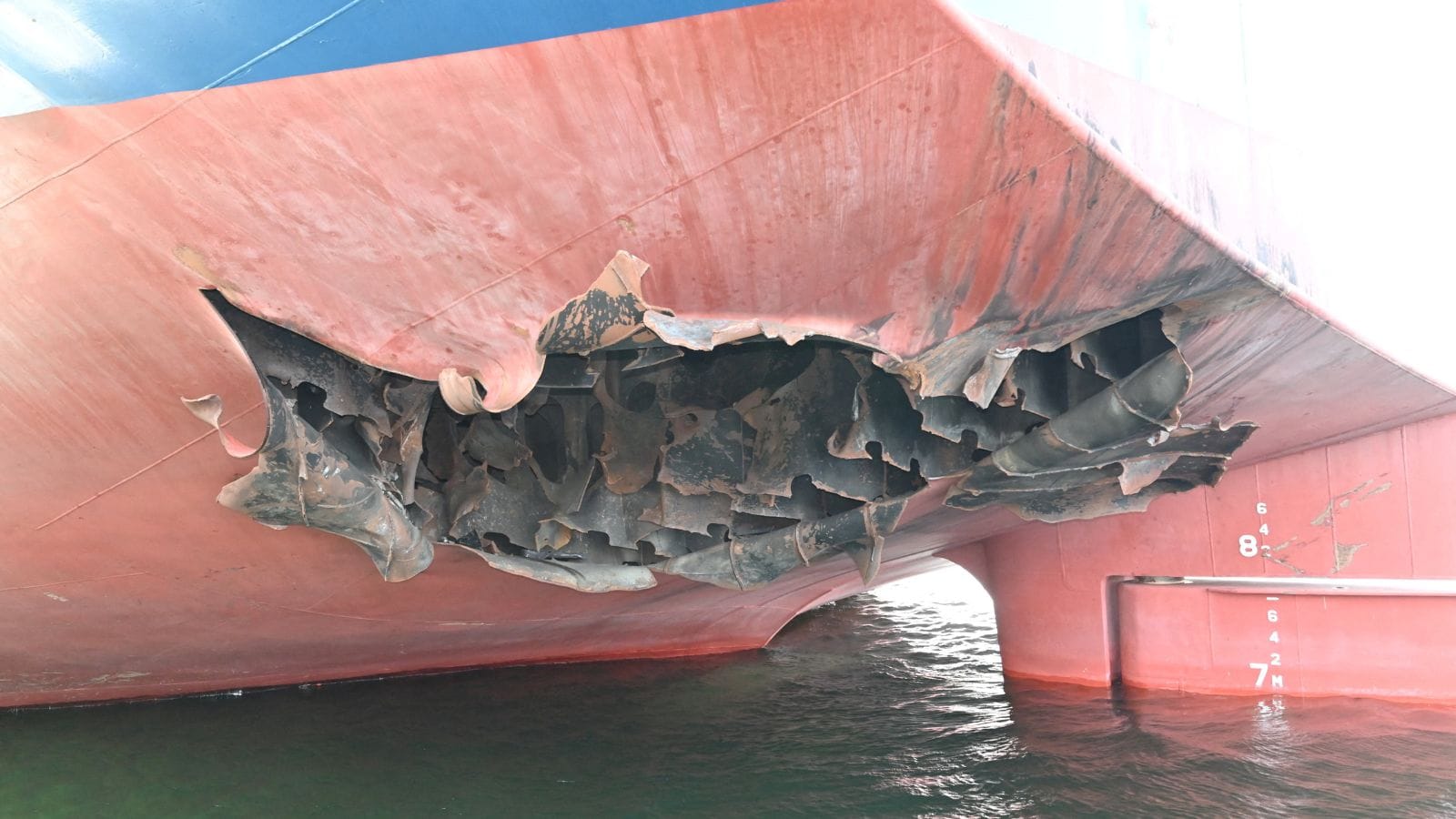
The HMM Namu was on its maiden voyage when disaster struck on May 4. While sitting at offshore standby near the United Arab Emirates, the crew felt violent vibrations. Two unidentified airborne objects tore into the port-side stern ballast tank just a minute apart.
The impacts punched a hole five meters wide into the hull, with structural damage tearing seven meters deep into the ship's interior. A nasty fire erupted in the engine room, knocking out power entirely. The 24 crew members managed to smother the flames using the ship’s fixed carbon dioxide suppression system, preventing total disaster. No one died.
Seoul initially pointed a heavy finger at Iran, summoning Iranian Ambassador Saeed Koozechi after claiming the weapon was likely an Iranian anti-ship missile. Tehran flatly denied it. South Korea has since softened its rhetoric, stating it can’t conclusively prove who pulled the trigger or if the ship was deliberately targeted. Dozens of vessels were clustered in the area when the attack happened. A nearby Chinese ship reportedly felt a similar shockwave.
The Economic Toll of a Stranded Fleet
While the HMM Namu sat disabled at Drydocks World in Dubai, the real damage accumulated on the balance sheets of global shipping lines. When Iran restricted shipping routes through the waterway back in February amid heightened geopolitical conflict with the US and Israel, 26 South Korea-linked vessels became effectively stranded.
According to data from the Korea Shipowners’ Association, those delays drained roughly 490 million won ($332,700) per day across the affected fleet. Those costs break down into three primary buckets:
- War Risk Premiums: Insurance companies hike rates exponentially the moment a civilian hull takes a missile strike in commercial waters.
- Idling Burn: Ships don't just turn off when they stop. Keeping auxiliary systems live requires constant fuel consumption.
- Crew Logistics: Prolonged stays in high-risk zones mean premium crew payouts and complex supply rotations.
The geopolitical temperature has dropped slightly since Washington and Tehran reached a tentative ceasefire, allowing 21 South Korean-operated ships to slip through safely. As of this week, only two South Korean-linked vessels remain stuck inside the Gulf, including the HMM Namu.
Why Shipping Lines Aren't Breathing Easy Yet
If you think the departure of the HMM Namu means the risk is gone, you're looking at the wrong metrics. The physical repairs on a ruptured hull are straightforward; the systemic risk to global logistics is not.
The Strait of Hormuz handles roughly a fifth of the world's petroleum liquids. When a single carrier gets crippled, the ripple effects hit regional ports within days. Right now, US President Donald Trump is signaling a preference for targeted single strikes over full-scale conflict, but the threat of sudden escalation remains high. Shipping companies are forced to calculate whether to risk the passage or take the long, expensive detour around Africa. For heavy bulk carriers and tankers, that detour adds weeks to a voyage and millions to the fuel bill.
Immediate Steps for Maritime Operators
If you're managing cargo transit through the Middle East right now, sitting back isn't an option.
First, audit your war risk insurance clauses immediately. Understand exactly where your coverage cuts off if an "unidentified airborne object" disables your vessel's propulsion system. Second, establish firm secondary routing plans via the Cape of Good Hope, calculating the exact fuel-to-tariff tipping point. Do not wait for a waterway blockade to start bidding for alternative slot allocations. Space fills up instantly when the strait tightens.