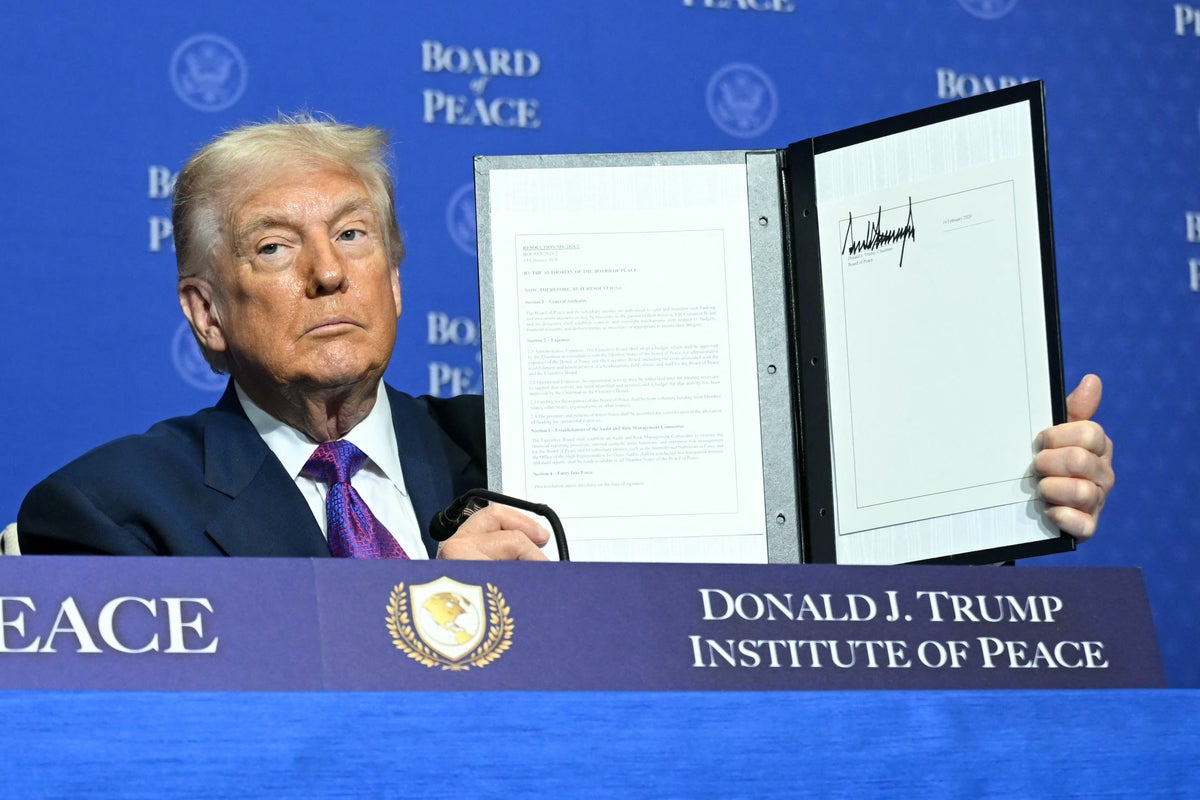
Donald Trump just declared that his self-styled Board of Peace has locked down a historic breakthrough. The headline sounds like a permanent fix to a broken region. Hamas disarms, Israeli troops pull back, and a new Palestinian government takes the wheel.
If only international diplomacy worked that smoothly on paper.
Behind the triumphant social media posts and the carefully choreographed White House announcements lie heavy doses of skepticism, vague execution timelines, and a deeply fractured political landscape. You have to look past the political theater to understand what this agreement actually means—and why it might fall apart before the first phase even wraps up.
What the Board of Peace Deal Claims to Fix
The core of the announcement centers on a phased roadmap. According to White House officials and statements posted online, the deal forces Hamas and other militant factions to surrender all heavy and light weapons. It aims to establish a strict policy of "one authority, one law, one weapon" under a newly empowered governing body known as the National Committee for the Administration of Gaza, or NCAG.
The mechanics look like this on paper:
- Personal weapons get handed over through a localized buy-back program.
- Heavy weapons and the sprawling network of underground tunnels face systematic destruction managed by an International Stabilization Force.
- Israeli Defense Forces withdraw from specific lines incrementally as milestones are met.
- Amnesties are offered to lower-level Hamas members who comply with the transition.
Trump credited regional mediators from Egypt, Qatar, and Turkey for pushing the parties across the finish line. Yet, the immediate reactions from the primary actors on the ground tell a much more complicated story.
The Reality of Israeli Skepticism
Prime Minister Benjamin Netanyahu's government isn't popping champagne. While Israeli officials have technically been briefed and consulted throughout months of back-channel discussions, deep institutional distrust remains.
Israel's military establishment operates under a show-me-first philosophy. Past ceasefires and demilitarization promises have repeatedly dissolved into renewed violence. Officials in Jerusalem have made it clear that no major troop withdrawals from strategic positions—such as the designated Yellow Line—will happen until verifiable, complete disarmament takes place.
Furthermore, independent security analysts point out that tracking down every hidden weapon cache and concrete-reinforced tunnel in a destroyed urban environment is an engineering nightmare. It's one thing for Hamas negotiators to sign a clause in Cairo or Doha. It's entirely another for local commanders in Gaza to turn over their stockpiles.
The Timeline Trap and Enforcement Gaps
Administration insiders suggest that full implementation could stretch anywhere from 200 to 350 days. That is a lifetime in Middle Eastern politics.
A lot can go wrong during a year-long transition. The agreement relies heavily on strict reciprocity rather than mutual trust. Each phase must be completed before the next one triggers. If a single skirmish breaks out, or if a rogue faction decides to launch a mortar shell, the sequence can shatter instantly.
Funding and structural power also present massive hurdles. The Board of Peace—anchored by hefty financial pledges and led directly by Trump—expects international forces and a freshly trained Palestinian police force to step into the security vacuum. Training local officers while simultaneously dismantling an entrenched insurgency is messy, dangerous work.
Where Things Go From Here
You shouldn't mistake an announced framework for a secured peace. Hamas agreed to the outline because political and military pressures left them few alternatives, pushing the immediate tactical burden onto Israel and the international coalition.
If the Board of Peace actually delivers on its promises, it marks a seismic shift for the region. If it stalls, it joins a long graveyard of ambitious diplomatic blueprints. Watch the two-week organizing window closely. If local police begin taking custody of minor administrative zones without immediate pushback, the roadmap has a pulse. If the guns keep firing, the historic deal was just another headline.