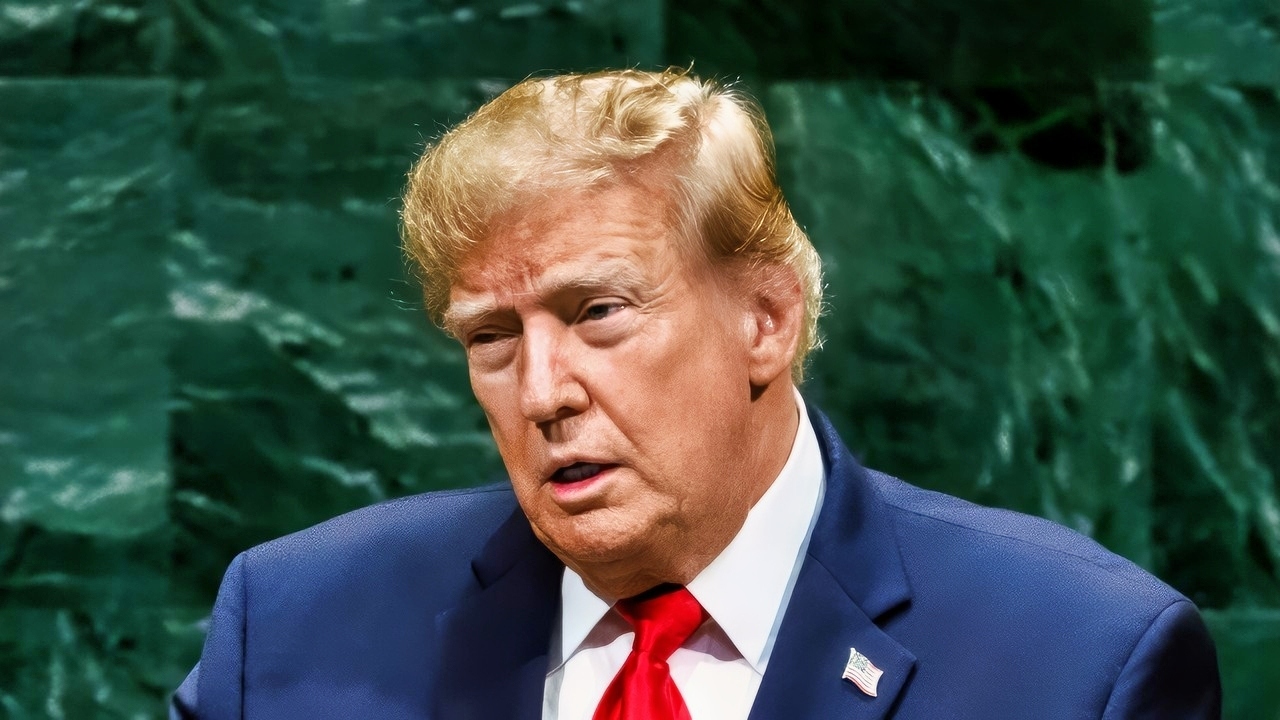
Donald Trump never misses an opportunity to attach his brand to a winner. As Israeli exit polls showed Prime Minister Benjamin Netanyahu pulling off a classic come-from-behind surge to position Likud as the Knesset's largest party, Trump stepped forward to claim the glory. Speaking to reporters following a campaign rally in Texas, the former US president insisted that his public endorsement was the secret engine driving Netanyahu's sudden momentum.
Reality, however, is a bit messier than a simple political badge of honor. The tight race in Israel reflects deep domestic fault lines, high-stakes security arguments, and a heavily polarized electorate that cares far more about regional survival and coalition arithmetic than external shoutouts from American political figures.
Decoding the Polling Surge
If you looked only at the early narrative pushed by mainstream outlets during the campaign cycle, Netanyahu was supposedly on the ropes. Critics and opposition voices pointed to sliding seat projections, arguing that fatigue had finally caught up with Israel's longest-serving prime minister.
Netanyahu dismissed those numbers as psychological warfare engineered by his detractors. When the ballots were counted, Likud emerged clearly as the largest individual party, defying pessimistic forecasts and proving that the right-wing base was energized beneath the radar.
Trump seized on that bounce to argue that his endorsement turned the tide. But attributing a complex parliamentary election in the Middle East to a single foreign statement ignores how Israeli voters actually make decisions.
The Security Factor That Actually Moved Voters
Foreign endorsements don't win elections when existential security is on the ballot. Netanyahu's campaign leaned heavily on aggressive defense milestones, pointing to military operations across Gaza, Lebanon, and Syria alongside direct strikes on Iranian infrastructure.
For conservative and right-wing voters in Israel, the core issue wasn't what leaders in Washington or Mar-a-Lago had to say. It was whether the state could afford a fragmented government that relied on anti-Zionist or Arab parties. Netanyahu framed the choice in stark terms, warning that a fractured coalition would compromise national security just as Iran and its regional proxies remained persistent threats.
That messaging resonated deeply with a traumatized and defensive public. Turnout surged past historical marks, hitting levels not seen in decades as voters mobilized to protect or shatter the status quo. Trump's comments might make good cable news soundbites, but they played a microscopic role compared to the visceral realities of local security.
The Battle to Form a Government
Even though Likud secured its position as the largest faction, the road ahead remains a mathematical puzzle. Exit polls showed both right-wing and opposition blocs falling short of an outright majority, leaving smaller parties and kingmakers holding immense leverage.
Netanyahu has already called on the Zionist majority to bridge differences and form a stable right-wing administration, fiercely rejecting any alignment with factions he labels as hostile to the state. Meanwhile, opposition leaders like Yair Golan and Gadi Eisenkot are pushing hard for alternative coalitions, arguing that the deadlocked numbers signal an underlying public exhaustion with Netanyahu's rule.
Trump wants a piece of the victory narrative because alignment with foreign strongmen plays well with his base back home. But the tight Knesset math proves that Israel's political future is shaped in Jerusalem, Tel Aviv, and the border towns, not by American endorsements shouted from campaign stages thousands of miles away.