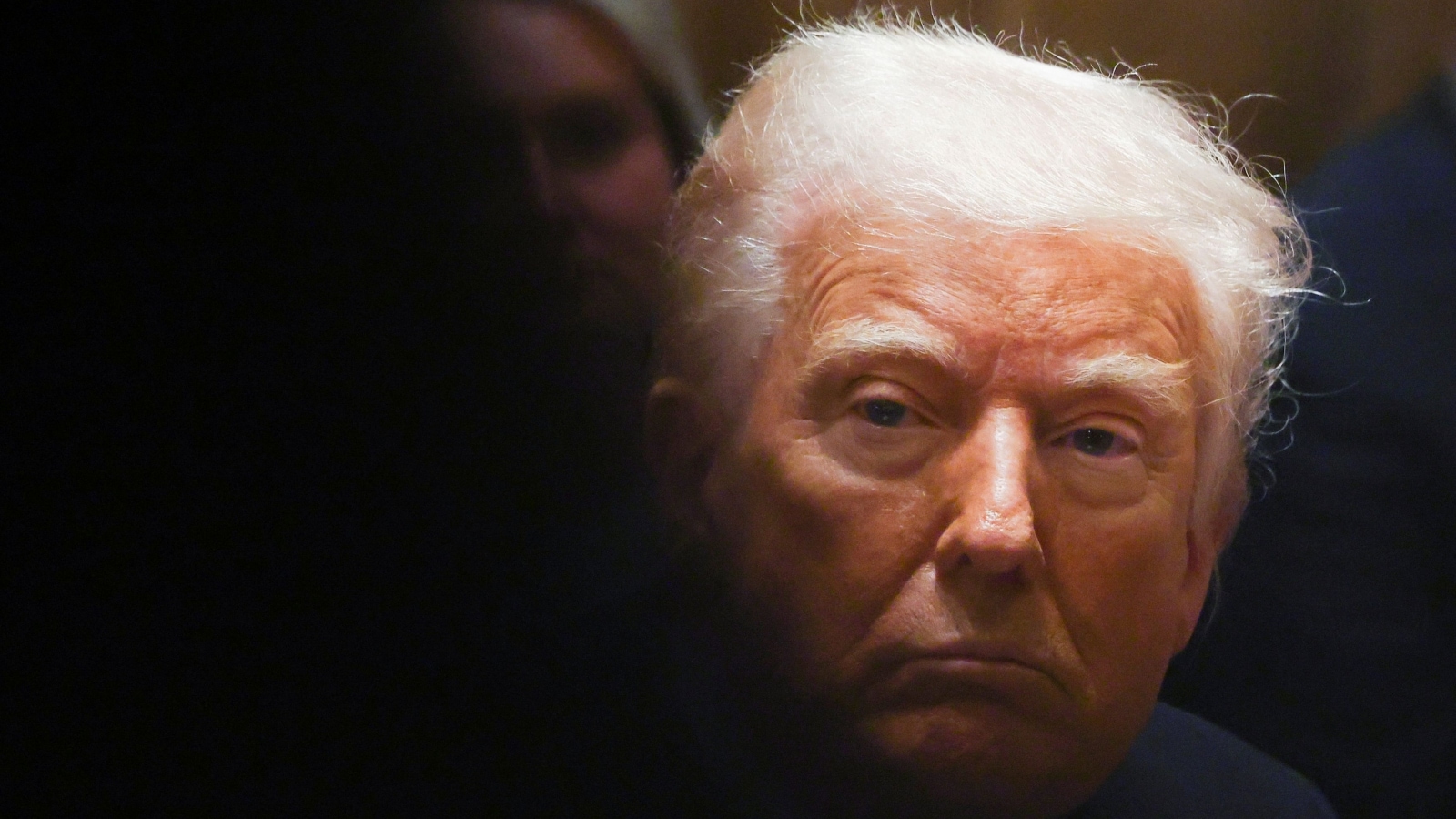
The debate over American voting integrity isn't going away. It's actually getting louder. Recently, Donald Trump pointed directly to the massive electoral machine in India to justify his push for the Save America Act. He’s arguing that if a country with over 600 million voters can mandate strict photo identification, the United States should be able to do the same.
It’s an interesting angle, but there is a lot of nuance lost in the headlines. Whether you agree with his approach or not, the logistical reality of how India handles its elections is genuinely impressive. Understanding why this comparison is being made requires looking past the political shouting match and into how different democracies actually manage the mechanics of voting.
How India manages the logistics of scale
When people talk about Indian elections, they usually underestimate the sheer volume involved. We aren't talking about a few million people. We are talking about hundreds of millions of voters showing up at polling stations across diverse terrain, from the high Himalayas to dense urban centers.
The Election Commission of India (ECI) relies on a mandatory photo identity card system for almost all voters. It's not just a suggestion; it's the standard. You show up, you present your ID, you get verified, you vote. The ECI’s reliance on physical presence—combined with the limited use of mail-in ballots—creates a system that functions differently than the American model.
In the US, the debate often centers on balancing access with security. Critics of strict ID laws argue they create barriers for marginalized voters. Proponents, like Trump, argue that without these checks, the system is fundamentally vulnerable to fraud. By highlighting India, Trump is trying to shift the goalposts of that debate. He is essentially saying that security and mass-participation aren't mutually exclusive.
Why the comparison matters for the Save America Act
Trump's focus on the Save America Act isn't accidental. He needs a high-profile win on voting rules before the next cycle. Using India as a reference point provides him with a "proof of concept" that works on a massive scale.
Basically, he’s pointing at the ECI and saying, "Look, if they can do it for 600 million people, we can surely do it for 160 million."
The political opposition in India, however, isn't letting this slide without a jab. Recent comments from Congress leader Pawan Khera highlight the irony. By suggesting that Trump should "take the election commissioners and the voting machines" to the US, the opposition is poking fun at the idea that the American system is broken enough to need external management. It’s a classic political distraction, but it does highlight a real friction point: importing foreign electoral models into the deeply entrenched US state-by-state voting system is incredibly difficult.
The technical reality of ID verification
I have spent time looking at how data verification works in large-scale operations, and the ECI system is a feat of decentralized management. They don't just rely on a plastic card. They maintain a massive electoral roll that is updated regularly. When you walk into a booth, the polling officer isn't just checking your face against a card; they are verifying you against a digital and physical record.
The US, meanwhile, is a patchwork. Every state has its own laws, its own registration deadlines, and its own ID requirements. Even if you wanted to implement a federal "India-style" mandate, you would run headfirst into a constitutional wall. Elections in the US are largely state-managed. You can't just flip a switch in Washington and expect every county clerk in Georgia, Wisconsin, or Arizona to change their software and training overnight.
What is actually at stake
If you want to understand the future of American voting, look at the tension between digital verification and physical access. The real question isn't just about showing an ID card. It's about how the government verifies the identity of every citizen in a way that is secure but doesn't lock people out of the process.
Most people get this part wrong: the issue isn't whether photo IDs work. The issue is how you design a system that includes everyone. India does this through a massive, years-long mobilization of human resources. Thousands of polling officials travel to remote villages, sometimes carrying voting machines on foot, to ensure every citizen has their say.
If the US wants to move toward a more stringent ID-based system, it would require a massive investment in administrative infrastructure. It wouldn't be as simple as passing a law. It would mean hiring, training, and deploying a permanent workforce to verify IDs at every single polling location, every single time.
Practical steps forward
If you are paying attention to the upcoming election cycles, keep your eyes on state-level legislation. That is where the actual action is happening. Federal mandates often die in the Senate, but state-level ID requirements are being litigated, refined, and implemented as we speak.
- Monitor state-specific voter ID laws. These are the rules that will affect you directly when you go to the polls.
- Check your registration status. Regardless of the ID debates, the most common reason people get turned away is outdated registration info, not a lack of a photo ID.
- Understand the alternatives. In states without strict photo ID, look into what documents are accepted. Most places offer a tiered system of verification.
The push for tighter rules is driven by a desire for perceived integrity. Whether or not it leads to a more secure system or just more bureaucratic hurdles is the central question for the next decade of American politics. Trump might be using India as a talking point, but the underlying challenge of balancing security and participation is here to stay. Don't expect this conversation to quiet down anytime soon.