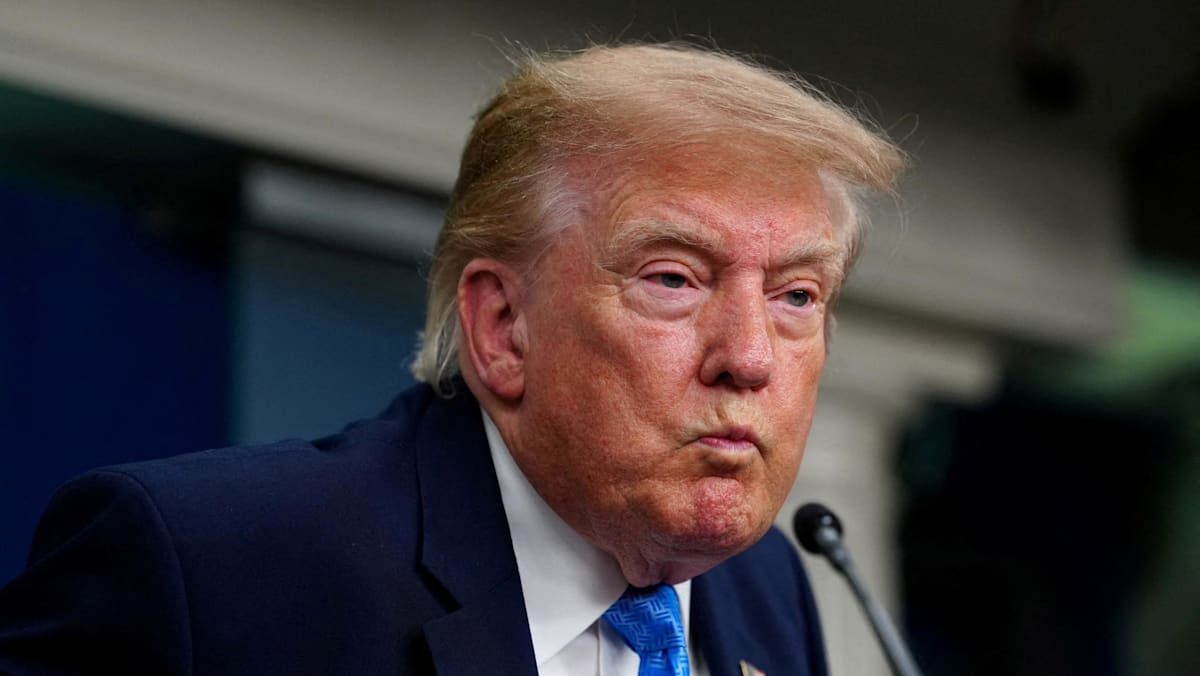
President Donald Trump wants a permanent nuclear agreement with Iran that outlasts future White House occupants, even if another president comes along in four, 15, or 20 years. Speaking on Fox News on November 21, 2026, Trump argued that Washington has already cleared out two successive Iranian leadership groups and is now negotiating with a third—calling this shift the "ultimate regime change" while simultaneously insisting he never really cared about regime change in the first place.
That contradiction isn't a slip of the tongue. It's the core tension of a conflict that has upended Middle Eastern security and global energy markets throughout 2026. For a different look, check out: this related article.
When people search for headlines about a 20-year Iran deal and leadership removal, they usually want two straight answers: Did the U.S. actually knock out Tehran's leadership twice, and how could any diplomatic deal survive two decades of shifting political winds? The short answer is that the leadership upheaval in Tehran is very real, starting with the killing of longtime Supreme Leader Ali Khamenei in late February 2026, followed by his son Mojtaba Khamenei taking over. Yet turning a wartime standoff into a durable 20-year nuclear lock faces steep constitutional, military, and diplomatic hurdles.
Why a 20-Year Iran Deal Sounds Tougher on Paper Than in Practice
Trump framed his push for a lasting deal around a blunt fear: future U.S. leaders might undo his work. "What I'm doing is making sure that even if, in four, 15, or 20 years, we have an incompetent president, the agreement I reach will be permanent," he told Fox News, repeating his vow that Iran won't be allowed to get a nuclear weapon. Related reporting regarding this has been shared by USA Today.
Here's what trips people up about international agreements. No sitting president can permanently bind a future U.S. administration through an executive agreement alone. Look at modern history: the 2015 nuclear accord known as the JCPOA was an executive commitment rather than a Senate-ratified treaty, which made it possible for Trump to exit it in 2018 during his first term. Even treaties ratified by two-thirds of the Senate can face suspension, reinterpretation, or withdrawal when geopolitical priorities shift.
To make a 20-year commitment stick, negotiators usually rely on layers of enforcement rather than a single signature. Think strict verification protocols, snap inspections, binding limits on enrichment, and international sanctions mechanisms that snap back automatically if violations occur. Analysts at institutions like the Center for Strategic and International Studies (CSIS) have pointed out that after months of fighting and nuclear tension, any credible settlement would demand intrusive monitoring—and right now, Tehran has blocked International Atomic Energy Agency inspectors from its nuclear facilities.
Trump also accused Iranian officials of breaking deals almost immediately. "We make a deal, and then they break the deal the next day," he said, arguing that a real pact has to prevent backsliding across multiple presidential terms. From Tehran's side, Iranian leaders have long argued that Washington isn't a reliable partner either, especially after military strikes erupted during nuclear talks earlier in 2026.
What Happened With Tehran's Leadership and Regime Change Claims
The phrase "removed Tehran leadership twice" grabs attention fast, so it helps to separate political rhetoric from what actually happened on the ground.
In late February 2026, joint U.S. and Israeli strikes launched the war with Iran, killing Supreme Leader Ali Khamenei and senior figures in his circle. That strike triggered an immediate leadership shock inside the Islamic Republic, followed by an interim arrangement and the selection of Mojtaba Khamenei as supreme leader in March. Reporting around the conflict has noted that Mojtaba Khamenei was wounded in the opening strikes and has kept a low or secluded public profile while governing alongside security and clerical figures.
When Trump says Washington has dealt with two groups of leaders and is now facing a third—calling it the "ultimate regime change"—he's pointing to the violent turnover of top decision-makers and power brokers since the war began. At the same time, he told Fox News that he never cared much about regime change itself, even though administration statements at the start of the conflict openly framed the campaign around toppling or transforming the system.
Honest observers can see why that sounds confusing. Removing top individuals isn't the same thing as replacing the Islamic Republic's political system. The state apparatus, the Assembly of Experts, and the Islamic Revolutionary Guard Corps (IRGC) are still operating, even under heavy economic strain and military pressure.
Why "More Reasonable" Still Means Hard Bargaining
Trump described Iran's current leaders as "probably ... more reasonable" than their predecessors, yet "very, very difficult" in talks. That's a classic negotiating dynamic. A leadership group battered by war, naval friction, and economic pain may see value in ending hostilities or easing sanctions. At the same time, surviving hardliners have every incentive not to look weak after losing senior figures.
Even when temporary pauses or frameworks have surfaced in 2026—such as ceasefires, talks in Islamabad, and a June framework deal—trust has remained thin. Tensions over shipping in the Strait of Hormuz, regional fronts like Lebanon, and missile limits have kept negotiations fragile.
The Bigger Picture Behind the Headlines
Short news briefs often treat a single TV interview as a sudden policy pivot. Usually, it's a snapshot of domestic politics colliding with regional strategy.
Following the November 2026 midterm elections—where Republicans lost control of Congress amid voter frustration over war costs and economic strain—Trump also signaled that major decisions on renewed strikes might wait until next year. "We've got time," he said in remarks reported this week, while also noting he could work with the incoming Democratic Congress on issues like credit card interest rates.
Meanwhile, energy markets and regional allies are watching every word. High fuel prices, shipping risks in the Gulf, and pressure from partners like Israeli Prime Minister Benjamin Netanyahu all shape Washington's calculus. If a deal drags out or collapses, oil markets and regional security feel the shockwaves almost immediately.
Common Mistakes People Make Following This Story
- Treating a 20-year target as a done deal: Saying a deal should last 20 years isn't the same as locking in legal or diplomatic mechanisms that survive four or five U.S. elections.
- Confusing leadership strikes with full system collapse: Killing or replacing top leaders changes personalities and power balances, yet entrenched institutions like the IRGC can keep functioning.
- Ignoring domestic U.S. politics: Foreign policy statements in November 2026 are heavily tied to midterm results, congressional dynamics, and fuel prices at home.
Practical Next Steps If You're Tracking the Conflict
If you want to follow how this plays out without getting whiplash from every soundbite, focus on verifiable markers rather than hype:
- Watch inspection access first: Track whether Iran allows International Atomic Energy Agency inspectors back into key nuclear sites—without verification, long-term nuclear limits are mostly talk.
- Check Strait of Hormuz and energy indicators: Maritime transit conditions and crude or fuel price swings tell you quickly whether de-escalation is real or temporary.
- Read primary briefings and think tank analysis: Pair breaking news with reports from organizations like CSIS or Critical Threats to see how military movements and diplomatic talks actually line up.
- Separate rhetoric from formal text: Wait for actual terms—on enrichment caps, sanctions relief, and enforcement—before judging whether a deal has real staying power.