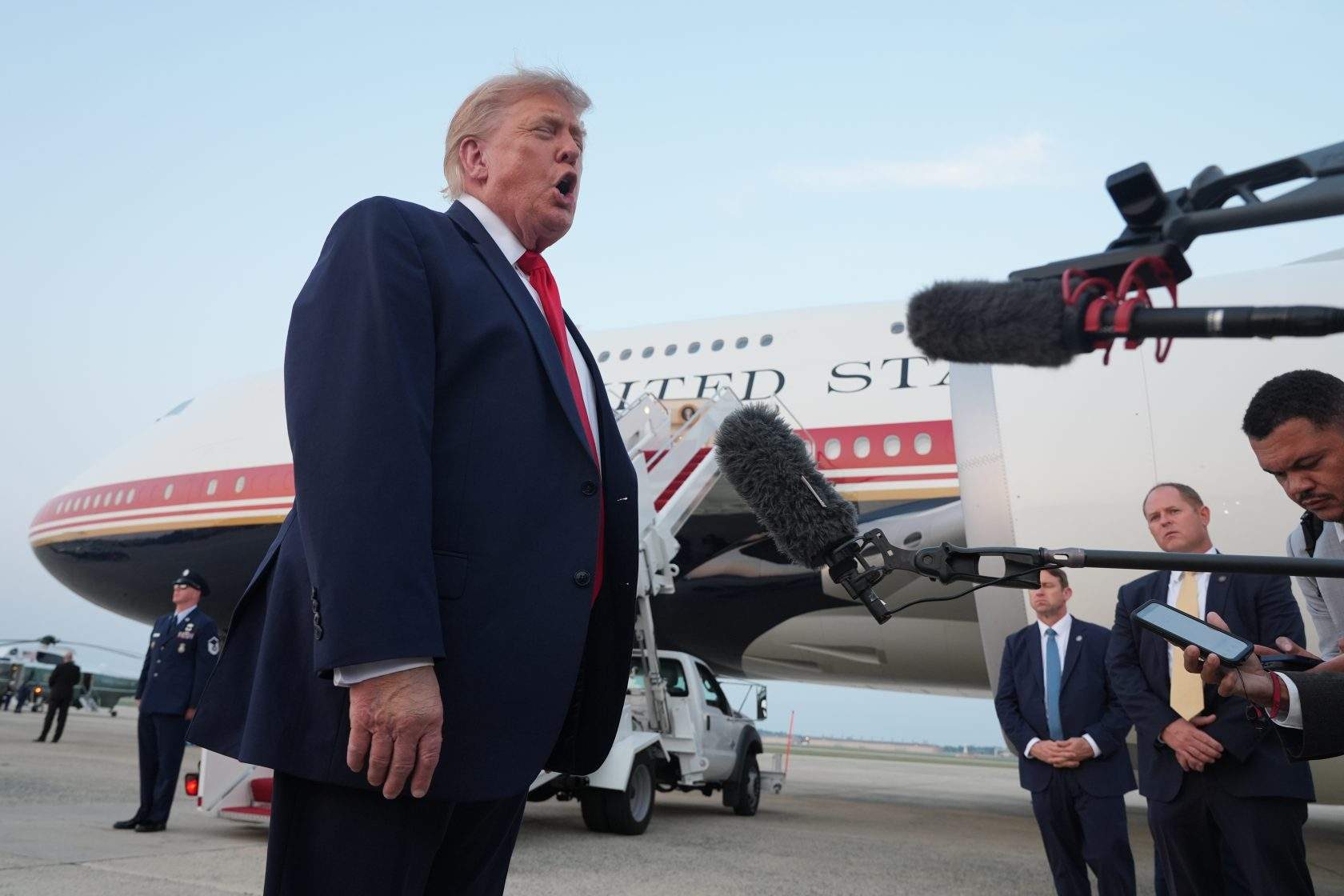
Donald Trump just pulled a obscure 1930s law out of the history books to hit Canada with a 50 percent import duty on dozens of everyday products. The White House claims it's hitting back against Canadian trade policies on cars, alcohol, and dairy. But when you look closely at the product target list, you realize this isn't just about milk and pickup trucks.
It covers everything from hockey sticks and bamboo skewers to toilet paper, smartphones, and live mushroom spawn.
If you run a cross-border business or just buy imported goods, the clock is ticking. You have 30 days before these taxes take effect on August 19, 2026. Here is what is actually on the hit list, why Washington picked these specific items, what got spared, and how this trade fight is going to affect your wallet.
What Are the Trump 50 Percent Tariffs on Canadian Goods
The White House rolled out three distinct proclamations invoking Section 338 of the Tariff Act of 1930. That specific legal clause gives the U.S. president sweeping powers to penalize countries that allegedly discriminate against American commerce compared to other foreign nations. It hasn't been weaponized like this in modern history.
The U.S. administration argues that Canadian policies have crippled American exports across three main sectors.
- Motor Vehicles: Washington points out that Canada maintained a 25 percent tariff on non-USMCA motor vehicle imports starting in early 2025. According to White House trade data, U.S. vehicle exports to Canada plummeted roughly 22 percent between April 2025 and March 2026.
- Alcohol and Spirits: After earlier U.S. tariff threats, almost every Canadian province and territory pulled American booze off liquor store shelves. Washington claims American distilleries and wineries were systematically frozen out of the market.
- Dairy and Agriculture: Long a sticking point in cross-border negotiations, Canada's supply management system limits U.S. milk, butter, and cheese access through tight import quotas.
Instead of sticking strictly to auto parts or cheese blocks, the White House cast a massive net. The resulting target list spans raw agricultural materials, industrial supplies, consumer electronics, and niche household items.
The Targeted Product Categories Explained
The scope of goods hit by these new duties is wide. To understand where the pain will land, it helps to break the targeted list down by sector.
Dairy and Agricultural Byproducts
While fresh liquid milk in small grocery cartons is handled through existing quota systems, this new round hits processed dairy inputs that food manufacturers use daily.
- Concentrated and Powdered Milk: Concentrated whey protein, liquid whey, dried whey, and milk powders used in commercial baking and processed foods.
- Specialty Ingredients: Casein derivatives, lactose syrups, glucose-fructose mixes, and baking mixtures containing over 25 percent butterfat.
- Animal and Crop Products: Natural honey, live mushroom spawn, animal bones, horns, unworked feathers, and specialized hop byproducts like lupulin.
If you manufacture packaged foods, your raw ingredient costs are about to jump significantly if you rely on Canadian suppliers.
Alcohol, Beverages, and Surprising Symbolic Items
The liquor battle escalated fast. Because provincial liquor boards stopped ordering U.S. bourbon, wine, and beer, Washington responded by hitting virtually every category of Canadian alcohol coming south.
- Spirits and Wine: Canadian whisky, vodka, gin, rum, tequila, brandy, vermouth, sake, sparkling wine, and ethyl alcohol meant for beverages.
- Malt Beer and Cider: Craft beers and hard ciders produced in Canadian breweries.
- Symbolic Targets: In what appears to be a direct nod to Canadian cultural exports, the list explicitly penalizes hockey sticks, ice skates, wooden tableware, bamboo skewers, and curling-style broom handles.
Everyday Consumer Goods, Textiles, and Paper
Average shoppers will feel this at big-box retailers. The U.S. government didn't spare basic household paper and clothing categories.
- Paper Products: Toilet paper, paper towels, paper pulp, notebooks, binders, paper plates, and cigarette paper.
- Apparel and Textiles: T-shirts, dresses, suits, trousers, sweaters, hats, wool, raw silk, cotton yarns, carpets, and leather jackets.
- Home and Leisure: Video game consoles, smartphones, optometry gear, chandeliers, Christmas decorations, golf equipment, and home swimming pools.
Building Materials and Industrial Supplies
Contractors and factory managers need to brace themselves. Heavy materials crossing the border will face immediate 50 percent markups unless renegotiated.
- Lumber and Wood: Plywood, wooden doors, structural lumber products, charcoal, and wood-burning fixtures.
- Cement and Construction: Portland cement, plaster sheets, cement tiles, bricks, and even scrap cement.
- Industrial Hardware: Turbocharged air compressors, packaging machinery, commercial baking mixers, metal locks, tool blades, wrenches, and spanners.
What Succeeded in Getting Spared From the Tariff List
Despite the extensive list, several heavy-hitting export categories managed to avoid the 50 percent duties. Washington intentionally carved out resources that the U.S. domestic economy cannot easily replace without triggering immediate industrial shortages or energy spikes.
- Energy Products: Crude oil, natural gas, refined petroleum, and electricity were left off the Section 338 proclamations. Canadian oil remains critical for Midwest and Gulf Coast refiners.
- Fertilizer Inputs: Potash, an essential component for American agricultural fertilizers, is completely exempt.
- Critical Minerals: Key metals necessary for battery production, defense manufacturing, and tech hardware avoided the hit.
- Seafood: Fresh and frozen fish exports were excluded from this specific wave of taxes.
- Steel and Aluminum: Goods already taxed under national security tariffs (Section 232) aren't hit with this additional 50 percent layer.
These exclusions show that while the administration wants to apply political pressure, it understands that shutting off Canadian energy or crop fertilizers would immediately backfire on U.S. farmers and power grids.
Economic Realities and Trade Friction
You can't slap a 50 percent tax on $28 billion worth of goods without breaking something in the supply chain.
Prime Minister Mark Carney noted that Canada stands ready to engage in intensive trade negotiations over the 30-day grace period. Canadian business leaders and provincial leaders, including Ontario Premier Doug Ford, have called for reciprocal dollar-for-dollar counter-tariffs if Washington doesn't back down.
Here is the hard truth: tariffs are paid by the importer, not the exporting country.
When a U.S. distributor imports Canadian whisky, plywood, or auto components, that distributor pays the 50 percent tax directly to U.S. Customs. To survive, that business has only two choices. They can absorb the hit and watch their profit margins evaporate, or they can pass the cost directly to American consumers through higher prices.
Given that annual inflation numbers have already proven sticky throughout 2026, adding a 50 percent tax on imported construction paper, cement, and food ingredients guarantees higher prices at retail counters.
It also throws the Canada-United States-Mexico Agreement into total turmoil. While USMCA was meant to allow duty-free trade for qualified goods, these new Section 338 proclamations explicitly override preferential USMCA rules for covered items.
How Businesses Should Handle the 30-Day Window
If your business imports or relies on goods listed in the recent Section 338 trade proclamations, sitting on your hands isn't an option. You have until August 19, 2026, before border agents start collecting the tax.
Audit Your Supply Chain Harmonized System Codes
Do not rely on product descriptions alone. U.S. Customs enforces tariffs using specific Harmonized Tariff Schedule (HTS) codes. Review your import documentation today to see if your product's exact HTS code is included in the White House lists.
Pull Orders Forward Before August 19
If you have pending orders with Canadian suppliers for non-perishable goods like timber, packaging machinery, or paper pulp, accelerate delivery. Goods that enter U.S. customs entry territory before the 30-day deadline hits will avoid the extra 50 percent tax.
Re-evaluate Vendor Contracts and Force Majeure Clauses
Check your supplier contracts for cost-shifting clauses. Determine who bears the legal burden for unexpected tariff additions. If your margins can't absorb a 50 percent surge, start discussions with suppliers now about split-cost arrangements or price adjustments.
Explore Alternative Sourcing Options
Start identifying secondary suppliers in domestic U.S. markets or non-targeted trade partners. While switching suppliers takes time, having backup vendors ready gives you leverage if cross-border negotiations collapse and duties become permanent.
Track Diplomatic Negotiations Daily
Remember that trade proclamations are often used as leverage. Over the next four weeks, Canadian and American officials will be locked in intense bilateral meetings. Key product lines might be dropped or modified before the final implementation date depending on diplomatic progress.