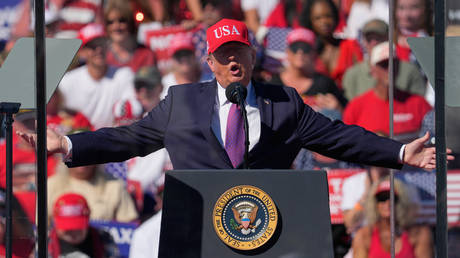
Donald Trump just escalated his war against classified information leaks, declaring that government employees who share state secrets with journalists deserve execution. Speaking at a midterm rally in Bullhead City, Arizona, the US president pointed to an incident where military operations were compromised after details regarding bomber departure schedules hit public news desks.
It is a striking rhetoric shift that highlights a deep, ongoing friction point between modern administration operations and traditional investigative reporting.
What Sparked the Latest Outburst
During his Arizona appearance, Trump recounted an episode where the Pentagon allegedly had to stall an air raid targeting Iran. The culprit? According to the president, internal sources leaked precise takeoff and arrival timelines directly to mainstream outlets like CNN and the New York Times.
“Somebody leaked – some sleazebag,” Trump told the rally crowd, arguing that individuals who compromise active military timetables put American lives directly at risk. “In the old days we used to shoot leakers… especially when they leak what time you’re going to attack a country.”
This is not an isolated flash of anger. Tensions over internal disclosures have simmered since the escalation of military campaigns in the Middle East. Over the past several months, media reports based on anonymous administration insiders have repeatedly detailed internal disagreements, weapon inventory levels, and strategic debates within the executive branch.
The Real Cost of Classified Information Disclosures
Why does Washington treat leaks with such severity? National security apparatuses rely on strict containment to protect tactical advantages. When operational details go public before a strike or movement occurs, adversaries have critical windows to relocate assets, reinforce defensive positions, or launch counter-measures.
Beyond tactical vulnerabilities, unauthorized disclosures create massive political headaches for sitting administrations. Leaks frequently expose internal dissent, policy contradictions, or friction between cabinet members—such as recent friction points reported regarding ammunition stockpiles and missile inventories.
Administration loyalists argue that unverified leaks often distort reality, painting false pictures of military readiness or strategic direction to undermine executive authority. From this viewpoint, unauthorized disclosures aren't whistleblowing; they are acts of sabotage by entrenched bureaucrats who disagree with elected leadership.
How Washington is Responding Behind the Scenes
Harsh words at a political rally translate into severe administrative actions. The Pentagon and other national security agencies have ramped up internal security measures significantly. Investigators have subjected numerous civilian employees and military officers to polygraph tests, electronic surveillance audits, and rigorous security clearance reviews.
Whistleblower protection laws traditionally shield individuals reporting waste, fraud, or abuse through legal, internal channels. However, sharing classified military operational plans with the press falls squarely outside those protections, crossing the line into criminal espionage or unlawful transmission of national defense information.
Past US administrations have aggressively prosecuted leaks under the Espionage Act, but Trump's recent rhetoric pushes the debate past standard prison sentences into historical, punitive extremes. As digital communication makes internal documents easier to copy and transmit anonymously, the battle between executive secrecy and public transparency continues to intensify with no resolution in sight.