Money doesn't buy peace when neither side wants to put down their guns.
The newly minted "Board of Peace" just wrapped up its first big meeting in Washington. Billions of dollars are on the table. Gulf states are flashing their checkbooks. International troops are getting lined up to police the rubble.
It looks great on paper. But it's completely detached from reality.
While diplomats in expensive suits talk about pouring seven billion dollars into rebuilding the Gaza Strip, the actual combatants are busy drawing lines in the sand. Hamas just issued a blunt reminder that they aren't about to let a foreign committee dictate their survival. They want a total end to Israeli military actions and a lifting of the blockade before anyone touches a single brick. Meanwhile, Israeli Prime Minister Benjamin Netanyahu says not a single dollar of reconstruction happens until Hamas disarms.
We've seen this movie before. The plot never changes, and the ending is always bloody.
The Illusion of a Washington-Led Fix
The Board of Peace is a highly ambitious, top-down initiative pushed hard by Donald Trump. The UN Security Council endorsed the framework, and Washington managed to get a surprising mix of countries to pledge boots on the ground. Indonesia is slated to take a deputy commander role in an International Stabilization Force. Morocco, Kazakhstan, Kosovo, and Albania have also committed troops.
It sounds like a robust coalition. Honestly, though, it looks more like an attempt to bypass the messy reality of local politics.
Look at who was missing from the room. Benjamin Netanyahu didn't show up; he sent his foreign minister, Gideon Saar. The Palestinians weren't leading the charge either. Instead, you have foreign powers trying to impose an economic solution on a territory that's still fundamentally caught in a hot conflict.
Hamas released a statement right after the Washington meeting that cut straight through the diplomatic theater. They stated that any political process or arrangement concerning the future of Gaza must start with a total halt of aggression and the lifting of the entire blockade. They aren't looking for a corporate restructuring plan. They're looking for survival and national rights.
The Disarmament Deadlock
Here's the core contradiction that nobody in Washington seems to have an answer for.
- The Israeli Position: No reconstruction without total demilitarization. Netanyahu has made it clear that Israel will not allow concrete and cash to flow into Gaza while Hamas retains its arsenal.
- The Hamas Position: No disarmament without an independent state. They view their weapons as their only leverage. Giving them up before achieving self-determination is a non-starter.
This leaves the fragile ceasefire, which has barely held for over four months, on incredibly shaky ground. Troops still control huge chunks of the territory. Clashes happen regularly. Just hours after the peace board met, the Israeli military reported killing an armed fighter in southern Gaza who crossed the technical boundary line. Civilian casualties, like a child recently wounded by gunfire in Jabalia, keep adding up.
If you think a seven-billion-dollar carrot is going to convince Hamas to willingly hand over its guns to an international force led by an American major general, you don't understand the history of this conflict.
What the Experts are Rightly Worried About
A lot of veteran diplomats are looking at this new peace board with massive skepticism. The exclusion of genuine Palestinian voices makes the entire project feel artificial.
Hugh Lovatt, a senior policy fellow at the European Council on Foreign Relations, pointed out that many of these grand reconstruction ideas originate from partners who are highly sympathetic to Israel's security demands while ignoring Palestinian political realities. He went so far as to call it an attempt to impose a foreign economic project on a territory without local consent.
Even some traditional US allies are backing away. French Foreign Minister Jean-Noel Barrot criticized the European Commission's involvement, arguing there was no real mandate to represent individual member states at this Washington summit. Dan Shapiro, a former US ambassador to Israel, noted that conditioning reconstruction on immediate disarmament makes it incredibly hard to take the Board of Peace seriously as a workable diplomatic vehicle.
The Next Fractures to Watch
If you want to understand where this goes next, stop looking at the press releases from Washington and start looking at the friction points on the ground.
First, watch the International Stabilization Force. Deploying Muslim-majority troops from countries like Indonesia is a clever tactical move to avoid the appearance of a Western occupation. But what happens the first time an Indonesian or Moroccan unit gets caught in crossfire between local fighters and an Israeli drone strike? The political will of those contributing nations will evaporate fast.
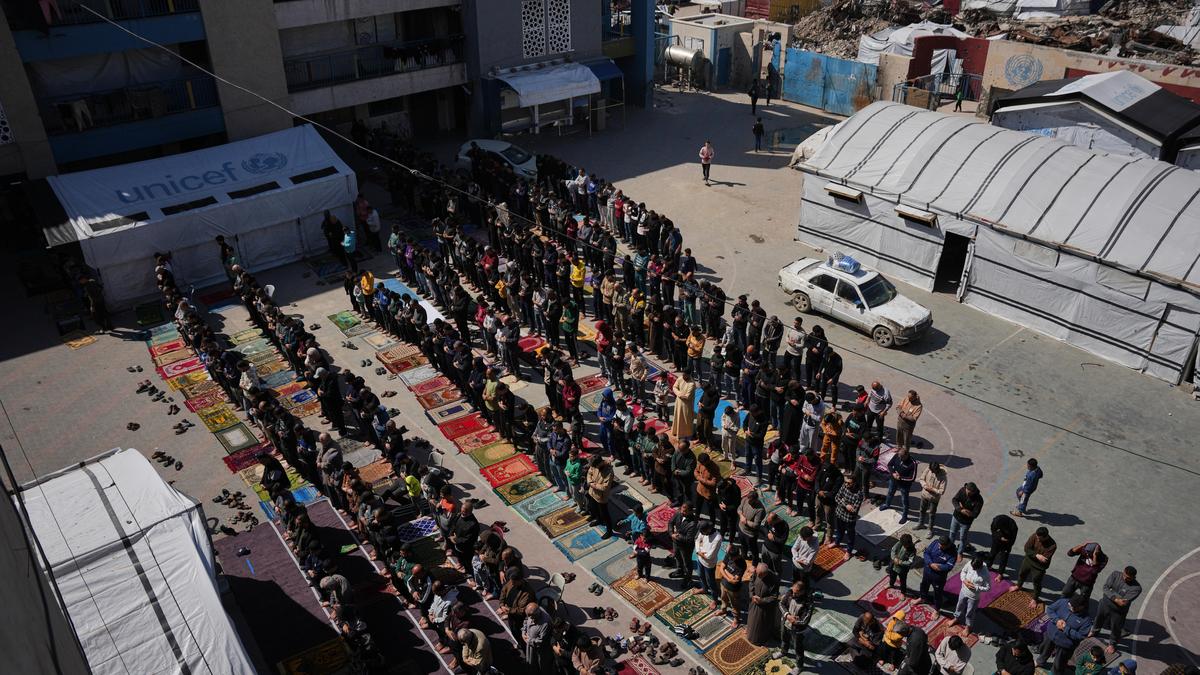
Second, watch the humanitarian aid corridors. The blockade remains the ultimate point of leverage. If Israel refuses to lift it until disarmament happens, the billions pledged in Washington will just sit in bank accounts while the population in Gaza continues to live in tents amidst the ruins of schools and mosques.
The Board of Peace wants to treat Gaza like a post-war redevelopment project. But the war isn't actually over. It's just paused. And trying to build a shiny new future on top of an active fault line is a recipe for disaster.
To get a sense of how fast this situation is moving, look no further than the sudden political shifts happening right now. Hamas just announced it's dissolving its formal government in Gaza to hand day-to-day administrative power over to a UN-backed committee of technocrats chaired by Ali Shaath.
On paper, Hamas claims this proves their commitment to reconstruction. In reality, it's a brilliant tactical pivot. By stepping back from trash collection and bureaucratic management, they shift the burden of governing a shattered populace onto the international community while keeping their underground fighters and weapons completely intact. Predictably, Israel has already dismissed the move as a meaningless political spin.
If you are tracking the viability of this peace plan, your next steps shouldn't involve watching high-level summits. Monitor whether the newly formed technocratic committee in Cairo actually secures operational control over the border crossings, and track whether Israel slows down its daily targeted strikes. Those real-world security metrics—not multi-billion-dollar pledges in Washington—will tell you if the ceasefire survives the month.