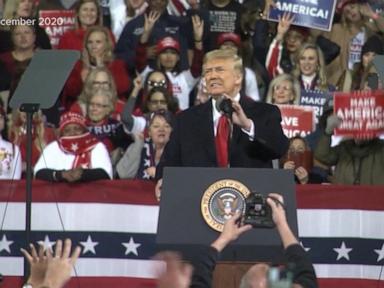
On Thursday night, President Donald Trump stood before the cameras in the Oval Office and tried to rewrite history.
If you tuned in expecting a major national security bombshell, you probably walked away disappointed. The highly anticipated primetime address, ostensibly focused on "election integrity," delivered plenty of high-stakes political theater but very little in the way of actual news. Instead, viewers got a 25-minute, tightly scripted speech designed to achieve two very specific goals: rally support for strict new voting laws and set the stage to challenge the upcoming 2026 midterm elections.
The administration had spent days teasing the release of newly declassified intelligence. White House Press Secretary Karoline Leavitt promised revelations that would expose systemic vulnerabilities. Trump himself promised a reckoning.
Yet, when the documents finally dropped, they fell flat.
The Real Strategy Behind the White House Broadcast
This address was not a spontaneous decision. It was a carefully timed political maneuver.
With the 2026 midterms looming, Republicans are facing a highly competitive electoral map. Trump's focus on election security is not just an obsession with his past defeat in 2020; it is a forward-looking strategy. By convincing his base that the current system is fundamentally broken, he achieves a double-edged political victory. He drives massive voter turnout among supporters who believe they need to overwhelm a "rigged" system, and he establishes a ready-made excuse if his preferred candidates lose in November.
Democrats quickly saw through the move. Representative Raja Krishnamoorthi, a senior member of the House Intelligence Committee, called the speech a selective declassification designed to "try to rewrite the history of an election he lost". Even some of Trump's closest congressional allies privately begged him to focus on the economy and inflation rather than looking backward.
He didn't listen. The draw of the election grievance was too strong.
Breaking Down the Declassified Document Dump
To give the speech a veneer of official authority, the White House simultaneously released a trove of newly declassified intelligence files. Trump claimed these papers revealed "shocking vulnerabilities" that had been covered up by deep-state actors within the intelligence community.
Look closely at the actual documents. They do not say what Trump claims they say.
The files detail hypothetical scenarios, localized glitches, and foreign intelligence-gathering operations. They do not contain a shred of evidence showing that votes were altered, deleted, or fabricated in any U.S. election.
In fact, some of the declassified files focus on election technology companies that are not even used in the United States.
David Becker, the executive director of the Center for Election Innovation & Research, was blunt about the lack of substance. He pointed out that the Trump administration has been in control of the federal government for 18 months, redirecting massive taxpayer resources to find voter fraud.
"And at the end of that 18 months," Becker said, "all we got is more rehashed, debunked conspiracy theories".
The Truth About the China Election Hacking Claim
The most dramatic claim in Trump's address was that China carried out "the largest compromise of election data in history" during the 2020 cycle. He alleged that Beijing gained deep access to U.S. voter rolls and used that information to actively influence the outcome.
This sounds terrifying. It's also highly misleading.
To understand why, you have to look at how voter data works in America. Voter rolls are not top-secret government files. In states like Ohio and North Carolina, the complete voter registration database is posted online for free. Anyone can download it. In other states, political campaigns, marketing firms, and advocacy groups buy this data legally for nominal fees.
If a Chinese intelligence agency downloaded or bought these public files, they did not "hack" the election. They simply accessed information that is already commercially available to anyone with an internet connection.
A joint bulletin previously released by the FBI and the Cybersecurity and Infrastructure Security Agency (CISA) confirmed this exact reality. While foreign actors have acquired voter registration information, they have never used that data to alter election results or prevent anyone from voting.
The Chinese embassy in Washington also denied the claims, stating that Beijing has no interest in interfering in U.S. elections. Trump's attempt to spin public registry access into a massive cyber-warfare narrative is a classic case of alarmism over substance.
Why Experts Say Your Vote is Safe
Trump called the current American voting system "catastrophically" short of basic security standards. But election security experts paint a very different picture.
Our system is actually remarkably resilient. It is decentralized, diverse, and heavily audited.
Lawrence Norden, an elections expert at the Brennan Center for Justice, emphasizes that multiple layers of physical and digital defense protect U.S. ballots.
- The Paper Trail: Today, roughly 98% of all votes cast in the U.S. have a verifiable paper backup. If a computer glitched or a machine was compromised, the paper ballots remain. They can be—and are—recounted by hand.
- No Internet Connection: Voting machines and ballot tabulators are completely air-gapped. They are not connected to the internet. A remote hacker in Beijing or Moscow cannot simply log in and change the tallies on election night.
- Pre-Election Testing: Before a single vote is cast, local election officials run rigorous logic and accuracy tests on every machine to ensure they are counting correctly.
- Post-Election Audits: After the polls close, bipartisan teams conduct audits, comparing the machine tallies against physical paper ballots to verify accuracy.
To alter an election at scale, an adversary would have to physically infiltrate thousands of individual, highly secure local voting offices across dozens of different states, bypass bipartisan observers, and somehow manipulate physical paper ballots without being caught. It is practically impossible.
What the SAVE America Act Actually Changes
Trump didn't just complain about the system; he also offered a legislative "fix". He used the Oval Office address to demand that Congress immediately pass the SAVE America Act.
This controversial bill would implement strict new rules for federal elections:
- Proof of Citizenship: To register to vote, citizens would be required to present physical, in-person proof of citizenship, such as a U.S. passport, naturalization certificate, or birth certificate.
- Strict Photo ID: Voters would be required to show an approved photo ID at the ballot box.
- Severe Limits on Mail-In Voting: The bill would heavily restrict the use of mail-in ballots, which Trump has long claimed are ripe for fraud.
Critics of the bill warn that these measures would not stop fraud—because non-citizen voting is already illegal and vanishingly rare—but would instead disenfranchise millions of eligible American voters. Many people, especially low-income citizens, students, and married women who have changed their names, do not have easy access to physical birth certificates or expensive passports.
The bill is currently stalled in Congress. By elevating it to a primetime focus, Trump is turning the legislation into a litmus test for Republican lawmakers ahead of the midterms.
The Teleprompter Drama and the Media Blackout
Behind the scenes, the evening was marked by high drama and open warfare between the White House and major media companies.
Several major television networks, including NBC, ABC, and CNN, chose not to broadcast the address live on their main primetime channels. They pointed to the highly partisan, unverified nature of the speech and elected to carry it on their digital streaming platforms instead. This decision infuriated Trump, who spent part of his day demanding that the federal government revoke their broadcast licenses.
Then there was the teleprompter incident.
The White House confirmed that Trump's long-time teleprompter operator was placed on administrative leave just before the address. The reason? The operator was allegedly caught placing bets of nearly $100,000 on a online prediction market, wagering on specific words and phrases the president would use during the broadcast.
The incident forced Trump to stick closely to his written script, a constraint that clearly cramped his usual freewheeling, rally-style delivery.
Where the Election Security Debate Goes Next
The Oval Office address made one thing perfectly clear. The debate over how we run our elections is only going to get hotter as we march toward November.
If you want to protect your vote and cut through the political noise, focus on what you can actually control.
Double-check your voter registration status early. Make sure your local photo ID meets your state's current requirements. If you plan to vote by mail, request your ballot the first day you are eligible and return it well ahead of the deadline. Local election offices are run by your neighbors—bipartisan civil servants who work incredibly hard to keep the system clean. Volunteer as a poll worker if you want to see how the safeguards operate firsthand.
Do not let the primetime rhetoric distract you from the mechanics of local democracy.