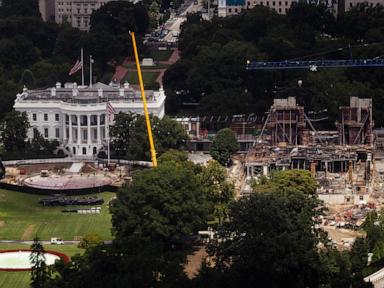
A massive construction site on the White House grounds has sparked an intense constitutional showdown. Donald Trump insists his proposed $400 million ballroom project is vital for the safety of the United States. Federal judges disagree, and the courts have stepped in to halt the work.
If you're wondering how a luxury entertainment space turned into a top-tier security debate, you aren't alone. The controversy isn't just about architecture. It exposes a deep legal clash over executive power, congressional authority, and what the White House actually needs to defend itself in the modern era.
The Official Security Claims Behind the Blueprint
The Trump administration isn't marketing this project as a simple venue for banquets and galas. Planners built the entire defense of the structure around hard-core military requirements. The design replaces the former East Wing with an expansive 90,000-square-foot complex that reaches six stories underground.
According to White House briefings, the blueprints include heavy-duty protective features:
- Bomb shelters designed to withstand severe attacks.
- Advanced medical spaces and underground hospital facilities.
- Structural elements utilizing missile-resistant steel beams and columns.
- A flat, reinforced roof meant to act as a drone port and a physical shield against aerial threats.
Trump has argued publicly that these elements are completely intertwined. You cannot separate the underground bunkers from the ground-floor structure or the specialized roof. In his view, pausing the above-ground build compromises the entire defense architecture of the site.
Why the Courts Blocked the Project
Federal courts have looked at those same blueprints and drawn a very different conclusion. A divided panel on the U.S. Court of Appeals for the D.C. Circuit ruled that the executive branch cannot bypass Congress to remake a historic national landmark.
Judges Patricia Millett and Bradley Garcia didn't mince words in their majority opinion. They wrote that a president acts as a temporary tenant rather than an owner of the White House property. National security concerns don't act as a blank check to ignore the separation of powers.
The court made a specific distinction in the legal blocks. While above-ground construction on the actual ballroom must stop, lower-level work addressing strictly underground security bunkers and baseline site protection is allowed to continue. Even so, the ruling halted the fast-tracked vision of finishing the complex before the end of Trump's term.
What Happens Next
Trump has already stated his intention to take the fight directly to the U.S. Supreme Court. The appeals court granted a temporary two-week stay to give the administration time to file its emergency appeal.
Public opinion remains heavily divided. Polling data from sources like ABC News and Ipsos show that a clear majority of Americans oppose tearing down the historic East Wing for this type of expansion, while a smaller base supports the modernization effort.
The upcoming Supreme Court battle will decide a much bigger question than just the fate of a D.C. construction zone. It will set a lasting precedent for how much unilateral power any president holds over federal properties.
Track the Supreme Court docket for the emergency filings over the next fortnight to see if the high court takes up the case before the temporary stay expires.