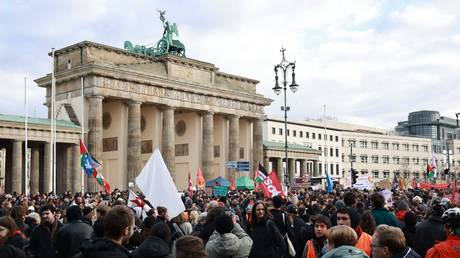
Walk down any street in Berlin, Leipzig, or Munich right now, and you can feel the political fatigue. People aren't just tired of politicians. They're losing faith in the entire system.
According to the latest Leipzig Authoritarianism Study by the Elsa Frenkel-Brunswick Institute, only about one-third of Germans are actually satisfied with how democracy functions in their country. Think about that for a second. Two-thirds of the population are unhappy. This marks the lowest point since the survey started tracking these metrics back in 2002.
People often miss the real story behind these numbers. It's easy to blame general voter apathy, but the truth is much sharper. Citizens care deeply, which is why they're angry. They feel ignored by mainstream institutions, squeezed by economic pressures, and disillusioned by political infighting.
The East-West Divide Keeps Widening
If you want to understand where this frustration boils over loudest, look at the former East German states. Here, satisfaction with democracy drops even further, down to roughly twenty-two percent.
This isn't a new phenomenon, but it's getting worse. Decades after reunification, many eastern citizens still feel like second-class participants in a political culture designed entirely in Bonn and Berlin. When local industries struggle, infrastructure lags, and people feel culturally dismissed by urban elites, trust evaporates.
Yet, there is a fascinating paradox here. Even as satisfaction with how democracy operates hits historic lows, broad support for the abstract idea of democracy remains remarkably high. Nearly ninety percent of respondents still agree that democracy is the right form of government in principle.
So, what gives?
The anger isn't directed at the core concept of freedom or voting. It's targeted squarely at the execution. Voters feel that the political machinery has become bloated, slow, and completely disconnected from everyday reality.
The Cost of Political Paralysis
Federal leadership under Chancellor Friedrich Merz and the broader government coalition has faced an uphill battle. Recent polling data highlights staggering levels of public discontent with executive performance, with a vast majority expressing dissatisfaction.
When everyday life gets harder—fueled by economic jitters, high cost-of-living concerns, and persistent debates over immigration—citizens look to Berlin for quick, effective solutions. Instead, they get endless compromises, public squabbling, and bureaucratic gridlock.
The Leipzig study also flagged a concerning rise in xenophobic and anti-Semitic sentiment, noting that nearly sixty percent of respondents agreed, at least partially, with claims that the country has been overwhelmed by immigration. When mainstream parties fail to address these anxieties candidly and effectively, populist and radical alternatives step into the vacuum.
What Happens Next
Ignoring these numbers won't make them go away. Dismissing unhappy voters as misinformed only widens the chasm.
Restoring faith in democratic institutions requires more than PR campaigns or finger-waging from politicians. It demands tangible delivery. Governments need to fix crumbling infrastructure, stabilize the economy for young professionals, and prove that public input actually shapes policy.
If mainstream leaders don't start listening to that dissatisfied two-thirds, the cracks in the foundation are only going to widen.