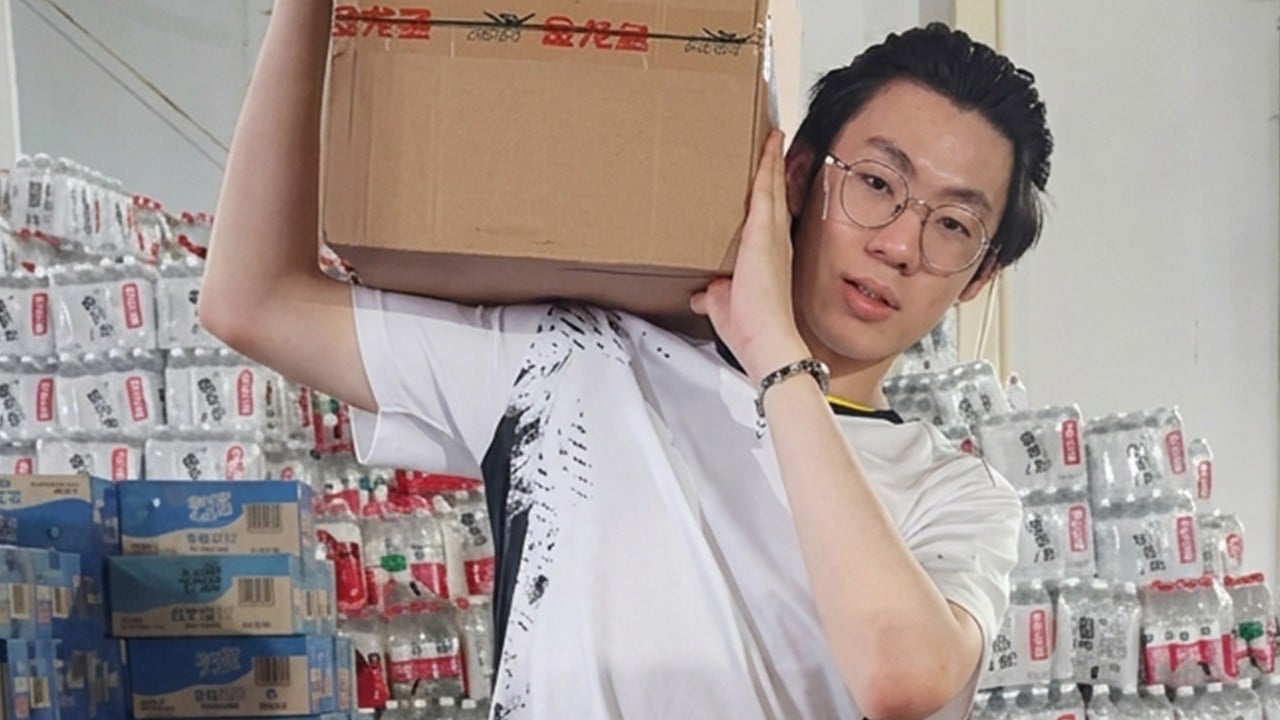
When 18-year-old Wu Yulun finished China's grueling college entrance exams this summer, his parents assumed he was planning a standard post-gaokao vacation. They thought he was heading off to Wuxi, a peaceful city a short train ride away from home.
He wasn't.
Instead of taking a relaxed holiday, Wu and his high school classmate Xin Ziyu packed heavy bags with essential supplies, hopped on a high-speed train, and traveled over 13 hours straight into the heart of Guangxi. The region was reeling from catastrophic, typhoon-driven flooding that killed dozens of people and displaced thousands.
Why lie? Simple. They knew their parents would stop them.
The Decision to Skip the Standard Graduation Trip
Most high school graduates celebrate by resting or traveling with friends. Wu had similar plans until he saw an online call for volunteers from a local youth association in Guangxi. Torrential rains had devastated parts of the region, leaving emergency workers overwhelmed as they tried to distribute aid.
Rather than just posting a sympathetic message online, Wu decided to do something about it. He called Xin, who immediately signed on.
They didn't just show up empty-handed either. Using their own personal savings, the two boys bought practical, high-demand items:
- Over 250 packages of sanitary pads
- Cases of instant cup noodles
- Pre-packaged sausages and canned congee
To keep his family in the dark, Wu hid the bulky boxes of supplies at a nearby parcel station near his home. He packed a smaller, decoy bag for his room so his family thought he was packing light for a quick trip west to Wuxi.
Showing Up Without Playing the Hero
When the teenagers arrived late at night in Hengzhou, one of the hardest-hit areas, they didn't try to charge into dangerous floodwaters or act like elite rescue workers.
That choice alone separates them from the usual viral stunts you see on social media.
Recognizing they lacked professional disaster training, Wu and Xin volunteered at a regional distribution center. They spent grueling hours unloading heavy relief trucks and organizing food and medical items. Local teams then carried those supplies on foot to families cut off in remote mountain villages.
"We did not want to play the hero," Wu later explained. "Helping where we could and serving as one small cog in the relief effort was enough."
They worked through the mud, hauled heavy loads alongside local volunteers, and slept where they could for nearly a week before heading back to Shanghai.
What This Story Tells Us About Genuine Disaster Relief
It’s easy to focus on the deceit—lying to parents isn't something most adults want to encourage. But look closer at why this story struck such a deep chord across Chinese social media.
First, it highlights a stark reality about logistics during severe weather events. Frontline rescue teams often face massive administrative strain. Having young, healthy volunteers who are content doing basic, heavy physical labor—without demanding special accommodations—is incredibly valuable in the early days of a disaster response.
Second, it reflects a shift in how the younger generation views civic duty. Wu quoted a famous line from Chinese writer Lu Xun to explain his motivation: "The infinite distance and countless people are all connected to me." That isn't abstract philosophy to these teens. It's an actionable mindset.
Of course, Wu's mother found out. A friend spotted news photos of the mud-splattered teenagers online and alerted her. While she admitted she wasn't happy about his sneaky tactics, she acknowledged his courage and supported his intentions once she verified he was safe.
When the boys returned home, Wu learned he had been accepted into East China Normal University. Meanwhile, local tourism officials in Wuxi—the city used as their cover story—heard about the stunt and offered both teenagers free entry to local attractions for a whole year as a lighthearted nod to their journey.
What You Can Learn from Their Approach
If you're ever inspired to help out during a crisis or disaster, copy their preparation, not their cover story:
- Assess your skill set objectively. If you aren't trained in swift-water rescue or emergency medicine, stay away from active danger zones.
- Focus on logistics. Sorting, packing, and moving supplies inside relief hubs frees up trained first responders to focus on life-saving operations.
- Bring what's actually needed. Consult emergency shortage lists before buying supplies. Everyday basics like hygiene products and shelf-stable foods are almost always in short supply.
Real civic engagement isn't about grand gestures or chasing online praise. It's about showing up, keeping your head down, and doing the heavy lifting where it actually counts.