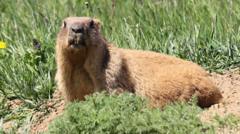
Science funding is a complete mess right now. When traditional grants dry up, researchers have to get creative to keep their labs afloat. Enter Daniel Blumstein, a UCLA professor who decided to take one of the world's longest-running wildlife studies to an unexpected corner of the internet.
His team launched an OnlyFans account called OnlyMarms. Instead of adult content, subscribers get G-rated, wholesome videos of chubby yellow-bellied marmots lounging around the Rocky Mountains. It sounds like a joke, but the financial crunch behind it is entirely real.
The Reality Behind OnlyMarms
The project itself is legendary in the scientific community. Based at the Rocky Mountain Biological Laboratory in Crested Butte, Colorado, researchers have tracked individual yellow-bellied marmots since 1962. It ranks as the second-longest study of wild mammals on Earth, trailing only Jane Goodall’s chimpanzee research.
Over decades, the project mapped out how these alpine rodents age, survive climate shifts, and maximize hibernation. But keeping field stations running costs money. Blumstein's team needs between $75,000 and $100,000 annually to pay graduate students and fund fieldwork. When federal science grants started shrinking, the lab faced a major shortfall.
Blumstein watched a comedy on Apple TV called Margo's Got Money Troubles, where the main character turns to digital content creation to escape financial ruin. That sparked a question. If creators make a living streaming on OnlyFans, why couldn't a wildlife lab share its vault of goofy rodent videos for tips?
Setting Up Shop on an Adult Platform
Getting a G-rated animal page approved on a platform built for adult creators wasn't simple. Blumstein had to deal with strict verification filters that weren't exactly designed to check the age of a furry, loaf-shaped rodent. Once the account cleared verification, a graduate student came up with the name OnlyMarms, and the internet did its thing.
The account posts fresh pictures and bios every Monday and Friday. So far, it has brought in about $4,000. It won't cover the entire annual budget, but every bit helps when graduate students are losing their funding. Beyond the subscription dollars, it exposes a massive global audience to ecological research that usually stays locked inside academic journals.
The Unofficial Meme Coin Chaos
Internet culture rarely stops at a simple subscription model. Once the OnlyMarms name started circulating online, the cryptocurrency crowd jumped into the mix.
Independent creators launched several OnlyMarms-inspired meme coins on Solana-based platforms like Pump.fun. Blumstein made it clear that the UCLA research team didn't create these tokens. Even so, some developers set up mechanisms where transaction fees flow back to support the project. It mirrors the viral phenomenon seen with Moo Deng the pygmy hippo, proving that internet meme culture can accidentally turn local wildlife into global digital assets.
What Comes Next for the Marmot Crew
The lab isn't stopping at digital subscriptions. They partnered with a Colorado brewery to brew a specialty "Marmot Tears" IPA and are gearing up for "Fat Marmot Week" later in August. Fans can vote in bracket-style matchups to crown the chunkiest rodent before winter hibernation begins, much like Alaska's famous Fat Bear Week.
If you want to support real field research without navigating adult platforms, the UCLA team accepts direct donations through the university. But if you want to chip in a few dollars while looking at high-definition footage of alpine rodents eating grass, the digital door is open. Science has officially entered the creator economy, and honestly, it's working.
:max_bytes(150000):strip_icc():focal(599x0:601x2)/sydney-sweeney-emmys-2025-5feae831f782414085c56ff6c1efc704.jpg)