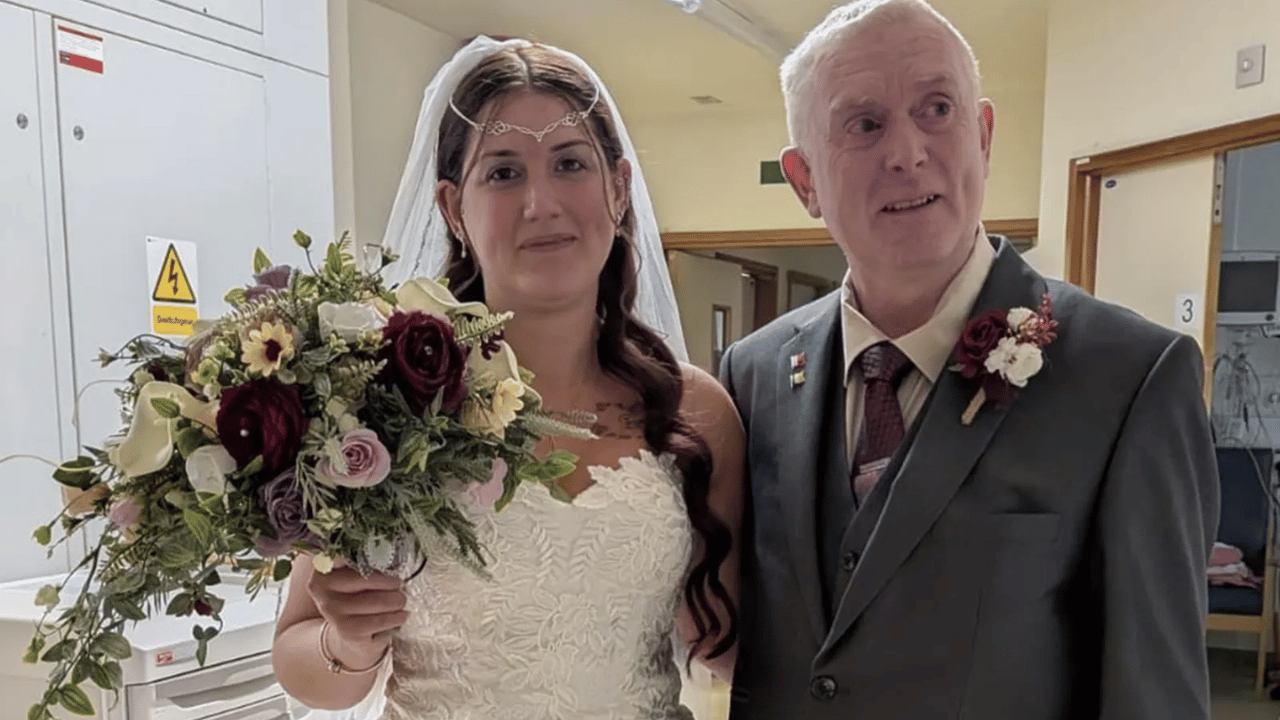
Plans shatter easily. You spend months booking venues, tasting cakes, and arguing over seating charts, assuming everything will go according to schedule. Then life steps in. Days before walking down the aisle, a UK bride faced every family's worst nightmare when her father suffered sudden heart failure and landed in a hospital bed.
Most people would panic, cancel, or try to postpone a massive event involving dozens of vendors and non-refundable deposits. This bride didn't do that. Instead, she packed up her wedding dress, headed straight to the hospital ward, and made sure the tradition happened anyway.
Let's look at how hospital environments, family resilience, and dedicated medical staff can turn a heartbreaking crisis into an unforgettable memory.
When Reality Crashes the Wedding Timeline
Heart failure doesn't check your calendar. When an elderly or vulnerable parent falls seriously ill right before a major family milestone, the emotional toll is immediate. You're caught between the joy of a life-changing celebration and the raw fear of losing someone you love.
The typical advice you'll hear is to put everything on hold. People tell you to focus entirely on health and forget the ceremony. While medical priorities always come first, emotional health matters too. Forcing a family to abandon every shred of normalcy can drain their remaining energy.
This specific UK bride understood something crucial. The core of a wedding isn't the expensive silverware or the three-tier cake. It's about marking a transition surrounded by the people who matter most. If her father couldn't travel to the grand ballroom, she would bring a piece of the ballroom to his hospital room.
The Logistics of Bringing a Wedding to a Hospital Ward
Executing a surprise event inside a clinical medical ward sounds impossible on paper. Hospitals have strict infection control protocols, limited visiting hours, and constant medical equipment monitoring. You can't just waltz in with a DJ, flashing lights, and a crowd of fifty cheering guests.
Making a moment like this happen requires active collaboration with nurses, doctors, and healthcare support staff.
- You need to secure permission from the charge nurse.
- You have to respect patient privacy and the comfort of roommates.
- You must time everything around medication schedules and physical therapy sessions.
Hospital staff often get stereotyped as rigid bureaucratic gatekeepers. In reality, nurses and care teams deal with heavy emotional burdens every single shift. When families approach them with a creative, heartfelt request that boosts a patient's spirits, many healthcare workers go above and beyond to make it work. They cleared space, helped adjust monitoring lines, and made sure the room felt as celebratory as sterile walls possibly could.
Why Small Gestures Matter More Than Grand Productions
We live in a culture obsessed with scale. Social media feeds are flooded with destination weddings, extravagant fireworks, and multi-day celebrations that cost more than a starter home. It's easy to lose sight of what actually moves us.
An impromptu father-daughter dance in a hospital gown beats a choreographed routine on a polished dance floor every single time. It strips away the superficial noise. There are no cameras trying to capture a perfect angle, no distant cousins talking over the music, and no timeline to rush.
Stripping away the pressure of a massive wedding reveals the raw emotional architecture of family bonds.
When you watch a bride in full white lace step into a quiet hospital room to hold her ailing father's hand, you realize authenticity wins. People remember how you made them feel, not how much money you spent on centerpieces.
How to Handle Last-Minute Health Crises During Major Events
If you find yourself facing a sudden medical emergency right before a big life event, you need a clear strategy to stay grounded. Panic makes bad situations worse.
First, communicate transparently with your medical team. Don't try to sneak things past nurses. Tell them what you're hoping to achieve, and let them guide you on safety limits. If a full dress reveal is too exhausting, scale it down. Sometimes just sitting together in formal wear for ten minutes provides the exact emotional boost needed.
Second, let go of perfection. Your photos won't look like a bridal magazine spread. The background might feature an IV pole or a curtain partition. That's fine. Those details tell the real story of resilience and love under pressure.
Finally, lean on your community. The wedding staff, venue coordinators, and family members want to help. Delegate the logistical headaches so you can focus entirely on being present with your loved one.
Take a deep breath, adapt to the room you are in, and focus on the person who matters most.