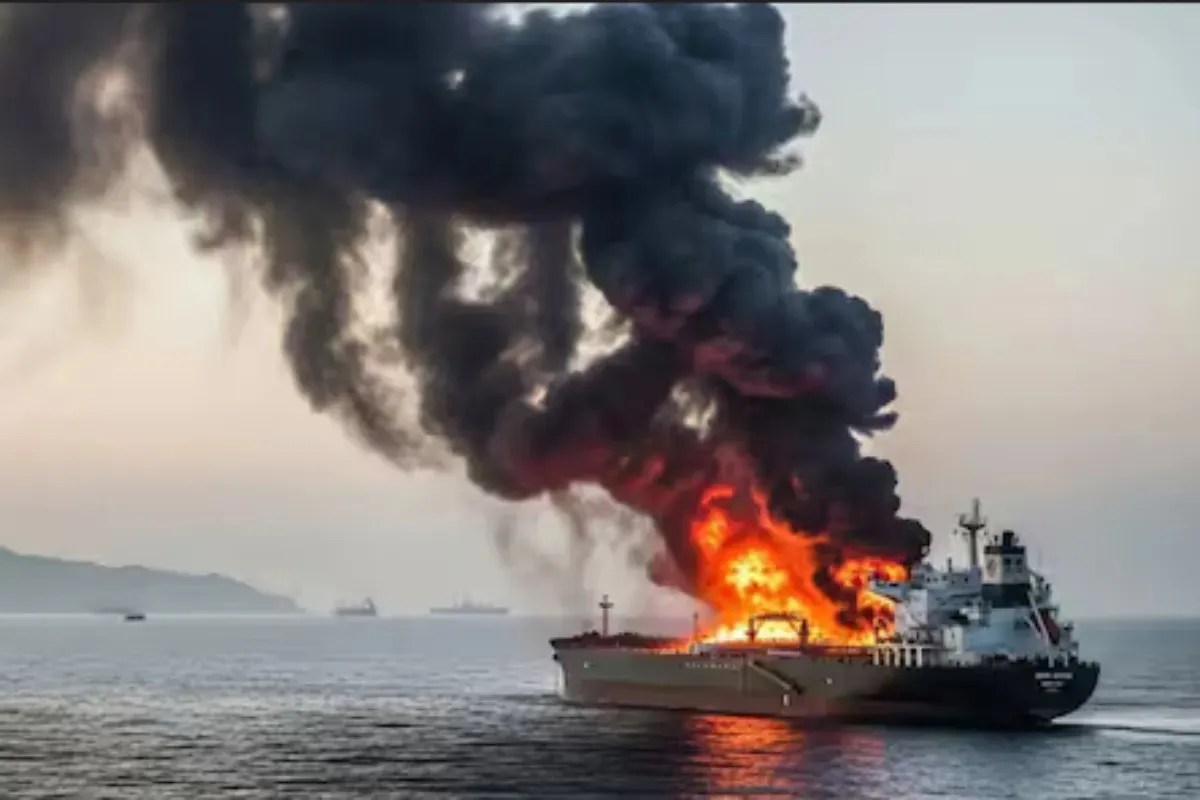
Over 1,000 drones lit up the night sky across Russia in a single overnight operation, culminating in what local authorities officially called the largest-ever aerial assault on Moscow. If you thought the conflict was settling into a predictable, slow-moving grind along stationary front lines, think again. Kyiv just changed the geometry of the entire campaign.
Let's look at what actually went down.
Breaking Down the Numbers
Russian air defense networks claimed they intercepted roughly 1,100 Ukrainian drones nationwide, stretching from the occupied Crimean peninsula all the way to the outskirts of the capital. In Moscow alone, Mayor Sergei Sobyanin reported that roughly 450 incoming systems were shot down en route.
Even with heavy air defense countermeasures, debris and direct impacts bypassed defenses. The Moscow Oil Refinery in the Kapotnya district took hits, sparking visible fires. Residential structures took damage too, forcing the evacuation of roughly 400 people, including 70 children. Local officials in the wider Moscow region confirmed two fatalities—a 74-year-old man and a 44-year-old woman—alongside 20 injuries.
Why launch this massive wave right now? Timing matters.
The Election Timing and Economic Strategy
This unprecedented drone swarm coincided precisely with the third and final day of Russia's parliamentary elections—the first wartime legislative vote held under strict Kremlin control. Moscow officials immediately framed the assault as a desperate attempt to disrupt the polls. Kyiv had a different target in mind: the financial machinery powering the invasion.
President Volodymyr Zelenskyy confirmed the strikes targeted key oil and logistics infrastructure, explicitly pointing out that these sectors generate billions of dollars to sustain the Kremlin's war chest. Kyiv didn't just rely on standard small-scale quadcopters. Reports and statements indicate a sophisticated mix of domestically developed long-range platforms, including Flamingo and Pelican systems, hitting high-value strategic targets deep within Russian territory.
The Escalating Long-Range Aerial Duel
Ground combat along the roughly 1,250-kilometer front line in eastern and southern Ukraine has slowed to a crawl. Heavy concentrations of frontline drones and ground-based robotic systems have made traditional troop maneuvers suicidal. Both militaries have responded by shifting focus upward.
While Ukraine pounds refineries and logistics nodes deep inside Russia to make the war's economic and daily realities felt by ordinary citizens, Russian strikes continue to pound Ukrainian urban centers. Just ahead of the Moscow drone barrage, a brutal strike in the Kyiv region claimed the lives of a mother and her children, highlighting the relentless back-and-forth cost of this prolonged conflict.
What Comes Next
Moscow continues to ring its capital with multi-layered air defense grids, trying to shield its core from incoming threats. Yet, stretching defensive assets thin across a massive geographic footprint leaves other regions exposed. Kyiv's expanding production of domestic long-range strike tech shows no sign of slowing down, especially as international military assistance, such as recent U.S. air defense packages, continues to flow.
The strategy is clear. Kyiv wants to prove that no capital is entirely out of reach as long as the war continues.