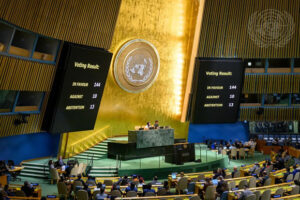
Global diplomacy rarely moves quietly, but the United Nations managed to rush through a historic decision behind closed doors this summer. On July 24, the UN General Assembly reappointed Volker Türk as the High Commissioner for Human Rights. It is a big deal because Türk becomes the first person set to serve two full terms since the office started back in 1993.
Yet, the victory came with severe friction. Ten nations voted against the reappointment, exposing deep fractures in international relations, backroom political maneuvering, and a strained human rights system facing acute financial pressures. If you want to understand where global power is shifting, look closely at how this vote played out.
How the Backroom Deal Unfolded
UN Secretary-General António Guterres wanted this done fast. With his own second term expiring in 2026, Guterres pushed through Türk's reappointment without an open competition or a broad public consultation process.
The strategy was transparent. By moving quickly, the current administration kept the sensitive appointment off the incoming Secretary-General's desk and avoided letting opposition consolidate. Most member states went along with the expediency, but Washington pushed back hard.
The United States tried to stall the vote, pointing out a total lack of meaningful consultation. Ireland stepped up on behalf of the European Union to defend the timeline, and the US motion got crushed 63 to 27. American diplomats didn't mince words, labeling the procedure "classic UN cronyism" and warning of direct consequences.
Russia tried a different wrench in the gears. Moscow proposed a brief 81-day extension of Türk's mandate to push the final choice onto the next UN leadership. That amendment failed too, getting voted down 71 to 19.
Strange Bedfellows in the Opposition
When the final tally came down, only ten countries opposed Türk. The list of dissenters tells a fascinating story about shifting geopolitical alignments.
Argentina, Burkina Faso, Israel, Mali, Nicaragua, Niger, North Korea, Russia, Trinidad and Tobago, and the United States all voted down the appointment.
Look at that lineup. You have the United States and Israel voting right alongside North Korea and Russia. You also see military-run Sahel states like Mali and Niger grouping together with Argentina. It shows that traditional ideological divides are cracking open. Washington and Moscow find themselves aligned in opposition to international administrative bodies when it suits their immediate national interests.
On the flip side, states with active UN human rights scrutiny, including the Democratic Republic of the Congo, Sudan, and Syria, actually backed Türk. Voting for the High Commissioner doesn't mean a government loves human rights oversight. Often, it just means they recognize the practical value of maintaining an open diplomatic channel with the Office of the High Commissioner for Human Rights (OHCHR).
The Financial Squeeze on Human Rights
Behind the political theater lies a harsher reality: money. The OHCHR is drowning in financial strain. Ongoing funding cuts from major contributors like the United States have forced internal staff reductions and slashed field operations.
When global powers weaponize budgets against international agencies, human rights monitoring suffers where it matters most. Türk steps into his second term with fewer resources to investigate abuses, protect activists, or hold aggressive state actors accountable.
Global institutions are buckling under national self-interest. Continuity won the vote, but the system is walking on fractured ice.