The United States is hitting its semiquincentennial. That is a massive mouthful of a word that basically means the country is turning 250 years old on July 4, 2026. If you think this is just another standard Fourth of July with a few extra sparklers and some longer parade routes, you are completely misjudging what is happening across the country right now.
This is the biggest nationwide milestone since the 1976 Bicentennial. Cities have spent years planning events that go far beyond local cookouts. We are talking about synchronized historical spectacles, massive naval fleets, and even a daytime ball drop in Times Square.
People are searching for the best spots to catch the action because the sheer volume of events is overwhelming. You want to know where to go, what to look for, and how to avoid the absolute chaos of the heaviest crowds. This guide maps out exactly how the US 250th birthday is going down, the exact events worth your time, and the behind-the-scenes realities that the glossy promotional videos do not tell you.
The East Coast Epicenters of the Celebration
The original thirteen colonies are naturally claiming the lion's share of historical bragging rights. The events planned for these cities are massive in scale.
Philadelphia where it all started
No city has more skin in the game than Philadelphia. It is the literal birthplace of American independence, and local planners have treated 2026 like their ultimate moment on the world stage. The city's signature Wawa Welcome America Festival has been expanded into an absolute marathon, starting all the way back on Juneteenth and running continuously straight through to July 4.
If you visit Philadelphia during the peak of the celebration, you will see a massive parade featuring representatives from all fifty states and US territories. The city is also hosting ArtPhilly, a multi-week festival that has turned public spaces into stages for live performances and massive public murals.
The most permanent marker of the day happens at Independence Mall. On July 4, officials are burying a national time capsule. The instructions are explicit. It will remain underground until Americans open it on the nation's 500th birthday in the year 2276. If you want to see history that links the past directly to the deep future, standing on the pavement in Philly is where you want to be.
Washington DC goes bigger than ever
The nation's capital is attempting to stage the largest fireworks display in global history. That is the official promise coming out of the planning committees. The night sky above the National Mall will be completely filled with pyrotechnics, but the daylight hours are just as packed.
Before the fireworks even start, the capital is hosting the Freedom 250 Grand Prix. This is a first-of-its-kind IndyCar race on a street circuit that weaves directly through the National Mall and loops around iconic landmarks. Imagine high-performance open-wheel race cars screaming past the Smithsonian museums.
The Potomac River will also host a massive sixty-ship naval review. On land, the National Mall is currently home to the Great American State Fair, a massive cultural exhibition representing food, agriculture, and traditions from every pocket of the country.
New York City breaks tradition in Times Square
New York is doing something it almost never does. It is dropping the famous Times Square ball in the middle of the afternoon.
At exactly 2:00 PM Eastern Time on July 4, the ball will descend to mark the precise historical moment the Continental Congress officially adopted the Declaration of Independence. It is a total departure from the usual New Year's Eve midnight tradition. The city is lowering the ball eight separate times throughout the day to align with midnight in every single US time zone, starting early in the morning for Pacific territories like Guam and wrapping up the next morning for American Samoa.
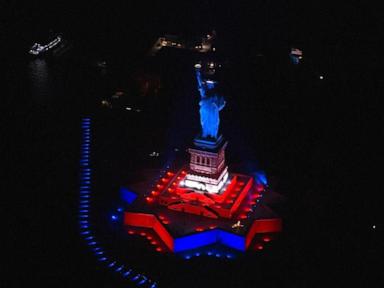
Down in the harbor, the maritime scale is staggering. The Sail4th 250 event is bringing more than thirty international tall ships and over fifty foreign warships into New York Harbor. They will pass in a formal presidential review and salute the Statue of Liberty. It is the largest single gathering of historic naval vessels in modern history.
Boston honors the cradle of liberty
Boston is focusing heavily on the Revolutionary War aspect of the milestone. As the final port of call for the international tall ships fleet, the city is packing its waterfront with historic vessels.
The National Park Service poured millions of dollars into restoring local revolutionary sites specifically for this year, including a massive overhaul of the Dorchester Heights Monument. Throughout July, the city is staging massive historical reenactments that make the standard local parade look like an afterthought. Regiments of actors are recreating specific skirmishes and political debates in the exact places they occurred 250 years ago.
Moving West with America's Block Parties
The US 250th birthday is not strictly an East Coast affair. The celebration stretches all the way to the Pacific, using technology and coordinated regional festivals to bridge the geographic gaps.
Los Angeles is anchoring the West Coast side of things with a massive celebration at the Los Angeles Memorial Coliseum. Billed as America's Block Party, the event connects major western hubs via live broadcast feeds. The event features a massive lineup including Chris Stapleton, The Smashing Pumpkins, and Chaka Khan, all hosted by Queen Latifah. The night wraps up with a coordinated display of fireworks and a massive fleet of synchronized drones painting historical imagery across the California sky.
In the midsection of the country, cities like Chicago and Nashville are leaning into public music festivals and open-door museum days. Nashville is using its legendary music scene to host free public concerts across multiple stages downtown.
For people who want to avoid the crushing crowds of the northeastern corridor, mid-sized cities like San Antonio and Denver are running parallel celebrations. They feature local food festivals, neighborhood parades, and synchronized fireworks that offer the exact same historic weight without the multi-hour gridlock of Washington or New York.
The Logistics and Corporate Cash Flow Behind the Scenes
An event of this scale does not just happen organically. It takes hundreds of millions of dollars and an immense amount of political maneuvering. The business side of the US 250th birthday is fascinating and occasionally controversial.
Congress originally established the bipartisan America250 Commission to oversee the national roadmap. Individual states then set up their own commissions to handle regional funding. In Washington, a semi-private entity called Freedom 250 has taken the lead on managing the massive events on the National Mall, including the Great American State Fair and the main July 4 rally.
Organizing these massive crowds requires highly specialized management. Contracts worth tens of millions of dollars have gone to major event production firms to handle everything from temporary stage construction to massive security footprints. Critics have pointed out that many of these massive federal contracts were awarded through fast-tracked processes due to the hard deadline of July 4, 2026. There is no delaying the country's birthday, so agencies paid premium prices to guarantee that the stages, barricades, and audio systems were ready on time.
Corporate sponsors have also jumped at the chance to tie their brands to the semiquincentennial. Historic American companies, from watchmakers like Bulova to massive food brands, are funding specific segments of the festival. You will see corporate logos sitting alongside historical exhibits all summer long. It is a reminder that while the event celebrates 1776, it is powered by modern corporate capital.
How to Actually Participate Without Losing Your Mind
If you are planning to experience the US 250th birthday in person, you need an actual strategy. Going into this blindly will result in you sitting in a gridlocked parking lot or staring at the back of someone's head three miles away from the nearest stage.
- Book public transit early: Cities like Philadelphia and Washington DC are shutting down massive blocks of their downtown cores to vehicle traffic. If you think you can drive to the National Mall or Independence Hall and find a spot, you are mistaken. Use the metro systems, trains, or designated park-and-ride shuttles.
- Look for free tall ship tours: If you are in New York or Boston, do not just watch the ships from the pier. Events like Sail4th 250 offer free public boarding tours at sites like Brooklyn Bridge Park and the Manhattan Cruise Terminal during the days surrounding July 4. You must reserve these vouchers online in advance.
- Host or attend America's Potluck: If you want to avoid crowds entirely, look into the national potluck initiative scheduled for July 5. Started by regional commissions, this is a nationwide push for neighborhoods to host community meals to mark the day after the big anniversary. It is a low-stress way to participate from your own backyard.
- Download local event apps: Every major host city has launched a dedicated digital guide for their specific 250th calendar. These apps provide real-time updates on crowd capacities, security checkpoint wait times, and sudden schedule adjustments for flyovers and drone shows.
The US 250th birthday is a once-in-a-generation occurrence. Whether you prefer the deafening roar of IndyCars on the National Mall, the sight of historic tall ships in New York Harbor, or a quiet community cookout in your local neighborhood, make sure you take a moment to look around. We won't see a milestone like this again until the tricentennial in 2076. Pick your spot, grab your credentials or travel tickets now, and secure your place in this piece of living history.