Donald Trump wants to buy Greenland. Again. When he first floated the idea back in 2019, the world laughed. It felt like a bizarre, real estate mogul’s punchline. Copenhagen flatly refused, calling the proposal absurd.
But nobody is laughing anymore.
Since Trump returned to the White House, the geopolitical rules that kept the Arctic stable have cracked. What used to be a fringe diplomatic joke has morphed into a genuine security nightmare. The concept of a modern siege of Nuuk—the tiny, ice-fringed capital of Greenland—is no longer confined to the imagination of dystopian writers. It is a terrifyingly plausible projection of where raw power politics is heading.
This is not about an overnight invasion with paratroopers. It is about a slow, crushing campaign of economic pressure, military muscle-flexing, and sovereign bullying that puts Europe in an impossible position. If you think Greenland is too remote to spark a global crisis, you aren't paying attention.
The Cold Reality Behind the Arctic Power Grab
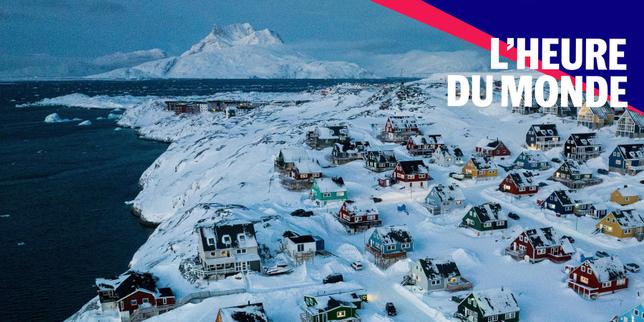
Nuuk is a quiet city of roughly 20,000 people. It is a place where colorful houses cling to dark rocks, overlooking deep fjords. Yet, this isolated capital is rapidly becoming the center of a new cold war.
Greenland is technically an autonomous territory under the Danish Crown. Copenhagen still handles its defense and foreign policy, while bankrolling the local government with a yearly subsidy of over 4.4 billion Danish kroner. That money keeps the lights on. But Greenlandic politicians are increasingly pushing for full independence.
Here is where the trap snaps shut.
Greenland cannot afford to be independent on fish exports alone. To cut ties with Denmark, Nuuk needs cash. And the only way to get that cash is by mining the island’s massive, untouched deposits of rare earth elements, uranium, and critical minerals.
Washington knows this. Trump's administration sees an opportunity to step in as Greenland's new financial patron, effectively buying the island's loyalty by replacing Danish subsidies with American mining investments. By offering Nuuk a golden parachute, the US can bypass Copenhagen entirely.
If Denmark resists, the pressure turns military. The US already operates Thule Air Base (now Pituffik Space Base) in the far north of the island. It does not take a massive leap of imagination to see Washington expanding its military footprint under the guise of "protecting" North America from Russian or Chinese Arctic aggression.
Why Washington is Obsessed with the High North
To understand why Greenland has a target on its back, you have to look at the global shipping lanes and the green energy transition.
As climate change melts the Arctic ice caps at an alarming rate, new trade routes are opening up. The Northern Sea Route could shave weeks off shipping times between Asia and Europe. Whoever controls Greenland controls the gateway to these new maritime highways.
Then there is the mineral wealth. Greenland sits on some of the largest undeveloped deposits of critical minerals outside of China. We are talking about neodymium, praseodymium, terbium, and dysprosium—the exact elements needed for electric vehicle motors, wind turbines, and advanced military hardware.
Right now, China dominates the supply chain for these metals. For Washington, securing Greenland is not a vanity project; it is a resource security imperative. If the US can control Greenlandic mining, it breaks Beijing’s monopoly in one swift move.
The European Nightmare and the NATO Paradox
A US-led squeeze on Greenland leaves Europe in a state of strategic paralysis.
Denmark is a NATO ally and a member of the European Union. Under normal circumstances, an aggressive US move on Greenland would trigger an existential crisis within the alliance. But these are not normal times.
If Washington demands "joint administration" or threatens economic sanctions against Denmark to force a lease or sale of the territory, what can Europe actually do?
- The military mismatch: European powers do not have the naval capacity to project power in the Arctic without US logistical support. A European military flotilla sent to protect Greenlandic waters would look absurd next to the US Navy.
- The diplomatic divide: Eastern European nations, terrified of Russia, will never risk alienating Washington over a dispute about Greenland. They need the US security umbrella too much.
- The economic leverage: The US remains Europe's largest trading partner. No major European economy is going to start a trade war with Washington to save Danish sovereignty over an icy giant.
This leaves Denmark isolated. The European Union might issue strongly worded statements, but when the pressure mounts, Copenhagen will be forced to make painful concessions.
Russia and China are Waiting in the Shallows
Do not think for a second that Moscow and Beijing will sit idly by while the US absorbs the world's largest island.
Russia has spent the last decade quietely rebuilding its Soviet-era Arctic bases. They have icebreakers, radar installations, and nuclear-capable missiles pointed directly over the North Pole. A massive American expansion in Greenland gives Russia the perfect excuse to fully militarize its northern coastline.
China, which famously declared itself a "Near-Arctic State" years ago, is also looking for an opening. Beijing has tried repeatedly to fund airport expansions and mining projects in Greenland. While Denmark blocked those specific deals under pressure from Washington, an independent but financially desperate Greenland might be tempted to accept Chinese cash if the US terms are too heavy-handed.
A scramble for Greenland quickly turns the quiet Arctic into a congested, dangerous zone of military friction. One miscalculation by a maritime patrol or a submarine could easily escalate into a direct confrontation.
How Europe Must Respond to the Arctic Squeeze
Europe cannot afford to treat the Arctic as a secondary theater anymore. If Brussels and Copenhagan want to keep Greenland within the European orbit, they need to act before the pressure becomes unbearable.
1. Match the American Economic Offer
If Denmark wants to keep Greenland, it must help Nuuk diversify its economy without relying on aggressive mining operations that destroy the local environment. Europe needs to co-invest in Greenlandic infrastructure, sustainable tourism, and local clean energy projects. If Europe does not fund Nuuk's future, Washington or Beijing will.
2. Build Real Arctic Naval Capabilities
European nations, particularly France, Germany, and the UK, need to invest in ice-strengthened vessels and cold-weather surveillance technology. You cannot claim sovereignty over waters you cannot patrol.
3. Establish a Unified European Arctic Strategy
Stop treating Greenland as a Danish domestic issue. The future of the High North is a European security issue. The EU must coordinate its diplomatic messaging and ensure that any American attempt to bully Denmark is met with a unified, collective European pushback.
The clock is ticking. The ice in the Arctic is melting, and the geopolitical landscape is shifting just as fast. If Europe does not wake up to the reality of the threat, the siege of Nuuk will transition from a podcast scenario into a front-page headline.