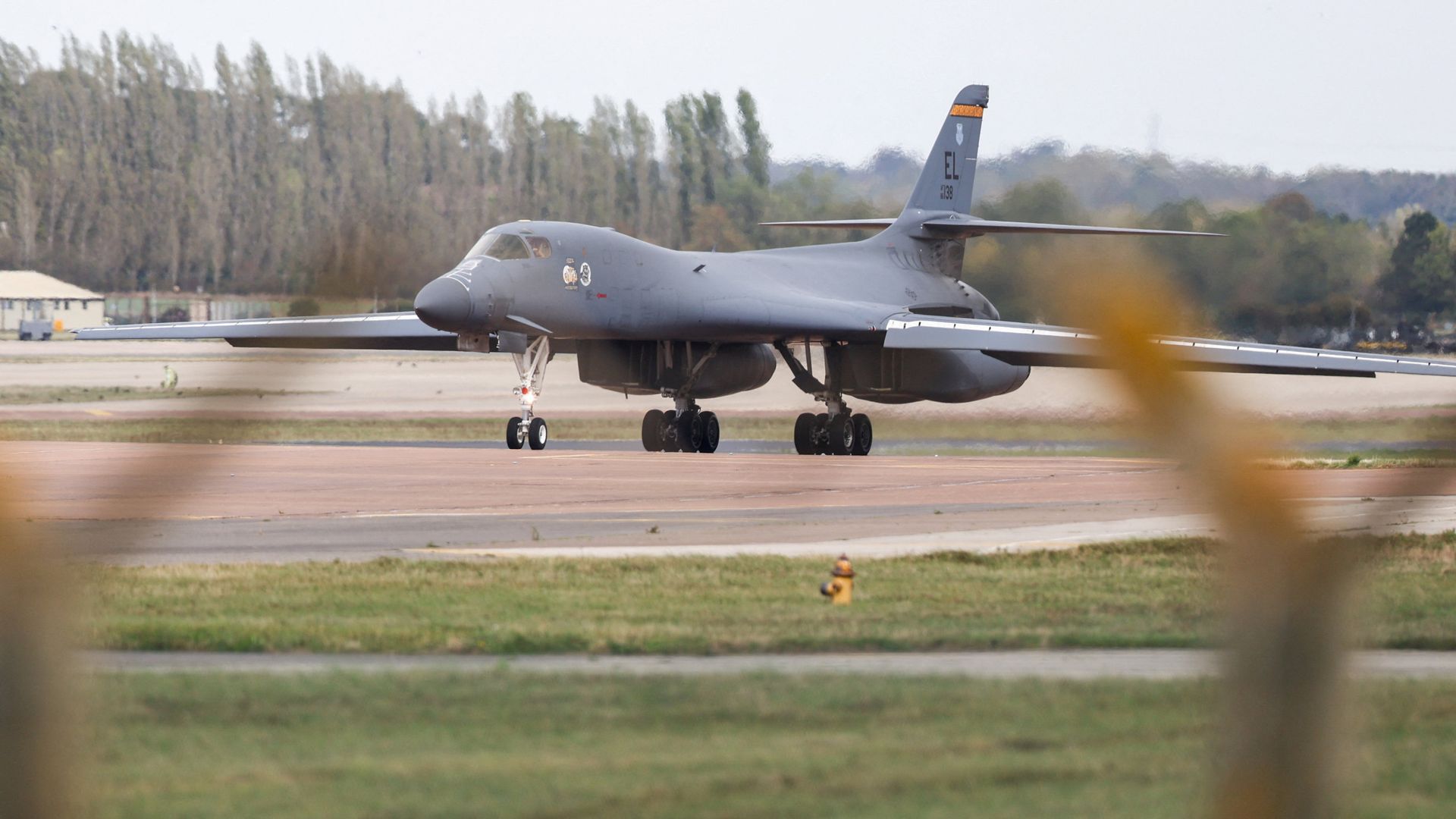
The United States Air Force didn't quietly pack up its heavy hitters from Britain's RAF Fairford over routine scheduling. They pulled every single B-1 Lancer bomber back to the continental United States following serious security alarms.
If you've been following military aviation developments, you know RAF Fairford in Gloucestershire has served as a critical forward operating location. Recently, the base hosted a massive deployment of the B-1B fleet—so many, in fact, that it forced the cancellation of the major RIAT 2026 airshow. But high-stakes operations come with extreme vulnerabilities.
What Sparked the Sudden Withdrawal
The rapid redeployment follows a string of security incidents that put local authorities and military commanders on high alert. British police arrested multiple suspects near the facility on suspicion of preparing a terrorist act and violating the Explosives Act. Although initial vehicle inspections did not uncover immediate explosives and suspects were later released on bail, the threat environment shifted drastically.
Subsequent arrests involving individuals with suspected ties or foreign state links pushed military planners to act. Iran's Islamic Revolutionary Guard Corps had previously designated RAF Fairford a legitimate target because the base was cleared for defensive strikes against Iran. When security risks hit the perimeter fence, operational calculus changes instantly.
The Cost of Forward Deployment
Concentrating massive strategic assets at a single European air base makes logistical sense for rapid task execution, but it creates a massive target. When the US Air Force sends a substantial portion of its B-1 fleet abroad, force protection becomes a logistical nightmare.
The Pentagon stated that bombers routinely operate globally to maintain readiness, and that crews can launch and recover directly from home stations in the United States if needed. That is military speak for a simple truth: if a forward base gets too hot, the aircraft fly home.
You don't leave billions of dollars in strategic hardware sitting on a tarmac if local threat levels spike beyond acceptable thresholds. The recent arrests around Gloucestershire proved that hostile actors are watching these installations closely.
What This Means for European Security Posture
This isn't the end of US bomber task forces in Europe, but it marks a sharp tactical pivot. Planners are re-evaluating how long high-value aircraft remain parked at exposed European staging posts.
Expect future deployments to rely heavily on "agile combat employment" models. Instead of parking dozen-strong fleets in one spot for months—thereby cancelling local airshows and drawing unwanted attention—the Air Force will likely favor unpredictable, short-duration rotations.
Protecting personnel and multi-million-dollar airframes always wins over keeping a static footprint. RAF Fairford will remain a vital strategic hub for NATO allies, but the days of predictable, long-term bomber residency there are facing a serious rethink.