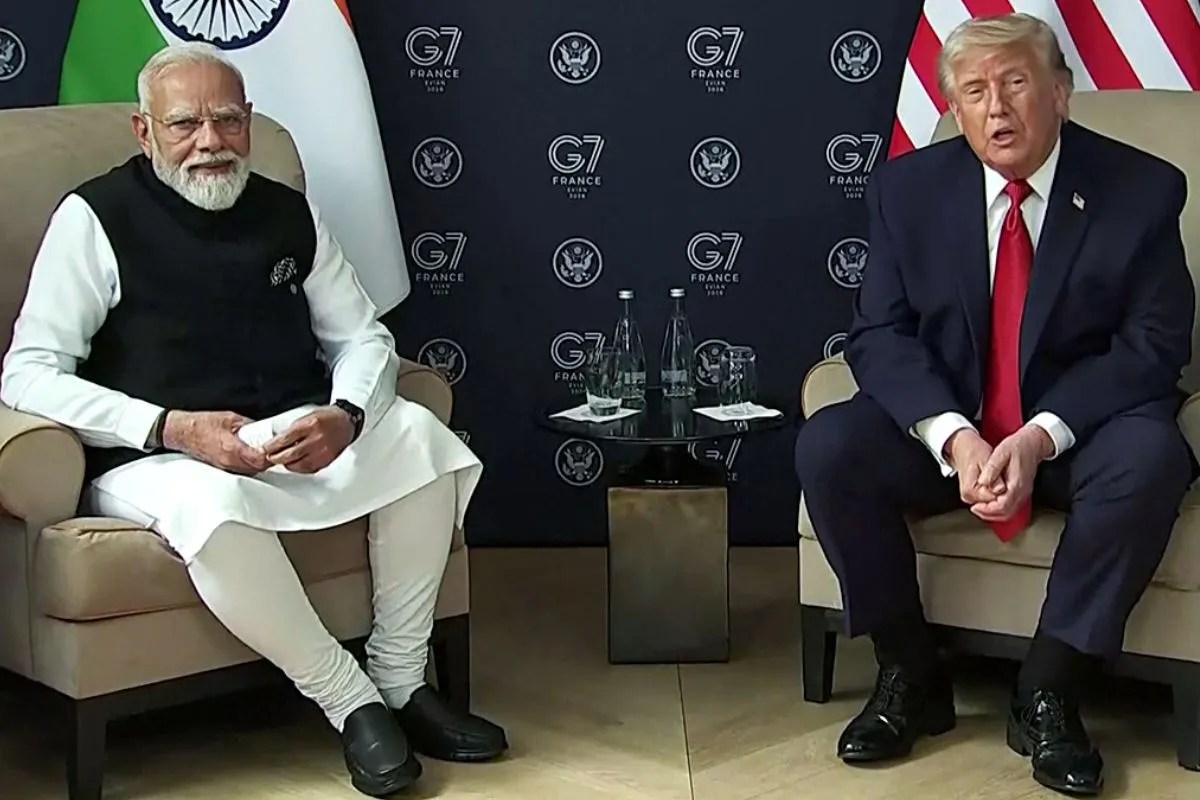
Washington just moved the goalposts on global trade. If you think diplomatic pressure is just talk, the recent legislative push in the United States proves otherwise. The US Senate overwhelmingly passed a hardline sanctions package—officially titled the Lindsey O. Graham Sanctioning Russia and Iran Act of 2026—that empowers the White House to slap up to 100 percent tariffs on nations buying discounted Russian energy.
India and China sit directly in the crosshairs.
This isn't just about abstract geopolitical posturing. It's an aggressive move targeting the economic lifelines keeping Moscow funded, and it forces fast-growing economies like New Delhi into a tight corner. Let's look at what this legislation actually does, why it targets specific nations, and what it means for global supply chains moving forward.
What the US Senate Bill Actually Proposes
The legislation cleared the Senate with an 86-11 vote, showing rare bipartisan backing. Conceived originally by the late Senator Lindsey Graham and Democrat Richard Blumenthal, the text grants President Donald Trump direct authority to levy heavy penalties on the world's top five buyers of Russian crude oil and natural gas.
Those top five buyers are currently:
- China
- India
- Azerbaijan
- Hungary
- Slovakia
The mechanics of the bill are straightforward yet brutal. Within 30 days of enactment, the executive branch gains the power to scale up import duties to 100 percent ad valorem on goods arriving from these specific countries. Crucially, the tariffs don't trigger automatically the second the ink dries. Instead, the bill hands discretionary authority to the president, turning the potential penalty into a massive geopolitical pressure point.
Why India is Under the Microscope
You might wonder why India absorbs so much attention in Washington's latest trade strategy. Ever since Western nations slapped sweeping bans on Russian energy following the invasion of Ukraine, global oil markets have fractured.
India didn't stop buying. In fact, Indian refiners capitalized on heavily discounted Russian crude to insulate domestic consumers from wild price swings, pushing imports to record highs—climbing roughly 34 percent in June alone. For New Delhi, this energy strategy is purely about economic pragmatism and national energy security.
Washington views it differently. US lawmakers argue that every barrel of discounted oil purchased keeps the Kremlin's treasury flush.
The friction isn't new. Washington already layered an extra 25 percent tariff on select Indian goods back in August 2025 due to these exact energy imports, pushing total trade penalties on certain products up to 50 percent. This new 100 percent tariff bill threatens to double down on an already strained trade relationship.
The European Exemption Double Standard
If you read the fine print of the Senate bill, a glaring contradiction jumps out. While countries like India and Hungary face the threat of crippling 100 percent duties, many European nations that historically relied on Moscow's pipelines receive carve-outs.
The legislation exempts European countries whose imports of Russian natural gas account for less than 15 percent of total exports and who show active reduction steps. Furthermore, exceptions are carved out for American purchases of Russian uranium for nuclear reactors, alongside space and nuclear research cooperation.
Critics of the bill point out this double standard immediately. Lawmakers opposing the measure argue that punishing Asian economies while letting European supply chains off with soft thresholds undermines the moral high ground of the sanctions. Trade analysts also warn that giving the executive branch unchecked tariff powers risks opening up unpredictable trade wars that ultimately push up costs for American consumers.
What Happens Next in the Legislative Process
The bill is far from becoming immediate law. Having cleared the Senate hurdle with strong numbers, the legislation now heads over to the House of Representatives.
Because the House is currently in recess, lawmakers won't pick up the debate until late August. Once the House reconvenes, it must pass its own version or approve the Senate text before sending the package to the President's desk for a final signature.
Even if enacted, the real question remains how the White House intends to wield this authority. Will it act as a blunt instrument to force a sudden halt to Russian energy imports, or will it remain a looming threat used to extract trade concessions behind closed doors?
Trade experts suggest India's leadership won't flinch easily. Policy groups emphasize that New Delhi's crude sourcing strategy must continue to rely on domestic economic interests and strategic autonomy rather than yielding to foreign legislative threats.
The upcoming weeks in Washington will dictate whether this tariff bill becomes reality or remains a high-stakes bargaining chip. Watch the House floor when it returns. That's where the real fight begins.