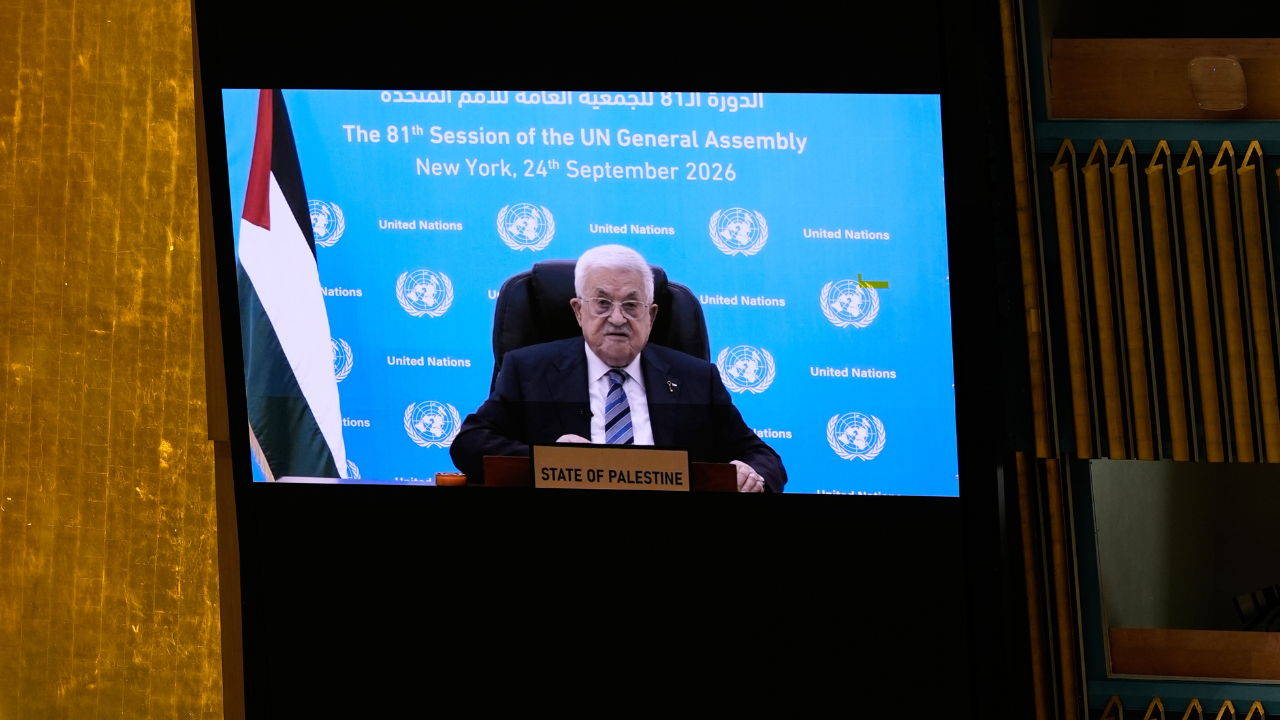
When a world leader has to address the United Nations through a pixelated video screen from his office in Ramallah because a host country refuses to stamp his passport, international diplomacy has hit rock bottom. For the second consecutive year, Palestinian President Mahmoud Abbas was blocked from taking the podium at the UN General Assembly in New York. Washington denied visas to him and his senior delegation. It's a blunt, exclusionary tactic that tells you everything you need to know about how the superpower manages global institutions on its own soil.
Abbas, now 90 years old and at the helm since 2005, delivered his prerecorded remarks to an assembly room where empty seats often echo louder than applause. The optic is striking. While Israeli Prime Minister Benjamin Netanyahu flew in to address the exact same gathering in person, the head of the internationally recognized Palestinian Authority was kept thousands of miles away by bureaucratic fiat.
The Real Cost of Visa Denials
You might wonder why a visa denial matters so much in the grand scheme of an intractable decades-old conflict. It goes far beyond hurt feelings or protocol. The United Nations headquarters in New York operates under a 1947 Headquarters Agreement. Under that treaty, the United States is legally obligated to facilitate access for representatives of member states and observers. By repeatedly blocking Palestinian leaders, Washington bends international obligations to suit its own political alignment.
It shuts down direct dialogue. It prevents backchannel conversations in the corridors of Manhattan. Most importantly, it signals to millions of Palestinians that their official leadership is treated as a non-entity on the world stage, even as Western governments endlessly preach the importance of a negotiated political settlement.
A Sidelined Authority Facing an Existential Crisis
The visa lockout happens against a backdrop of deep institutional decay for the Palestinian Authority. Abbas isn't just fighting foreign travel bans; he's fighting irrelevance. Having been elected in 2005 for what was supposed to be a four-year term, he hasn't faced voters in two decades. The Authority administers fragmented parts of the occupied West Bank under severe military constraints, relies heavily on foreign aid, and has been entirely shut out of high-stakes talks regarding Gaza's post-war future.
While symbolic diplomatic victories pile up—such as majority international recognition of Palestinian statehood—none of it alters the realities on the ground. Israeli military checkpoints still divide towns, settlement expansion continues unabated across the West Bank, and the Authority remains trapped between an angry domestic populace and an indifferent international community.
What Happens When Diplomacy Moves Behind Closed Doors
When physical presence is denied, diplomacy decays into monologues. Abbas's video address ticked all the expected boxes, calling for an end to the occupation and demanding accountability for civilian suffering. Yet, prerecorded speeches lack the urgency of live presence. They can't spark spontaneous hallway negotiations or force tough face-to-face reckonings between hostile delegations.
By keeping Palestinian leadership off US soil, Washington effectively sanitizes the UN General Assembly of uncomfortable confrontations. It keeps the status quo intact, shielding its primary regional ally from direct diplomatic friction while pretending that procedural exclusion is a neutral administrative choice.
If global bodies like the United Nations cannot guarantee basic access for all recognized parties, their claim to international neutrality collapses entirely. Blocking a microphone doesn't solve a crisis; it only guarantees that the grievances fueling it will find much louder, less peaceful outlets.