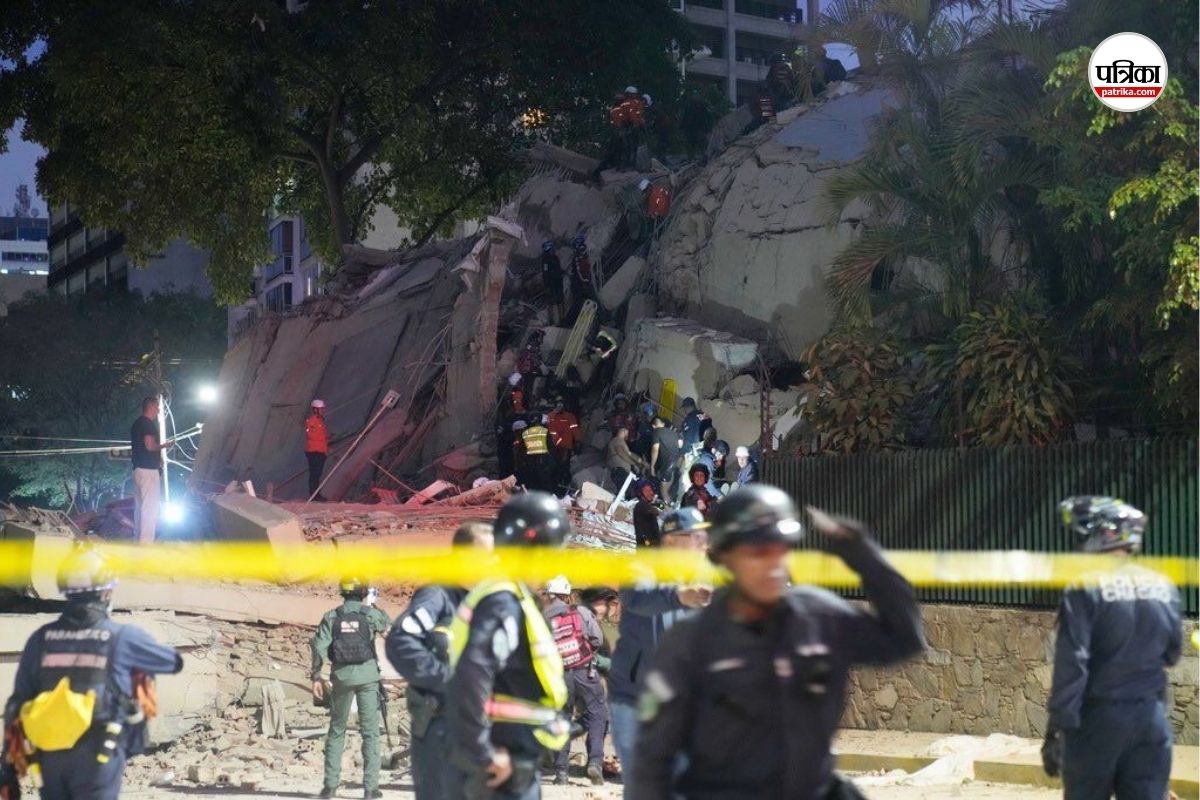
Venezuela's northern coastline just shattered. In less than a minute on Wednesday evening, the country faced a terrifying double-punch of seismic energy that turned parts of the capital into a cloud of concrete dust. This isn't just another standard news report about a tremor. It's the biggest geological disaster the country has seen in over a century, and the early signs point to an absolute human catastrophe.
If you are looking at the headlines and wondering how a couple of tremors could cause the United States Geological Survey to estimate potential casualties between 10,000 and 100,000 people, you need to understand the structural trap that Venezuela has become. Decades of economic decay, ignored building codes, and crippled emergency services have turned a predictable natural phenomenon into a nightmare scenario.
The ground shook. Then it shook harder.
The Thirty Nine Second Double Strike
Seismologists call it a doublet. It's a rare, incredibly destructive sequence where two massive earthquakes strike the same area almost simultaneously. At 6:04 PM local time, a magnitude 7.2 foreshock tore through the Yaracuy state near San Felipe. People were just sitting down for dinner or trying to get home through heavy traffic.
Buildings began to sway. People screamed. They started to run.
Before the first round of shaking could even stop, the real monster hit. Exactly 39 seconds later, a massive 7.5 magnitude mainshock struck just southeast of Yumare, near the coastal town of Morón. It was shallow. The United States Geological Survey clocked the depth at just ten kilometers.
When a massive earthquake happens that close to the surface, the energy doesn't dissipate through the earth. It hits the surface with full force. The epicenter sat roughly 168 kilometers west of Caracas, but the capital felt like it was right on top of the rupture.
The force tossed people onto the ground. It ripped the asphalt on coastal highways. In Caracas, residents watched in horror as entire building facades sheared off, exposing living rooms and bedrooms to the open air. Heavy columns of thick, gray dust rose over the eastern districts of the city.
Why Caracas Crumpled So Fast
You might wonder why a 7.5 magnitude earthquake threatens to kill tens of thousands in Venezuela when similar quakes in places like Chile or Japan often result in minimal casualties. The answer lies in the concrete.
Caracas is a city built on top of a valley, packed with high-rise apartments and sprawling, self-built hillside barrios. For twenty years, building regulations have been a joke. Developers cut corners. The state didn't check the structural integrity of older concrete blocks.
Look at the Altamira neighborhood. This is an affluent, heavily built-up sector of eastern Caracas where restaurants and businesses are usually packed. Interior Minister Diosdado Cabello took to state television to confirm that several homes and major high-rise buildings completely collapsed there.
Odalis Escalona, a 54-year-old bank employee in Caracas, described the terror to reporters. She said the concrete stairs in her building simply detached from the frame. The walls cracked open. Objects rained down from the ceiling. She got out alive, but hundreds of her neighbors are likely trapped beneath piles of pancaked concrete slabs.
Further out in the informal settlements on the hillsides, the situation is grim. These houses are made of unreinforced brick and corrugated iron, piled on top of each other. When the ground shook for over a minute, these unstable hillsides simply gave way, triggering massive landslides that buried entire blocks.
A Shocked Nation Left in the Dark
The immediate aftermath of the twin quakes has paralyzed northern Venezuela. The infrastructure was already on life support before the ground moved. Now, it's shattered.
Interim President Delcy Rodríguez declared a formal state of emergency, but managing a crisis of this scale requires tools the government lacks. Heavy earth-moving equipment is scarce. Fuel shortages complicate rescue logistics.
Interior Minister Cabello ordered an immediate shutdown of the main gas lines across major cities. It was a necessary move to prevent massive urban firestorms, but it leaves millions without power or cooking capabilities. Cellphone towers crashed across the central coast, cutting off communication.
This communication blackout is causing severe mental anguish. More than 7.7 million Venezuelans live abroad due to the country's ongoing political and economic crisis. Millions of migrants in Miami, Madrid, and Bogotá are frantically calling phones that simply ring out or say the network is unavailable. They don't know if their parents, siblings, or children are alive under the rubble.
The country's primary aviation hub, the Simón Bolívar International Airport in Maiquetía, is closed. The terminal buildings suffered heavy structural damage, and the runways are being checked for fissures. Airlocks are jammed. This means international search and rescue teams cannot fly directly into the capital to help dig out survivors.
The Crushing Weight of the Tectonic Boundary
This disaster didn't happen in a vacuum. The northern coast of Venezuela is a geologically volatile zone. The country sits right on the boundary where the Caribbean tectonic plate grinds past the South American plate.
This boundary is dominated by two massive strike-slip fault systems: the San Sebastián fault zone along the coast and the El Pilar fault zone further east. They move horizontally past each other, accumulating massive amounts of friction over decades.
The last time Caracas took a hit like this was in 1967, when a 6.6 magnitude quake killed around 240 people. That was a fraction of the energy released on Wednesday night. A 7.5 magnitude quake releases roughly 30 times more energy than a 6.6. The country has not experienced a seismic release of this scale since the late 19th century, meaning multiple generations of construction have never been tested by real seismic violence.
The geology tells us that the danger isn't over. Dozens of significant aftershocks are rattling the central coast every hour. A building that was cracked and weakened by the 7.5 mainshock can easily turn into a tomb when hit by a 5.5 aftershock. That is why authorities are begging people to sleep in parks, plazas, and on the streets instead of returning inside.
A Broken Medical System Facing an Avalanche of Trauma
The true horror of this event will play out in the hospitals over the coming days. Venezuela's healthcare system has faced systemic shortages of basic medical supplies like antibiotics, bandages, and sterile saline for years.
Now, thousands of severely injured people are arriving at triage centers. Doctors are dealing with crush syndrome, open fractures, and severe head trauma without the necessary tools. Power grids are failing, and hospitals are relying on backup generators that have limited fuel supplies.
The human capital is also thin. Thousands of experienced doctors and nurses left the country during the migration wave. The remaining medical staff are working frantic, sleepless shifts, trying to save lives with makeshift equipment.
International aid is the only way out of this hole. Neighboring countries are preparing packages, but getting the supplies past bureaucratic hurdles and into the hands of field doctors will be a massive logistical race against time.
What You Need to Do If You Are in the Area
If you are reading this from Venezuela or a neighboring Caribbean territory under advisory, stop looking at social media videos and take immediate precautions.
- Stay in open spaces: Do not enter any concrete structure to retrieve personal items. The aftershock sequence will last for weeks, and compromised walls will fall.
- Conserve your phone battery: Switch your devices to ultra-power-saving mode. Text messages use less network bandwidth than phone calls and are more likely to get through the damaged cellular infrastructure.
- Do not use tap water: Earthquakes frequently rupture sewage and water lines simultaneously, contaminating local water supplies. Use bottled water or boil whatever you have access to.
- Clear the roads: If you own a working vehicle, park it off the main avenues. Emergency vehicles, ambulances, and civil protection trucks need completely clear pathways to transport the injured to functional field clinics.
- Check on vulnerable neighbors: Eldery residents and children cannot navigate the debris-strewn streets alone. If you are in a safe open zone, check your immediate vicinity to assist those who cannot move easily.
The scale of what happened along the Venezuelan coast is still coming into focus. The dust hasn't settled, the rescue workers are just beginning to dig, and the political and economic realities of the country are going to make the next few weeks incredibly painful. Keep your eyes on the ground reports, and get ready to support independent international relief organizations like the Red Cross or secular field medical teams as verified donation pipelines open up.