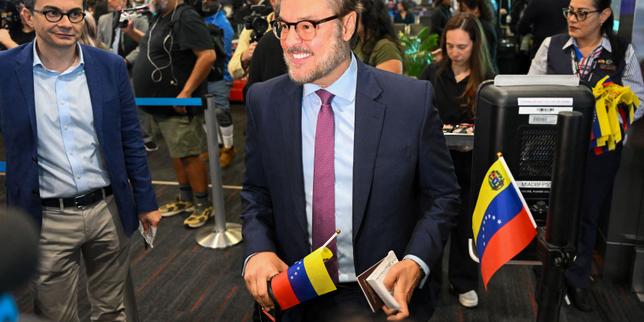
Venezuela just overhauled its diplomatic leadership during its most chaotic period in recent history. Interim President Delcy Rodriguez announced a major cabinet shakeup, merging the foreign affairs and foreign trade ministries into a single entity. She placed Félix Plasencia, the country's current top diplomat to the United States, in charge of this newly consolidated powerhouse. Yvan Gil, who served as the Venezuela foreign minister since 2023, is out. He is moving over to run the Ministry of Science and Technology.
This isn't just routine political musical chairs. It's a calculated, high-stakes gamble. Rodriguez is managing a nation on the brink, dealing with the fallout of the capture of former President Nicolas Maduro by US forces in January, alongside a catastrophic double earthquake that killed over 4,500 people. If you want to understand where Venezuela is heading, you have to look at why Plasencia was chosen and what this means for international aid. Building on this theme, you can find more in: Why Us Airstrikes Against Iran Are Changing Everything In The Middle East Right Now.
The Strategy Behind the New Venezuela Foreign Minister
Rodriguez needed an operative who understands Washington. Plasencia fits that exact description. He served as Caracas's diplomatic envoy to the US since February, navigating the incredibly tense relationship that followed Maduro's capture.
By merging foreign policy with foreign trade, Rodriguez is signaling that diplomacy and economic survival are now the same job. Venezuela desperately needs cash, resources, and relief supplies. Plasencia previously held ambassador roles in China, Colombia, and the United Kingdom. He knows how to talk to both Western powers and traditional allies. He isn't an ideologue. He's a pragmatist. Analysts at Associated Press have also weighed in on this situation.
The timing tells the whole story. The country is currently digging out from under crumpled buildings. The National Assembly recently confirmed that the death toll from the double earthquakes reached 4,561 people, with over 16,000 injured. Over 20,000 citizens are living in temporary shelters. The government is overwhelmed. Managing international aid transparently while protecting state sovereignty requires someone who won't trip over diplomatic protocols.
Moving From Defiance to Dollar Diplomacy
For years, Venezuelan diplomacy was defined by loud anti-imperialist rhetoric. That luxury is gone. The interim government is operating under intense American pressure and severe domestic strain.
The US government recently pledged nearly $400 million in humanitarian aid and deployed two naval vessels to assist with earthquake relief. This creates a complicated dynamic. Accepting millions from the nation that captured your former leader requires careful positioning. Rodriguez calls her approach peace diplomacy, but it's fundamentally about survival.
Plasencia's primary mandate is to ensure that this aid flows without letting foreign entities dictate internal Venezuelan politics. It's a tightrope walk. Gil was a solid minister for a different era, but his background didn't offer the deep Washington connections required for this specific crisis. Moving Gil to science and technology keeps a loyalist in the cabinet while freeing up the diplomatic front line for a specialist.
Shaking Up the Global Balance
This cabinet shift will ripple far beyond Caracas. Think about how major global powers view Venezuela.
China and Russia have long-standing financial stakes in Venezuelan oil. Plasencia's history as an ambassador to Beijing means he can reassure Chinese investors that their assets are secure, even as Caracas opens up to American aid ships. He knows how Beijing operates. He understands what they want in exchange for stability.
Colombia is another vital piece of the puzzle. Relations between Caracas and Bogotá were restarted recently after a long freeze. Plasencia previously served as ambassador to Colombia, giving him direct lines to regional neighbors who are watching Venezuela’s political transition with extreme nervousness. If Venezuela destabilizes further, Colombia bears the brunt of the migrant crisis.
What This Means For Future Elections
You can't separate this diplomatic reshuffle from the domestic political timeline. Rodriguez has been running an interim administration since the chaotic events of January. She has already replaced the military high command and pushed through an amnesty law for political prisoners.
She is clearing out the old guard. She is building a government capable of managing a transition, likely leading toward internationally recognized elections. To make those elections happen, she needs sanctions relief. To get sanctions relief, she needs a foreign minister who can cut deals with US Secretary of State Marco Rubio. Plasencia is that bridge.
Don't expect Venezuela to suddenly become a staunch Western ally overnight. The interim government will still assert its sovereignty. They will still protect their core interests. But the tone is shifting from loud confrontation to quiet, transactional diplomacy.
Immediate Steps to Watch
Keep your eyes on three specific indicators over the next few weeks to judge if this move is working.
First, look at the coordination of the earthquake relief effort. Watch how smoothly those two US warships interact with the Venezuelan military. If aid distribution happens without major political standoffs, Plasencia is doing his job.
Second, monitor any official statements regarding sanctions. If we see a quiet easing of restrictions on Venezuelan state oil operations, it means backchannel negotiations in Washington are bearing fruit.
Third, watch how regional bodies react. If Colombia or Brazil take a more active role in supporting Rodriguez's interim administration, it proves Plasencia's regional network is paying off.
The old Venezuelan political playbook is officially dead. Survival requires adaptation, and this cabinet consolidation is the clearest proof yet that Caracas knows it.