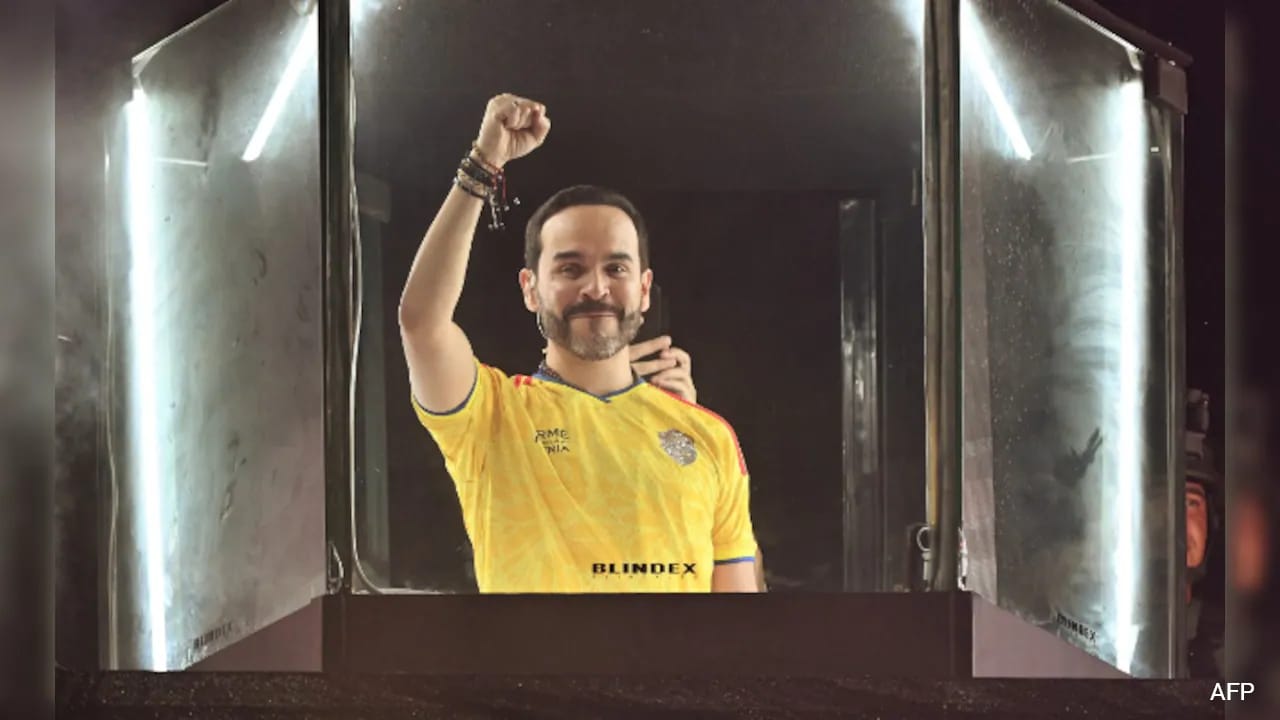
Colombia just shocked the region. In the tightest presidential race the country has ever seen, a right-wing multi-millionaire lawyer captured the highest office in the land. His name is Abelardo De La Espriella.
If you haven't been tracking the chaotic political climate in Bogotá, this development might look like a random fluke. It isn't. The victory represents a total rejection of the left-wing political track established under outgoing President Gustavo Petro. With 99.99% of the ballots counted, De La Espriella scraped by with 49.66% of the vote, defeating his leftist rival Iván Cepeda by roughly 250,000 votes.
The political shift is massive. For four years, Colombia served as a major progressive holdout in South America. Now, the nation has swung hard to the right, embracing a flashy, unapologetic defense attorney who models his political style directly after Donald Trump.
From High Society Defense to the House of Nariño
To understand how a defense lawyer managed to conquer the Colombian presidency, you have to look at his history. He wasn't forged in the traditional halls of local government or legislative debates. He made his name in the courtroom and on television screens.
Born in Bogotá in 1978, De La Espriella grew up in Montería, a region historically dominated by cattle ranchers and conservative elites. His father was a well-connected magistrate and a close ally of former President Álvaro Uribe. Growing up in these circles shaped De La Espriella's worldview early on. He went to conservative universities, eventually getting his law degree from Sergio Arboleda University.
But it was his legal practice that turned him into a household name. He didn't handle low-profile civil disputes. He represented the most infamous, headline-grabbing figures in modern Colombian history.
He defended David Murcia Guzmán, the mastermind behind the massive DMG pyramid scheme that fleeced millions of everyday citizens out of their life savings. He represented Dania Londoño, the woman at the center of the 2012 Secret Service prostitution scandal in Cartagena. He even did legal work connected to Alex Saab, the businessman jailed in the United States over his financial ties to the Venezuelan regime.
Every single case brought intense scrutiny. Critics accused him of playing fast and loose with ethics, but De La Espriella loved the spotlight. He used the attention to build a personal brand focused on absolute power, luxury, and an aggressive, winning-at-all-costs attitude. He flew around in private jets, launched his own brands of high-end rum and wine, and flaunted his wealth on social media. He proved that in modern politics, notoriety can be easily converted into a powerful populist platform.
The Strategy Behind a Razor Thin Victory
The campaign wasn't subtle. De La Espriella ran under his newly minted political movement, Defenders of the Homeland. He recognized early on that a large portion of the population felt deep anxiety over the country's security situation. Under the previous administration, cocaine production hit record highs and various armed criminal groups expanded their regional influence.
He played directly into those fears. He promised an iron-fist approach to law enforcement, vowing to build mega-prisons and initiate an all-out war against drug trafficking organizations. During rallies, he spoke from behind thick sheets of bulletproof glass, warning voters that the country was on the verge of total collapse.
His digital campaign was flawless. Instead of relying on traditional media, his team flooded platforms like TikTok and Instagram with short, highly emotional videos. They utilized local influencers and targeted messages to paint his opponent, Iván Cepeda, as a dangerous continuation of economic stagnation. It worked well enough to secure him 43.7% of the vote in the initial May ballot, setting up the June runoff.
The strategy worked because it offered simple, aggressive answers to incredibly complex problems. When he told crowds he wanted to break the back of organized crime, voters who felt abandoned by the state cheered.
A Brewing Institutional Crisis
The victory hasn't brought immediate peace. In fact, Colombia is staring down a massive institutional standoff. Outgoing President Gustavo Petro has refused to formally recognize the preliminary results, alleging widespread irregularities in the vote counting process managed by the National Civil Registry.
Iván Cepeda has taken the same stance. In a heated speech following the vote announcement, Cepeda declared that his legal team is actively preparing to challenge the results across 33,000 separate polling stations. The left isn't going down without a fierce fight.
Tensions have already spilled over into the streets. Protesters gathered in Bogotá and Cali, leading to clashes with riot police. In Cali, anger boiled over as demonstrators burned American flags to protest the international backing De La Espriella received during the final days of his campaign.
De La Espriella has urged his opponents to back down, warning them not to trigger widespread social unrest. He claims he will govern for all citizens, but his past rhetoric makes that hard for many to believe. He previously used extreme language when describing how he would handle the political left, though he later claimed those comments were purely metaphorical.
Realigning with Washington
The global implications of this election are immediate. De La Espriella has made no secret of his deep admiration for Donald Trump. After winning the initial voting round in May, he received a full endorsement from the US President, who celebrated the final runoff numbers on social media.
The geopolitical chessboard in Latin America is shifting fast. With Colombia moving back to the right, the region's progressive block is shrinking significantly. Only a few major nations like Mexico and Brazil remain under left-leaning administrations.
The incoming government intends to tie itself directly to US policy. Right after the election numbers dropped, US Secretary of State Marco Rubio reached out to congratulate the president-elect. The two discussed a shared agenda focused heavily on security cooperation, crushing drug cartels, and stopping regional immigration routes.
For the United States, a cooperative, hardline government in Bogotá offers a major tactical partner in South America. For De La Espriella, it provides international legitimacy to back up his aggressive domestic policies.
What Happens Next
The official scrutiny process will take a couple of days to wrap up. Unless the legal challenges brought by the left reveal massive, systemic fraud that completely reverses the count, Abelardo De La Espriella will take the oath of office on August 7, 2026.
If you are tracking how this political transition impacts regional security or business interests, here are the critical indicators to watch over the coming weeks.
Monitor the official registry updates over the next 48 hours to see if the razor-thin margin holds up against legal challenges. Watch the streets of major hubs like Bogotá, Cali, and Medellín for escalating protests that could disrupt local commerce. Track early cabinet announcements, particularly the choices for Defense Minister and Finance Minister, to understand how quickly the new administration intends to roll out its security and economic reforms.