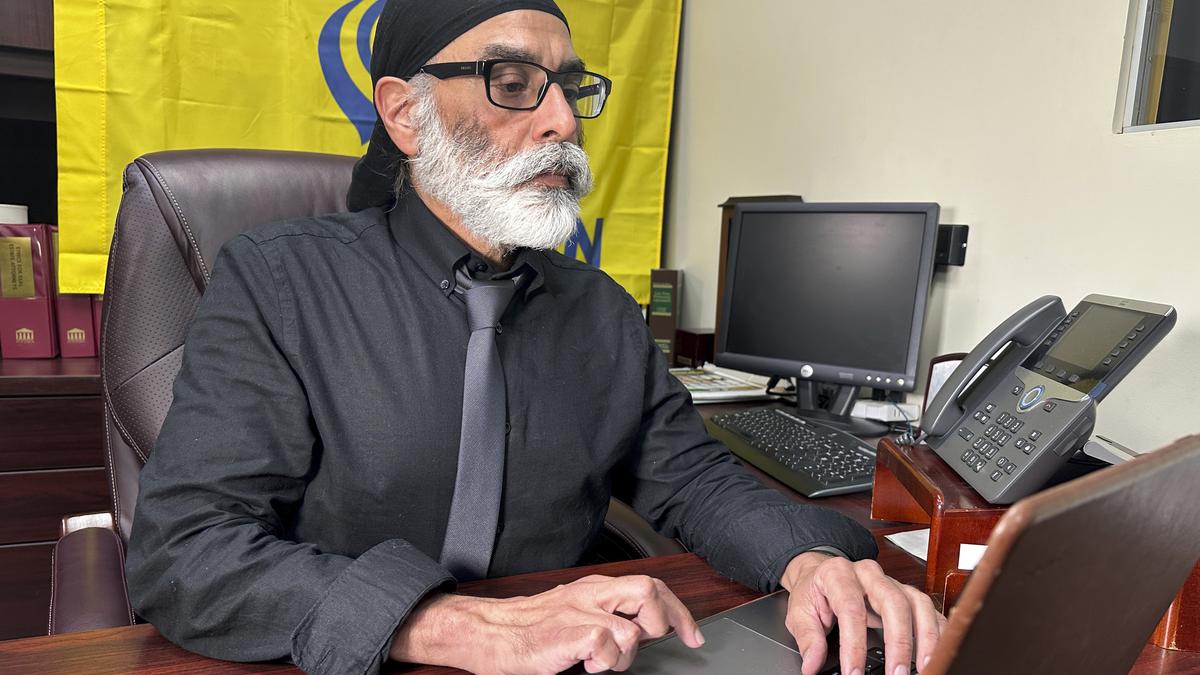
International espionage usually plays out like bad fiction. But sometimes, real-world indictments drop that permanently alter how superpowers deal with each other behind closed doors. When American federal prosecutors formally named Vikash Yadav, an Indian intelligence official, as the mastermind behind a foiled assassination plot on American soil, it stopped being a whispered diplomatic secret. It became a matter of public record.
If you have been trying to piece together how a transnational murder-for-hire scheme targeting a Sikh separatist leader in New York turned into a full-scale diplomatic crisis, you are looking at one of the most complex intelligence scandals of the decade. Let us break down what actually happened, who was involved, and why the fallout is still echoing through Washington and New Delhi.
The Anatomy of a Foiled Hit in New York City
The plot centered on Gurpatwant Singh Pannun, a dual U.S. and Canadian citizen and general counsel for Sikhs for Justice, an organization advocating for an independent Sikh state called Khalistan. New Delhi views these separatists as direct security threats. Washington views them as citizens protected by the First Amendment. That ideological collision set the stage for disaster.
According to unsealed federal indictments from the U.S. Department of Justice, the operation began around May 2023. Vikash Yadav, identified by U.S. authorities as a senior field officer working for India's Research and Analysis Wing (RAW), allegedly directed an Indian national named Nikhil Gupta to orchestrate the hit.
Gupta was not a trained spy. He was a middleman who thought he was hiring professional underground operatives. Instead, the person he contacted looped in federal law enforcement. The entire blueprint—complete with home addresses, surveillance photos, day-to-day schedules, and a $100,000 blood money price tag—was monitored by American investigators before it could be executed.
Who Is Vikash Yadav and Where Does He Stand Now?
Before his name flashed across international news networks, Yadav operated in the shadows. Court documents describe him as a former security official who had ties to the Central Reserve Police Force before transitioning into intelligence. He used aliases like "Amanat" while coordinating the mechanics of the cross-border operation.
When the indictment dropped, New Delhi initially pushed back against the narrative. Yet, as international pressure mounted, India's Ministry of External Affairs confirmed that Yadav was no longer an employee of the government.
Unlike Nikhil Gupta—who was extradited from the Czech Republic and subsequently pleaded guilty in a New York federal court—Yadav remained at large. He became the subject of a federal arrest warrant and an FBI wanted poster. Whether India will ever extradite a former intelligence operative to face trial in a Western court is practically zero. Sovereign nations protect their intelligence apparatus. Still, naming him publicly was a deliberate, aggressive warning shot from the U.S. Justice Department.
The Geopolitical Fallout Between Washington and New Delhi
Diplomacy is rarely straightforward when intelligence agencies get caught overstepping boundaries. Both the United States and India share a massive strategic interest in countering China's growing influence in the Indo-Pacific region. Defense pacts, technology transfers, and high-level trade summits depend on mutual trust.
When U.S. Attorney General Merrick Garland and FBI Director Christopher Wray stepped up to microphones to denounce the plot, they made it clear that foreign governments cannot treat American streets as a hunting ground for dissidents. Yet, unlike Canada—which publicly accused high-ranking Indian officials of orchestrating the assassination of hardline separatist Hardeep Singh Nijjar on British Columbia soil—Washington managed the Pannun crisis with a careful dose of institutional pragmatism.
American officials drew a sharp line: while the rogue operations had to be exposed and prosecuted, the highest levels of the Indian government, including Prime Minister Narendra Modi, were not directly implicated in ordering the hit. That distinction kept the broader bilateral alliance from completely collapsing, even as legal cases crawled through New York federal courts.
Why This Case Matters for Global Intelligence
Transnational repression is not a new concept. Governments have tracked, harassed, and occasionally eliminated political enemies across borders for centuries. What makes the Yadav-Gupta indictment a watershed moment is the sheer digitization and clumsiness of modern state-sponsored plots.
Relying on criminal intermediaries, unencrypted messaging apps, and improvised payment methods leaves a digital paper trail that modern intelligence surveillance picks up almost instantly. When you mix state intelligence with underworld fixers, the margin for error shrinks to zero.
The legal proceedings have sent a chilling message to intelligence networks worldwide. Operating inside Western democracies carries an astronomical cost when local law enforcement refuses to look the other way. If anything, the case proves that the days of quiet diplomatic coverups for botched extraterritorial operations are rapidly coming to an end.
Pay attention to how intelligence agencies adapt next. The shadows are getting smaller.