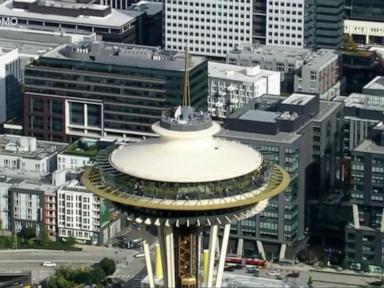
Two tourists walked into the Space Needle around 8:50 p.m. on a Friday, paid full price for their tickets, and blended right in with the crowd. Minutes later, they sprinted out of a restroom wearing helmets and harnessed packs, scaled the glass barriers of the 605-foot observation deck, and launched themselves into the Seattle night air.
If you scrolled through TikTok or X over the weekend, you already saw the clips. Witnesses like Jacob Jarreau captured the madness on video, watching in real-time disbelief as the pair performed a backflip off the ledge and deployed their parachutes before anyone could stop them. Local emergency dispatchers fielded frantic calls around 9:30 p.m. as one jumper reportedly drifted toward Fifth Avenue and another drifted near the active Bite of Seattle food festival.
Viral videos make stunts like this look like a harmless cinematic adventure. They strip away the messy reality of urban BASE jumping, municipal safety laws, and the actual criminal fallout waiting for thrill-seekers when they finally hit the pavement.
The Logistics of a High-Altitude Stunt
Executing an illegal jump from a major landmark like the Space Needle requires cold calculation, not just blind adrenaline. According to the Seattle Police Department, the two individuals spent time standing near the top-level viewing area, scouting the layout and checking wind conditions over Lake Union before making their move.
They didn't break down doors or pick locks. They simply bought standard admission tickets, scanned through security checkpoints like normal visitors, and hid their gear beneath outer layers until the final moment. Witnesses noted how fast the sequence unfolded. The sprint from the restroom to the glass window took barely ten seconds, leaving zero window for tourist intervention or security guards to react.
One jumper cleared the barrier and drifted down toward the roof of a nearby hotel, while another descended close to crowded festival grounds. Witnesses on lower stories watched in horror as the figures dropped past their windows.
Why Urban BASE Jumping Is a Legal Nightmare
Social media comments often romanticize these daredevils as modern-day folk heroes defying corporate rules. That perspective ignores what happens after the parachute packs are rolled back up.
Seattle authorities launched an active investigation immediately following the incident. Police officials confirmed that the suspects face severe first-degree criminal trespassing charges. Property owners, local law enforcement agencies, and municipal governments take structural security threats extremely seriously, especially in packed tourist zones where falling debris or miscalculated landings can injure innocent bystanders on the ground.
When you leap off a private landmark into a public city center, you aren't just breaking a building rule. You are creating an active hazard for drivers, pedestrians, and emergency responders who have to sort out whether a structural security breach involves an extreme sports stunt or a catastrophic emergency.
What Security Protocols Miss
High-profile towers face a constant design dilemma. They must remain welcoming, open-access public tourist attractions while maintaining enough physical security to deter individuals carrying concealed parachutes. Metal detectors and bag checks are standard at airports, but observation towers rely on casual ticket scans and trust.
Tightening security further risks turning iconic architectural achievements into fortress-like checkpoints that ruin the visitor experience. Incidents like this force facility operators to re-evaluate their surveillance habits, crowd monitoring, and response times. Reviewing security camera footage after the fact doesn't stop a 10-second sprint to a glass barrier.
Stop treating reckless rooftop stunts as harmless entertainment. The viral clout fades fast, but criminal records and municipal fines stick around much longer than a two-minute video on your feed.